 10 years of water leakage warranty for Regrouting showers.

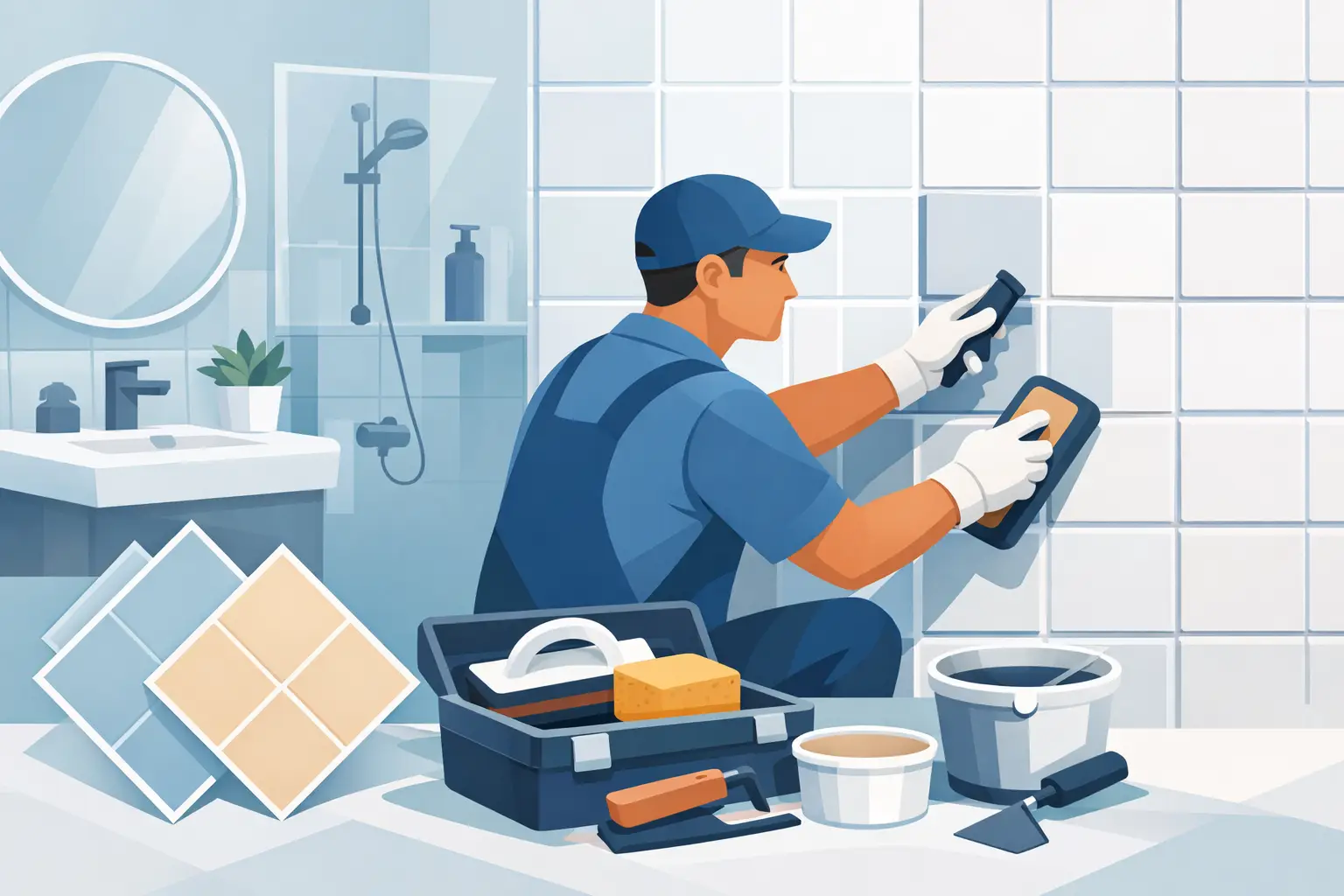
A bathroom can look tired long before the tiles themselves are ready to be replaced. If the grout is cracked, stained, missing or constantly showing signs of mould, a professional bathroom tile regrouting service can restore the space without the cost and disruption of a full renovation.
For many property owners, the problem starts small. A few dark grout lines around the shower. Fine cracks near wall joints. Loose or hollow-sounding sections that seem cosmetic at first. But grout is not just there to finish the look. It helps protect the tiled surface, supports cleanliness and plays an important role in keeping moisture where it belongs.
When a bathroom tile regrouting service makes sense
Regrouting is often the right solution when the tiles are still in good condition but the joints between them have failed. In bathrooms, that usually happens because of constant moisture, cleaning chemicals, movement in the substrate, age, or a poor-quality original installation.
The clearest sign is cracking. Once grout begins to split, water can work its way into places it should not reach. You may also notice grout that has become powdery, loose or patchy. In showers, persistent discolouration is another common warning sign. If grout stays dark no matter how often it is cleaned, the issue may be deeper than surface staining.
There is also the appearance factor. Even premium tiles can look neglected if the grout lines are uneven, mouldy or yellowed. Regrouting can sharpen the whole room, making existing tiles look cleaner, newer and more refined.
Not every bathroom needs complete tile replacement. In fact, many bathrooms respond exceptionally well to a targeted restoration approach. Where the tile layout still suits the room and the surface remains sound, regrouting is often the more practical and cost-effective path.
What professional regrouting actually involves
A proper bathroom tile regrouting service is more than applying fresh grout over old joints. That shortcut rarely lasts. For a durable result, the failed grout needs to be removed carefully, the tiled area prepared correctly, and the new grout installed with precision.
The process typically begins with inspection. This is where a specialist assesses the condition of the grout, silicone joints, tile stability and any signs of water damage. That step matters because regrouting will only perform properly if the surrounding surface is still structurally suitable.
Old grout is then removed from the joints using the right tools for the tile type and joint width. This stage needs a steady hand. Poor workmanship can chip tile edges, create inconsistent joint depth or leave behind debris that affects bonding.
Once the joints are clean, dry and ready, new grout is applied evenly and worked into the lines for a consistent finish. Silicone in movement joints and corners is usually replaced as well, especially in wet areas like showers, because these sections expand and contract differently from the tiled field.
The final result should look clean, aligned and balanced across the whole surface. More importantly, it should perform properly under daily use.
Why regrouting is not just a cosmetic fix
A bathroom is one of the hardest-working spaces in any home or commercial property. It deals with steam, splashing, cleaning products and frequent temperature changes. When grout fails, the issue is not limited to appearance.
Moisture intrusion is the larger concern. Water that seeps behind tiles can contribute to odours, mould growth, swollen substrates and ongoing deterioration. Left too long, what begins as a grout problem can become a bigger repair job involving waterproofing, tile removal or wall and floor rectification.
That is why quality regrouting sits at the point where presentation and performance meet. It refreshes the finish of the bathroom, but it also helps protect the integrity of the tiled surface. For landlords and property managers, that can mean avoiding more expensive maintenance later. For homeowners and renovators, it is a way to restore the bathroom with less downtime than a full rebuild.
The difference between DIY and a specialist service
There are store-bought grout pens, patch compounds and quick-fix products that promise an easy refresh. Some have their place for minor touch-ups, but they are rarely a substitute for a true bathroom tile regrouting service.
Bathrooms are wet areas, and wet areas are unforgiving. If old grout is not removed deeply enough, or if the new product is not suitable for the environment, the finish may fail again sooner than expected. The same applies if mould is simply covered instead of properly addressed.
A specialist service brings more than labour. It brings judgement. That includes knowing when regrouting is appropriate, when silicone replacement is essential, and when tile movement or substrate issues need to be dealt with first. It also means achieving a cleaner visual result, with tighter lines and a finish that complements the tile rather than distracting from it.
For clients who care about detail, this is where craftsmanship matters most. Bathrooms are compact spaces, so flaws are easy to spot. Clean edges, even joints and neatly finished corners make a visible difference.
How long does regrouting last?
That depends on the condition of the bathroom, the quality of the workmanship, the products used and how the space is maintained afterward. A bathroom that has good ventilation and is cleaned appropriately will usually hold up far better than one exposed to constant moisture and harsh chemical cleaning.
The quality of preparation also has a major impact. Regrouting done over failed or contaminated joints is unlikely to deliver long-term performance. By contrast, professional removal, proper product selection and careful finishing can significantly extend the life of the tiled area.
In showers especially, warranties provide useful confidence because they reflect the installer’s belief in the process and the finish. That kind of backing matters when the work is not only aesthetic, but functional.
Choosing the right bathroom tile regrouting service
Not all regrouting work is equal. If you are comparing providers, look beyond price alone. The key questions are about method, detail and accountability.
Ask whether the old grout is fully removed or simply patched. Ask whether silicone joints are replaced. Ask what products are used in wet areas and how the team handles mould-affected sections. It is also worth asking how the finished area is protected during curing and what aftercare is recommended.
Presentation matters too. A good regrouting result should not look like a repair. It should look intentional, balanced and in keeping with the bathroom as a whole. That is especially relevant in renovated homes, higher-end apartments and commercial spaces where finish quality affects perception.
A specialist such as A1 Grouting & Tiling understands that technical accuracy and visual refinement go together. The goal is not merely to fill joints. It is to restore the tiled surface with precision, improve hygiene, and leave the bathroom looking noticeably cleaner and more polished.
Is regrouting always the right answer?
Not always. If tiles are drummy, loose or badly cracked, or if there are underlying waterproofing failures, regrouting alone may not solve the real problem. In those cases, a more extensive repair or partial renovation may be the better investment.
That said, many bathrooms sit in the middle ground. The tiles are sound, the layout still works, and the space simply needs expert restoration. This is where regrouting delivers excellent value. It updates the finish, improves cleanliness and extends the life of the room without the cost and mess of starting again.
If your bathroom still functions well but no longer looks or feels fresh, it is worth looking closely at the grout lines before assuming the whole room needs replacing. Often, the transformation comes from restoring the details properly – and in a bathroom, those details do the heavy lifting every day.