 10 years of water leakage warranty for Regrouting showers.

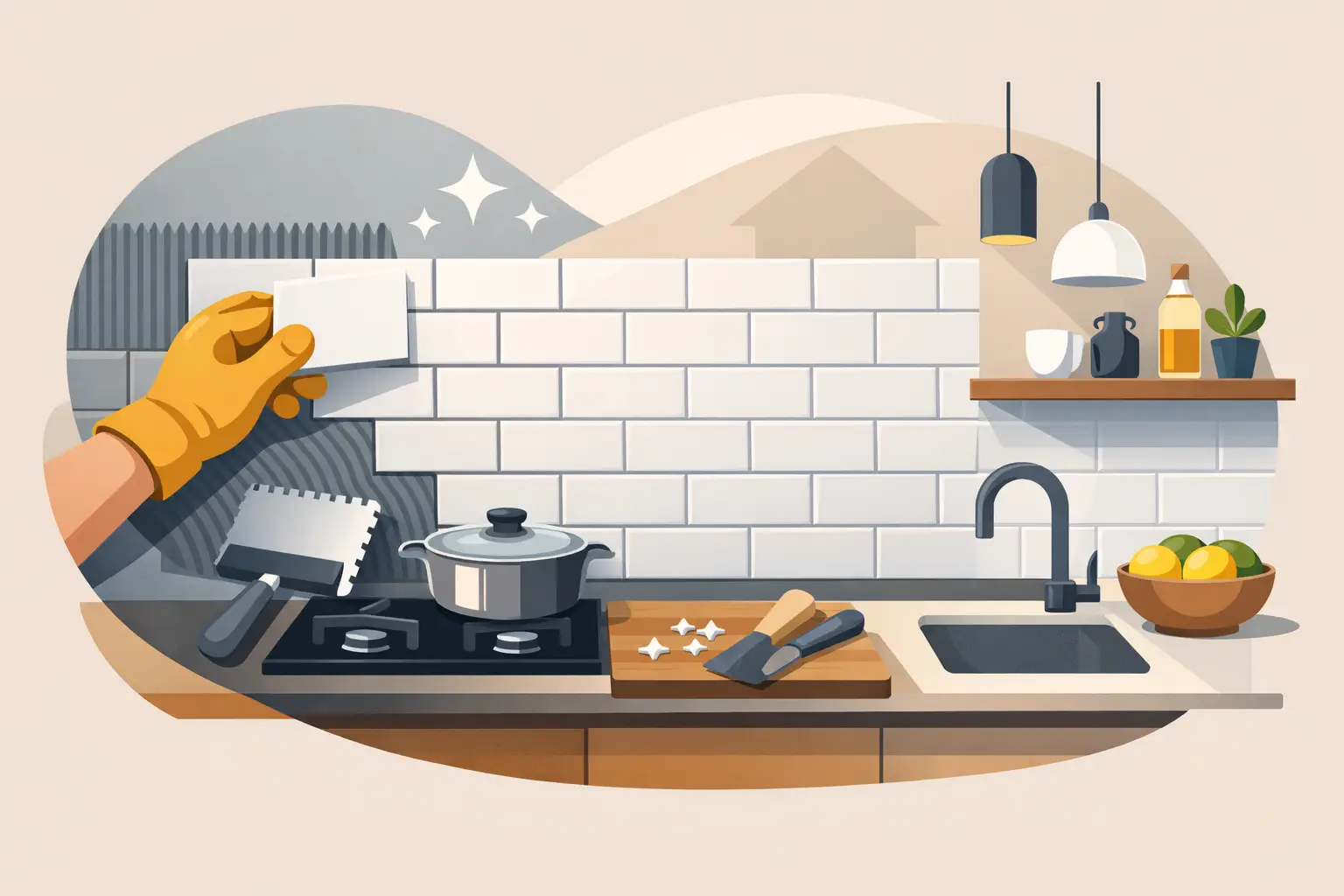
A splashback is one of the first things people notice in a kitchen, and one of the hardest-working surfaces in the room. Kitchen splashback tiling needs to do more than look sharp under good lighting. It has to handle steam, cooking residue, constant wiping, and the visual pressure of sitting between your benchtop and cabinetry every single day.
When it is done well, the result feels clean, balanced and finished. When it is rushed, the problems show quickly – uneven lines, awkward cuts, stained grout and edges that never quite look right. That is why splashback tiling is not just a decorative add-on. It is a detail-driven part of the kitchen that affects both appearance and long-term performance.
Why kitchen splashback tiling matters
A tiled splashback protects plasterboard and painted surfaces from moisture, grease and heat exposure in busy cooking zones. It also creates a hygienic, easy-to-clean wall finish that stands up better than paint in high-use areas. For homeowners and renovators, that means less maintenance and a kitchen that keeps its finish for longer.
There is also a design reason it matters. The splashback sits at eye level, often running the full length of the workspace. Even when the benchtop, joinery and appliances are high quality, a poorly executed splashback can pull the entire room down. A precise tile layout, consistent grout joints and clean transitions around power points and corners give the kitchen a more refined result.
Choosing the right tile for a splashback
Not every tile that looks good in a showroom will perform the same way on a kitchen wall. Size, surface texture, edge finish and grout requirements all influence the final result.
Ceramic and porcelain remain popular because they are durable, practical and available in a wide range of finishes. Porcelain is denser and often better for stain resistance, while ceramic can offer excellent value for straightforward designs. Glass can create a clean, light-reflective look, but it tends to show adhesive issues and installation errors more easily. Natural stone brings character, though it usually requires more maintenance and sealing, which may not suit every household or rental property.
Tile size changes the visual effect and the installation demands. Large-format tiles can reduce grout lines and create a sleek look, but they leave less room for error. If walls are out of square or uneven, those imperfections become more noticeable. Smaller tiles, including subway and mosaic formats, allow more flexibility in layout and can suit detailed patterns, though they involve more grout and more ongoing cleaning.
That trade-off matters. A minimalist look with fewer joints can be easier to wipe down, but only if the substrate is prepared properly and the cuts are exact. A patterned splashback can add real personality, but it needs disciplined setting out to stop the design from looking busy or misaligned.
Layout is where quality shows
The difference between an average splashback and a polished one often comes down to layout before the first tile is fixed. Good set-out work considers the room as a whole – cabinet lines, benchtop height, rangehood position, window reveals and the placement of power points.
This is where experience counts. If tile joints do not align cleanly with key features, the eye catches it immediately. Slivers at the ends of runs, badly centred patterns or uneven cuts around outlets can make an otherwise expensive kitchen feel unfinished.
Planning cuts, edges and symmetry
A professional finish usually starts with balancing the tile layout across the visible area rather than simply beginning at one end and hoping the cuts work out. In many kitchens, the best result comes from centring the layout on a focal point such as the cooktop or rangehood. In others, it makes more sense to prioritise clean margins at the ends or around a window.
There is no single rule that suits every project. A compact apartment kitchen, a custom renovation and a commercial kitchenette each have different visual priorities. What matters is that the layout is intentional.
Edge treatment is another detail that deserves attention. Exposed tile edges can be finished with trims, mitred returns or tiles with a factory edge, depending on the design. Each option changes the look. Trims can be neat and practical, especially in modern kitchens, while mitred edges offer a more premium, integrated appearance when executed properly.
Surface preparation is not optional
Splashback tiling is a finish layer, not a cover-up for poor wall conditions. If the substrate is uneven, dusty, unstable or previously damaged, those problems can affect adhesion and alignment.
In renovation work, walls behind old splashbacks often need more preparation than expected. Adhesive residue, paint failure, movement cracks or patchy plaster can all interfere with the result. Skipping proper preparation may save time upfront, but it usually shows later through uneven tile lines, debonding or cracking grout.
This is one reason professional installation has value beyond the visible tile itself. The finished appearance depends on what sits behind it. Precision workmanship starts before the tiling begins.
Grout selection affects both looks and upkeep
Grout is often treated as a minor decision, but it changes the character of the whole splashback. The colour can either sharpen the tile pattern or soften it. A matching grout creates a more continuous surface, while a contrasting grout highlights the shape and layout of each tile.
The practical side matters too. White or very light grout can look fresh and crisp, but in a kitchen it is more vulnerable to staining, especially behind cooktops. Mid-tone greys and carefully chosen neutrals often strike a better balance between appearance and maintenance. In some cases, epoxy grout may be worth considering for its stain resistance and durability, though it requires skilled handling and may not be necessary for every project.
Cleaning and long-term presentation
A good splashback should be easy to maintain, not just attractive on installation day. Smooth glazed tiles are usually the simplest to keep clean. Heavily textured surfaces may look striking, but they can trap grease and make routine wiping more difficult.
The same goes for grout joint width. Very narrow joints can create a sleek finish, but only if tile calibre and wall conditions allow it. Wider joints offer more flexibility, though they introduce more visible grout into the overall look. It always comes back to the same principle – the right solution depends on the tile, the kitchen use and the standard of finish you want to achieve.
Common mistakes in kitchen splashback tiling
Some problems are aesthetic, and some are structural, but both can shorten the life of the installation or reduce the value of the renovation.
Poorly aligned tiles are the obvious issue, especially where horizontal lines clash with cabinetry. Uneven spacing, chipped cuts and messy silicone work around benchtops or window frames are also common. Less visible mistakes include inadequate adhesive coverage, poor substrate preparation and rushed grouting, all of which can affect durability.
Another frequent issue is treating power points as an afterthought. A neat splashback requires precise cuts and careful finishing around electrical fittings so they sit flush and clean. If those details are off, the whole wall can feel compromised.
When a professional finish is worth it
Kitchen splashbacks cover a relatively small area, which sometimes leads people to assume they are straightforward. In reality, the compact size often makes precision more critical. Every cut is visible. Every joint sits close to other fixed features. There is very little room to hide mistakes.
For landlords and property managers, a professionally tiled splashback can improve presentation and reduce maintenance concerns between tenancies. For owner-occupiers, it protects the investment already made in cabinetry and benchtops. For renovators, it is one of those finish items that can lift the perceived quality of the whole project.
At A1 Grouting & Tiling, this is exactly where specialist workmanship makes a difference – not just in getting tiles onto a wall, but in delivering clean lines, lasting adhesion and a finish that feels considered from every angle.
Getting the look right for your kitchen
A splashback should support the kitchen design, not compete with it. If your benchtop has strong veining or movement, a quieter tile choice often creates better balance. If the cabinetry is simple and restrained, the splashback can carry more character through shape, texture or pattern.
Lighting also changes everything. Gloss tiles can brighten darker kitchens and bounce light well, while matt finishes offer a softer, more architectural look. Neither is automatically better. It depends on the materials around them, how much natural light the room gets and how much day-to-day wiping you are happy to do.
The best kitchen splashback tiling feels effortless when you look at it, but that finish is rarely accidental. It comes from sound preparation, careful planning and tradespeople who understand that visual detail and practical durability need to work together.
If you are planning a new kitchen or updating an existing one, treat the splashback as part of the overall finish, not a last-minute extra. Get the proportions, materials and workmanship right, and it will keep doing its job quietly and beautifully long after the renovation dust is gone.