 10 years of water leakage warranty for Regrouting showers.

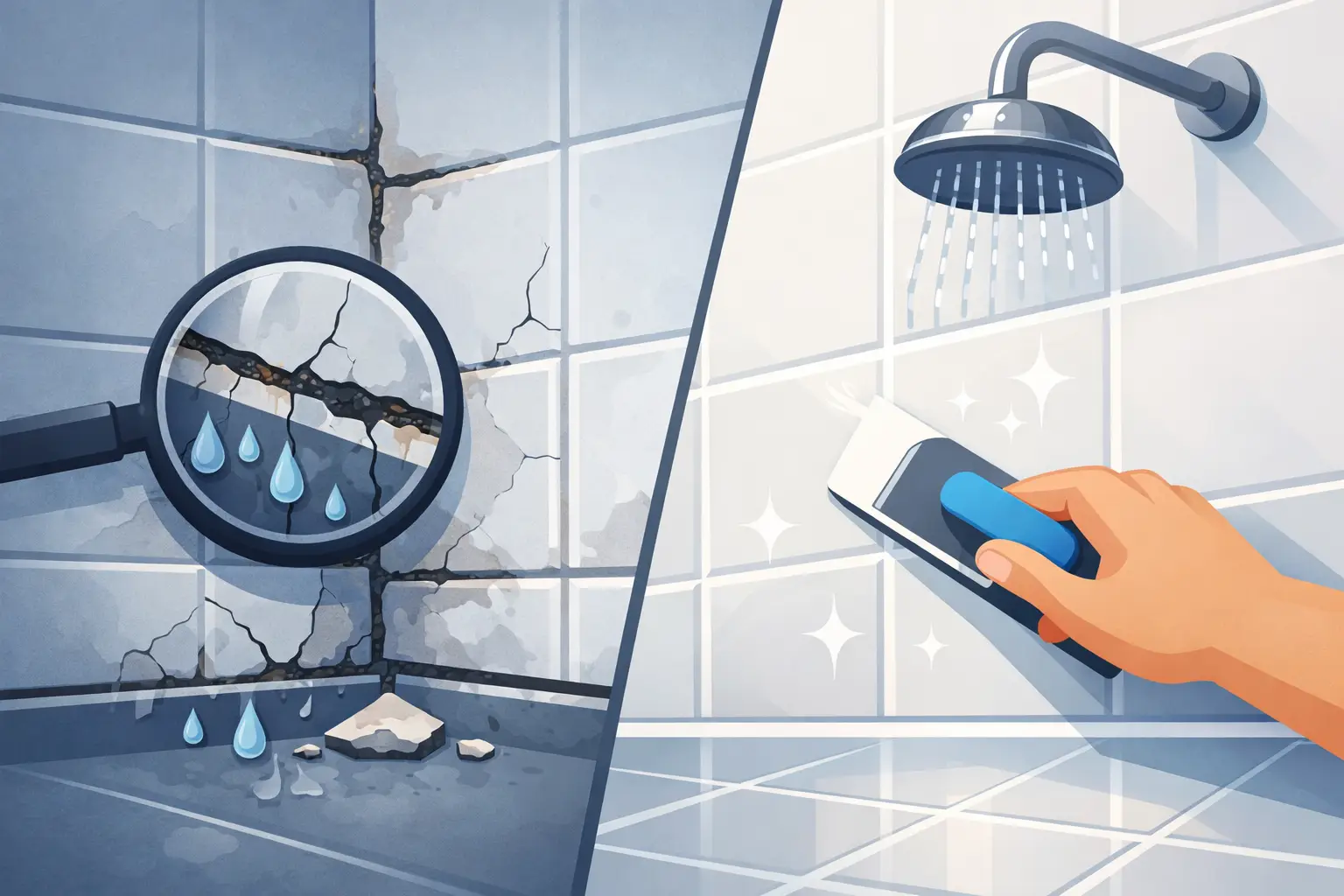
A shower rarely fails all at once. More often, it starts with small warning signs – grout that looks tired, joints that stay dark, a faint musty odour that never quite disappears. The top signs shower needs regrouting are usually visible well before serious water damage sets in, and catching them early can save you from a far more expensive repair later.
Regrouting is not just a cosmetic refresh. In a shower, grout plays a critical role in keeping tiled surfaces stable, sealed and easier to keep hygienic. When it begins to break down, the finish suffers first, but the real concern is what moisture may be doing behind the tiles.
Top signs shower needs regrouting
The clearest sign is cracked or missing grout. If grout lines are breaking apart, crumbling when touched or falling out in sections, the shower is no longer properly protected. Water can start working its way into gaps, especially around corners, wall joints and high-use areas near the mixer and showerhead.
Discoloured grout is another common red flag. Some staining is superficial and can be improved with a professional clean, but persistent yellowing, dark patches or blotchy grout that never looks clean often points to deeper deterioration. When grout becomes porous with age, it traps moisture, soap residue and grime more easily. That affects both appearance and hygiene.
Mould that keeps coming back is one of the strongest indicators that the existing grout and silicone are no longer performing as they should. If you have cleaned the shower properly and mould reappears quickly, especially in corners and along lower joints, the issue may be moisture retention rather than surface dirt. At that point, regrouting can be the more reliable fix.
Loose tiles should never be ignored. Tiles may sound hollow, shift slightly under pressure or feel less secure than they once did. This can happen when water gets behind the tiled surface and compromises the bond. Regrouting alone may not solve every case of tile movement, but it is often part of the wider repair conversation and should be assessed promptly.
When grout problems are more than cosmetic
Many property owners delay shower repairs because the problem still looks manageable. A few cracks or stains can seem minor, especially in an older bathroom. The trade-off is that grout and silicone issues tend to get worse in a wet area, not better.
If paint is bubbling on the wall behind the shower, skirting boards nearby are swelling, or adjoining rooms show signs of damp, the shower may already be leaking. In that situation, damaged grout lines are not just affecting the finish. They may be allowing water to travel into surrounding materials, where repairs become broader and more costly.
A persistent musty odour is another sign worth taking seriously. Bathrooms naturally deal with humidity, but a stale damp smell that lingers even after cleaning and ventilation can suggest hidden moisture. When combined with failing grout, this often means water is getting where it should not.
The visual signs homeowners notice first
For most people, the earliest clue is simply that the shower starts looking old before the rest of the bathroom does. Grout lines may appear patchy, uneven or rough. The joints can shrink slightly, leaving fine gaps at tile edges. Silicone around the base or vertical corners may peel away, split or develop mould that cannot be removed completely.
These details matter because a well-finished shower should look clean, precise and sealed. Once the joints lose that neat, uniform appearance, the shower often feels harder to maintain. You may find yourself scrubbing more often without getting a better result. That is usually a sign the materials have worn beyond what regular cleaning can fix.
In design-conscious bathrooms, deteriorated grout also undermines the overall finish. Even quality tiles can look tired when the joints are stained or broken. Regrouting restores the sharpness of the layout and gives the entire shower a cleaner, more refined appearance.
Top signs your shower needs regrouting versus a simple clean
Not every grout issue means full replacement is required, so this is where experience matters. Surface soap scum, light staining and minor residue can sometimes be resolved with proper cleaning. But if the grout is cracked, powdery, recessed, persistently mouldy or separating from the tile edges, cleaning will not restore its performance.
The difference comes down to condition, not just appearance. Sound grout should be firm, consistent and intact across the tiled area. If it has become soft, brittle or uneven, it has moved past maintenance and into repair territory.
Silicone should also be assessed at the same time. In many showers, failed silicone and failed grout appear together. Replacing one without the other can leave weak points in the system, especially around corners and transitions where movement and moisture are highest.
Why older showers are more vulnerable
Age alone does not mean a shower needs regrouting, but older showers are more likely to show wear in the joints. Daily use, harsh cleaning products, poor ventilation and natural movement in the building all take a toll over time. In investment properties and commercial settings, the wear can show up even faster due to heavier use.
There is also the issue of previous repairs. Some showers have had patch jobs done over the years, with new grout placed over failing sections or silicone applied as a temporary fix. These quick solutions rarely address the full problem. They can even hide water entry points for a while, making the damage harder to track.
A proper assessment looks at the whole shower, not just the worst-looking corner. That includes the grout lines, silicone joints, tile stability and any surrounding signs of moisture movement.
When to act fast
If water is appearing outside the shower area, tiles are loose, grout is actively falling out, or mould returns almost immediately after cleaning, it is time to move quickly. These are not signs to monitor for another six months. They are signs the shower may already be compromised.
Landlords and property managers should be especially careful here. What starts as a maintenance issue can become a larger tenancy problem if leaks affect walls, flooring or neighbouring rooms. Homeowners planning a renovation should also avoid postponing regrouting if the shower is still in regular use. Delaying often turns a targeted repair into a broader bathroom rectification job.
What professional regrouting changes
Professional regrouting does more than improve appearance. It removes failing material, restores joint integrity and helps return the shower to a watertight, hygienic and easier-to-maintain condition. When paired with properly installed new silicone, the result is cleaner lines, better protection and a finish that lifts the entire bathroom.
This is where workmanship matters. Poorly prepared joints or rushed application can shorten the life of the repair. Precision removal, correct product selection and a neat finish all influence how well the shower performs over time. For property owners who want durability as well as presentation, that detail is not optional.
At A1 Grouting & Tiling, the focus is not just on repairing what has failed, but on restoring the shower with a finish that looks sharp and performs properly in daily use.
If your shower has been harder to clean, showing cracks, holding moisture or giving off that unmistakable damp smell, trust what you are seeing. Small grout issues have a habit of becoming bigger structural ones. Acting early gives you more control, a better finish and a far simpler path back to a shower that looks right and works as it should.