 10 years of water leakage warranty for Regrouting showers.

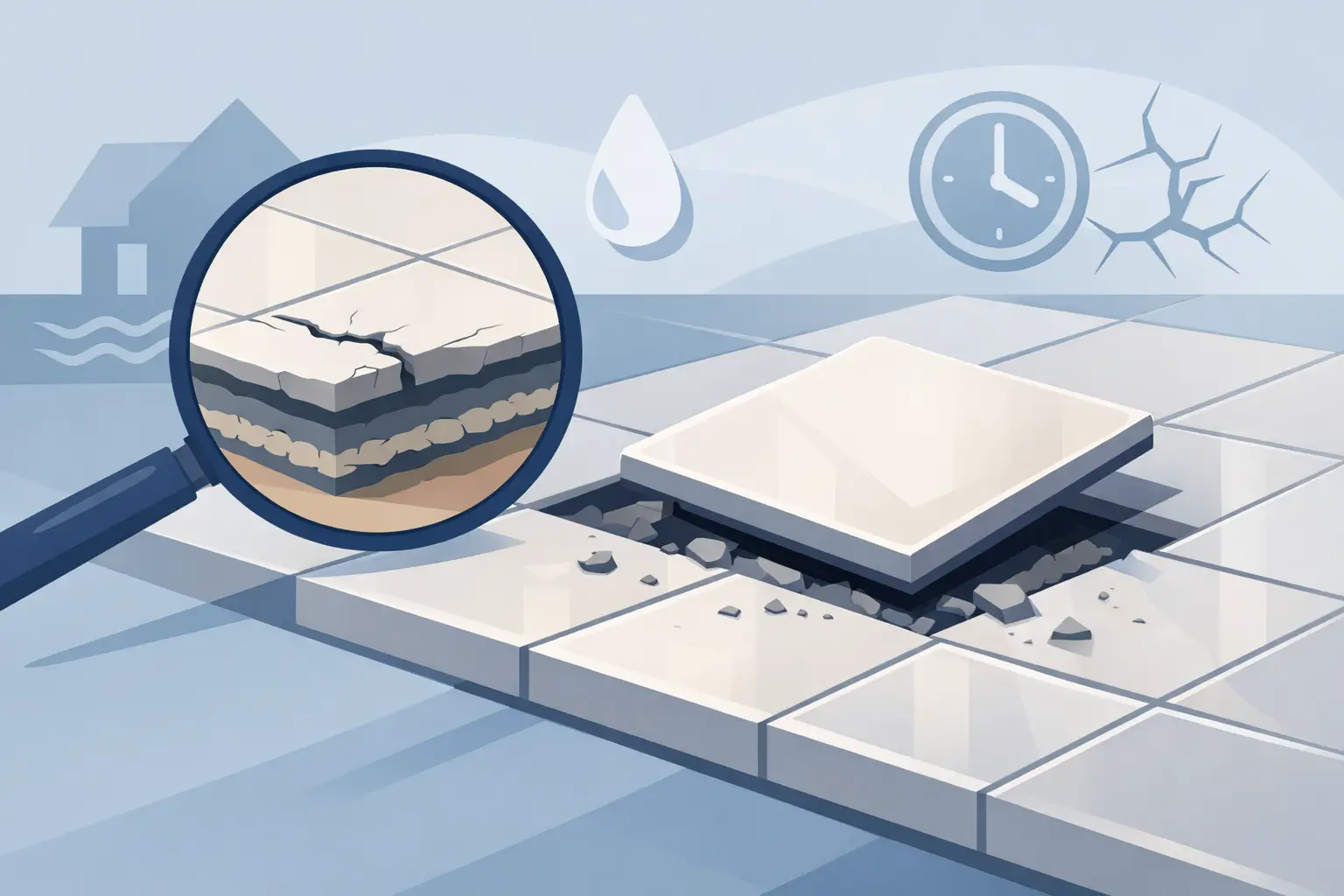
A tiled floor should feel solid underfoot. If a tile sounds hollow, shifts slightly, or lifts at the edge, something in the system has started to fail. When people ask why do floor tiles come loose, the answer is rarely just one issue. It usually comes down to movement, moisture, installation quality, or age – and the right repair depends on which of those is driving the problem.
Loose tiles are more than a cosmetic annoyance. They can crack, create trip hazards, let water travel beneath the surface, and gradually affect surrounding tiles as pressure transfers across the floor. In homes and commercial spaces alike, early attention protects both the finish and the structure beneath it.
Why do floor tiles come loose in the first place?
Tiles do not loosen on their own. They come loose because the bond between the tile, adhesive, substrate, and grout has been compromised. That breakdown can happen slowly over years or quite quickly after a poor installation.
In many cases, the tile itself is still in good condition. The problem sits underneath, where the adhesive may not have bonded properly, the subfloor may be moving, or moisture may have weakened the system. That is why surface patching alone often does not last. A repair needs to deal with the underlying cause, not just press the tile back into place.
Poor adhesive coverage
One of the most common causes is inadequate adhesive coverage beneath the tile. If the adhesive was applied unevenly, used too sparingly, or allowed to skin over before the tile was laid, there may be voids under the surface. Those hollow areas reduce support and create weak points.
Over time, normal foot traffic places repeated stress on the unsupported sections. The tile may begin to sound drummy, then loosen, then crack. This is especially common in high-traffic kitchens, hallways, entry areas, and commercial interiors where the floor works hard every day.
Subfloor movement
Tiles are rigid by nature, but buildings move. Timber subfloors can flex, concrete slabs can shift or crack, and poorly prepared surfaces can settle. If there is too much movement beneath the tiles, the bond will eventually be affected.
This is where preparation matters. A floor may need levelling, crack isolation, appropriate underlay, or the correct adhesive for the substrate. Without that, even an attractive installation can start to fail earlier than it should.
Moisture getting underneath
Water is another major culprit. In bathrooms, laundries, kitchens, balconies, and entry zones, moisture can find its way through damaged grout lines, failed seals, leaking fixtures, or inadequate waterproofing. Once water reaches the adhesive bed or substrate, it can weaken the bond and trigger tile movement.
Moisture problems tend to spread quietly. A single loose tile may be the visible symptom of a broader issue below the surface. If there is also stained grout, musty odours, efflorescence, or recurring mould, it is worth investigating beyond the tile itself.
The installation details that often get missed
Quality tiling is about more than laying tiles straight. The unseen details are what determine long-term performance.
Incorrect adhesive selection is one issue. Different tiles, subfloors, and environments call for different products. A heavy porcelain tile on a busy floor does not perform best with the same approach as a small ceramic tile in a low-traffic area. If the wrong adhesive is used, the floor may initially look fine but struggle over time.
Movement joints are another detail people rarely think about until a problem appears. Floors expand and contract with temperature changes, structural movement, and environmental conditions. Without properly placed movement joints, pressure builds up in the tiled surface. That pressure can cause tiles to debond, tent, or crack.
Then there is curing time. Tiled floors need the right conditions and enough time to set properly before heavy use. If a newly tiled floor is walked on too early, loaded with furniture, or exposed to water before it has cured, the bond can be compromised from the start.
Why do floor tiles come loose years after installation?
Not every loose tile points to a recent installation error. Sometimes the floor has simply reached a point where wear, age, and environmental stress have caught up with it.
Grout can deteriorate over time, allowing more movement between tiles and opening paths for moisture. Adhesives can break down if they were not suitable for the environment. Repeated thermal expansion from sun exposure can place stress on tiled areas near large windows or external doors. Even a well-installed floor can eventually show signs of fatigue if the surrounding conditions are demanding enough.
That said, a properly prepared and professionally installed tiled floor should not start failing prematurely. When tiles loosen unusually early, the cause is often linked to preparation, product choice, or workmanship.
Signs the problem is spreading
A single loose tile is sometimes localised, but it is important to know when it signals a wider problem.
Hollow-sounding tiles nearby are one warning sign. Cracked or powdery grout lines are another. If tiles are lipping, lifting at corners, or moving under pressure, the bond may be failing across a larger section. In wet areas, discoloured grout, mould, or water staining can point to moisture beneath the tile bed.
These signs matter because isolated repairs are only effective when the surrounding floor remains sound. If the substrate is moving or water has affected a broader area, lifting and resetting one or two tiles may not be enough.
Can loose floor tiles be repaired?
Often, yes – but the correct method depends on the cause and extent of the failure. If only a small number of tiles have debonded and the substrate is stable, a targeted repair can restore both appearance and performance. Matching the tile, cleaning out failed material, re-bedding correctly, and regrouting neatly are all part of achieving a finish that looks right and lasts.
If the issue is more widespread, a larger section may need to be lifted so the base can be assessed and corrected properly. Where moisture is involved, simply replacing tiles without addressing the source will usually lead to repeat failures.
This is where experienced assessment makes a difference. A polished result depends on more than making the floor look good on the day. It needs to feel solid, remain aligned, and hold up under real use.
When replacement makes more sense than patching
There is a point where repeated spot repairs stop being cost-effective. If the floor has widespread hollow tiles, multiple cracks, ongoing moisture issues, or an unstable substrate, a more comprehensive renovation may be the smarter investment.
For property owners, this is often a balance between short-term cost and long-term value. A quick patch can be appropriate in the right circumstances. But if the underlying conditions are poor, a proper rebuild gives you a cleaner finish, better durability, and greater confidence that the issue will not return.
In design-led spaces, replacement can also be an opportunity to improve layout, refresh outdated finishes, and create a more cohesive result. Practical repair and visual refinement often go hand in hand.
How to reduce the risk of tiles loosening again
The best prevention starts well before the tile goes down. Sound substrate preparation, the correct adhesive system, suitable movement joints, and clean, precise installation all matter. In wet areas, reliable waterproofing and well-maintained grout lines are essential.
Ongoing care also plays a part. If grout cracks, seals fail, or leaks develop nearby, early repair helps stop moisture from travelling beneath the tiled surface. Heavy impact should be avoided where possible, and any new movement or hollow sound should be checked before the problem spreads.
At A1 Grouting & Tiling, this is exactly why repair work should never be treated as a surface-only job. The finish has to be clean and refined, but the structure beneath it needs equal attention if you want lasting performance.
A loose floor tile is usually the floor’s way of telling you something deeper has changed. The sooner that message is addressed, the easier it is to protect the surrounding area, restore a flawless finish, and keep the space safe, durable, and ready for everyday use.