 10 years of water leakage warranty for Regrouting showers.

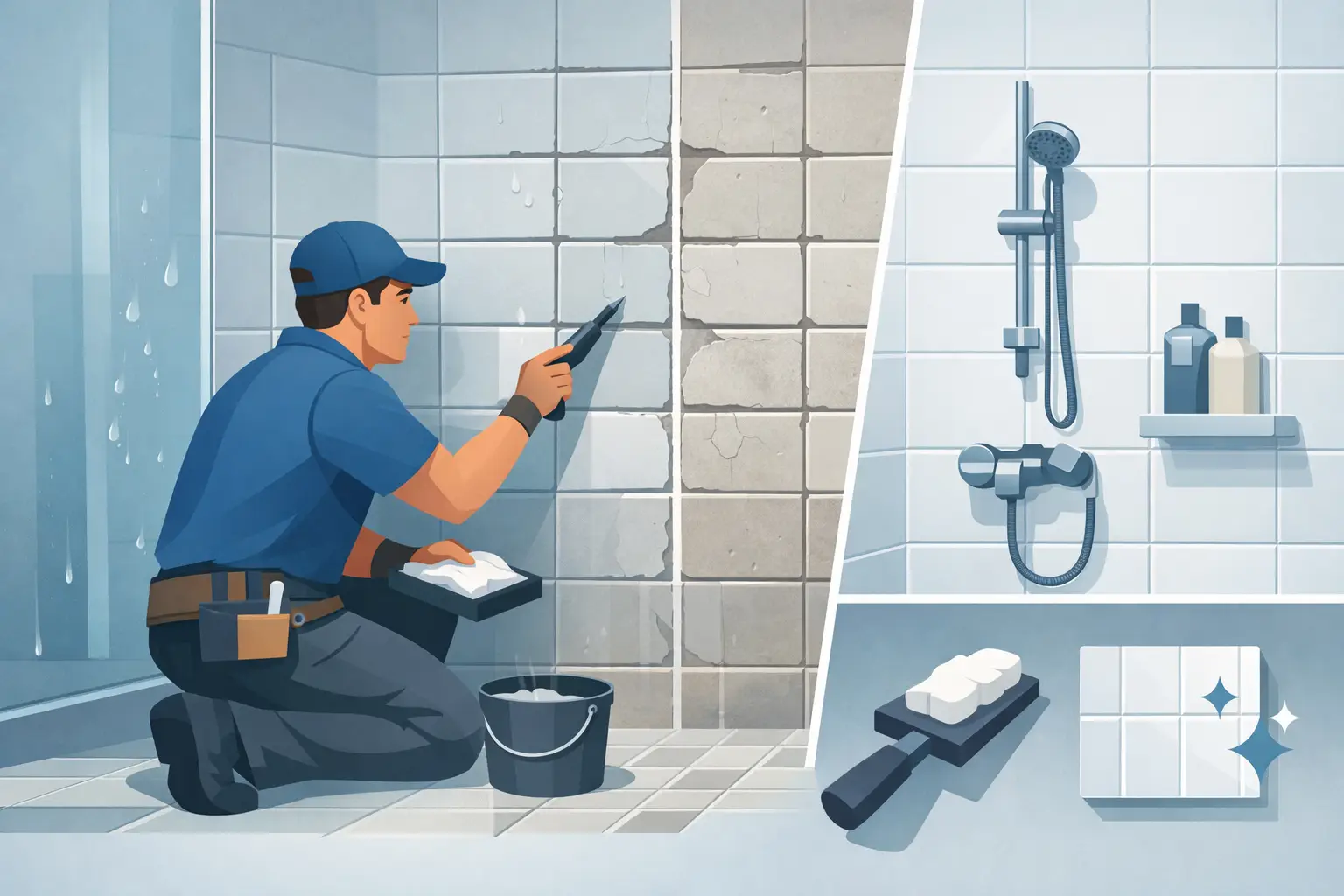
A shower can look clean at a glance and still be quietly failing where it matters most. Cracked grout, missing joints, stained corners and loose silicone are often early signs that water is getting where it should not. That is why shower regrouting specialists are not just there to improve appearance – they help protect the structure behind the tiles, restore hygiene, and extend the life of the bathroom.
For many property owners, the first instinct is to scrub harder or patch a few lines with a store-bought product. Sometimes that buys a little time. More often, it covers the symptom while moisture keeps moving behind the surface. In showers, small grout failures rarely stay small for long.
What shower regrouting specialists actually do
Proper shower regrouting is a corrective trade service, not a cosmetic touch-up. The process starts with removing failed grout and deteriorated silicone, assessing the condition of the tiled surface, and identifying whether the issue is surface level or a sign of broader waterproofing failure.
If the tiles are sound and the substrate has not been compromised, regrouting can be an excellent way to restore the shower without a full renovation. Fresh grout lines improve water resistance, lift the whole look of the bathroom, and make ongoing cleaning easier. New sanitary-grade silicone at movement joints and corners is equally important, because these are common failure points in wet areas.
A specialist also focuses on finish quality. Even grout depth, clean lines, properly tooled silicone and colour consistency all affect the final result. In a bathroom, details are not minor. They are the difference between a repair that looks obvious and one that feels like the shower has been properly renewed.
When to call shower regrouting specialists
Some showers make the need obvious. Others show quieter warning signs that are easy to miss until the damage becomes more expensive to address.
If grout is crumbling, cracking or falling out, the shower needs attention. If silicone is peeling, blackened with mould or separating from the edges, that also points to failed sealing. Damp smells, persistent mould despite regular cleaning, or water marks on adjoining walls can all suggest moisture is escaping the shower area.
There is also the visual side. A shower may no longer leak visibly but still look tired, patchy and unhygienic because the grout has become deeply stained or uneven over time. In those cases, regrouting is often one of the most effective ways to lift the presentation of the bathroom without the cost and disruption of replacing all the tiles.
For landlords and property managers, timing matters. A shower that is borderline functional can quickly become a maintenance issue between tenancies. For homeowners preparing to sell or renovate in stages, regrouting can be a practical upgrade that improves both appearance and confidence in the wet area.
Why specialist workmanship makes a difference
Shower repairs are one of those jobs that can look straightforward until they are done poorly. Surface-level patching often leaves weak joints, uneven colouring, excess residue on tiles or gaps that continue to let water through.
Specialist workmanship matters because showers are high-moisture environments with very little tolerance for shortcuts. The preparation has to be thorough. Old material needs to be removed cleanly. The right grout and silicone need to be selected for the application. The finish has to be neat, but it also has to perform.
There is a technical judgement involved as well. Not every shower is a candidate for regrouting alone. If tiles are drummy, movement is excessive, or there are signs of underlying membrane failure, a responsible specialist will say so. That honesty matters just as much as the repair itself, because a good result depends on treating the real problem rather than selling the quickest fix.
Regrouting versus renovation
This is where many clients pause, and fairly so. If a shower is looking tired, is regrouting enough, or is it better to start over?
The answer depends on the condition of the existing tiles and what sits behind them. If the tile layout still suits the space, the surface is stable, and the problem is limited to failed grout and silicone, regrouting is often the smarter option. It is more cost-effective, less disruptive and faster than a full bathroom renovation.
If tiles are loose, badly installed, outdated to the point that presentation is a priority, or there is evidence of significant structural water damage, renovation may be the better long-term path. A quality specialist will help separate these two scenarios clearly. The goal should never be to push the biggest job. It should be to recommend the work that will actually hold up.
The benefits go beyond stopping leaks
Most people start thinking about regrouting because they want to stop water damage. That is reason enough, but it is not the only benefit.
A professionally regrouted shower is easier to keep clean because fresh joints are smoother, more consistent and less likely to trap grime. The bathroom feels newer because the eye notices clean grout lines immediately, even more than it notices the tiles themselves. In many homes, regrouting delivers a visible transformation without changing the overall design.
It also supports hygiene. Old, porous or damaged grout can harbour mould and bacteria, especially around corners and base joints. Replacing those failed sections helps create a cleaner, healthier wet area.
For commercial properties, presentation and reliability carry equal weight. Whether it is a residential block, hospitality setting or managed accommodation, worn shower joints undermine the standard of the whole space. Precision regrouting helps maintain that standard while avoiding the downtime of larger works where they are not necessary.
What to expect from a quality regrouting service
A professional service should feel organised from the first inspection through to the final clean-up. That includes clear advice on suitability, realistic expectations around outcome, and careful workmanship on site.
The best results come from a methodical approach. Failed grout is removed properly rather than skimmed over. Silicone is stripped and replaced neatly. Surfaces are prepared with care. The grout chosen should suit the environment and the condition of the existing tiled area. Once complete, the shower should not just look better. It should feel solid, clean and professionally finished.
Clients should also expect practical guidance on curing times and aftercare. Using the shower too early, cleaning it with harsh products or ignoring ventilation issues can shorten the life of even well-executed work. Good trades do not simply finish the job and leave – they set the repair up to perform.
Where warranty-backed workmanship is offered, that adds an extra layer of confidence. In a wet area, accountability matters. It shows the work is being carried out with long-term performance in mind, not just a quick visual improvement.
Choosing the right shower regrouting specialists
Not every tiler or handyman is equipped for detailed shower restoration work. When choosing shower regrouting specialists, look for a provider that understands both function and finish. The technical side matters because the shower has to resist moisture. The visual side matters because poor detailing is obvious every day.
Experience in wet-area repairs is essential, but so is pride in presentation. Clean lines, tidy joints, colour-matched finishes and respect for the surrounding bathroom all speak to the standard of workmanship. A company such as A1 Grouting & Tiling builds trust by treating regrouting as a specialised service, not an afterthought.
It also helps to choose a team that communicates plainly. You want a clear assessment, not vague reassurance. If regrouting is the right fix, they should explain why. If the shower needs more extensive work, they should be upfront about that too.
A practical upgrade with lasting value
In many bathrooms, the tiles themselves are not the problem. The failure happens in the joints, corners and seals that hold the system together. Regrouting addresses that weak point directly, and when done well, it restores both performance and appearance in a way that feels immediate.
A shower should be easy to maintain, pleasant to use and built to handle daily wear without constant concern. If yours is showing signs of age, leakage or mould, acting early usually gives you more options and a better result. The right repair, carried out with precision, can give the whole space a cleaner finish and a longer life.