 10 years of water leakage warranty for Regrouting showers.

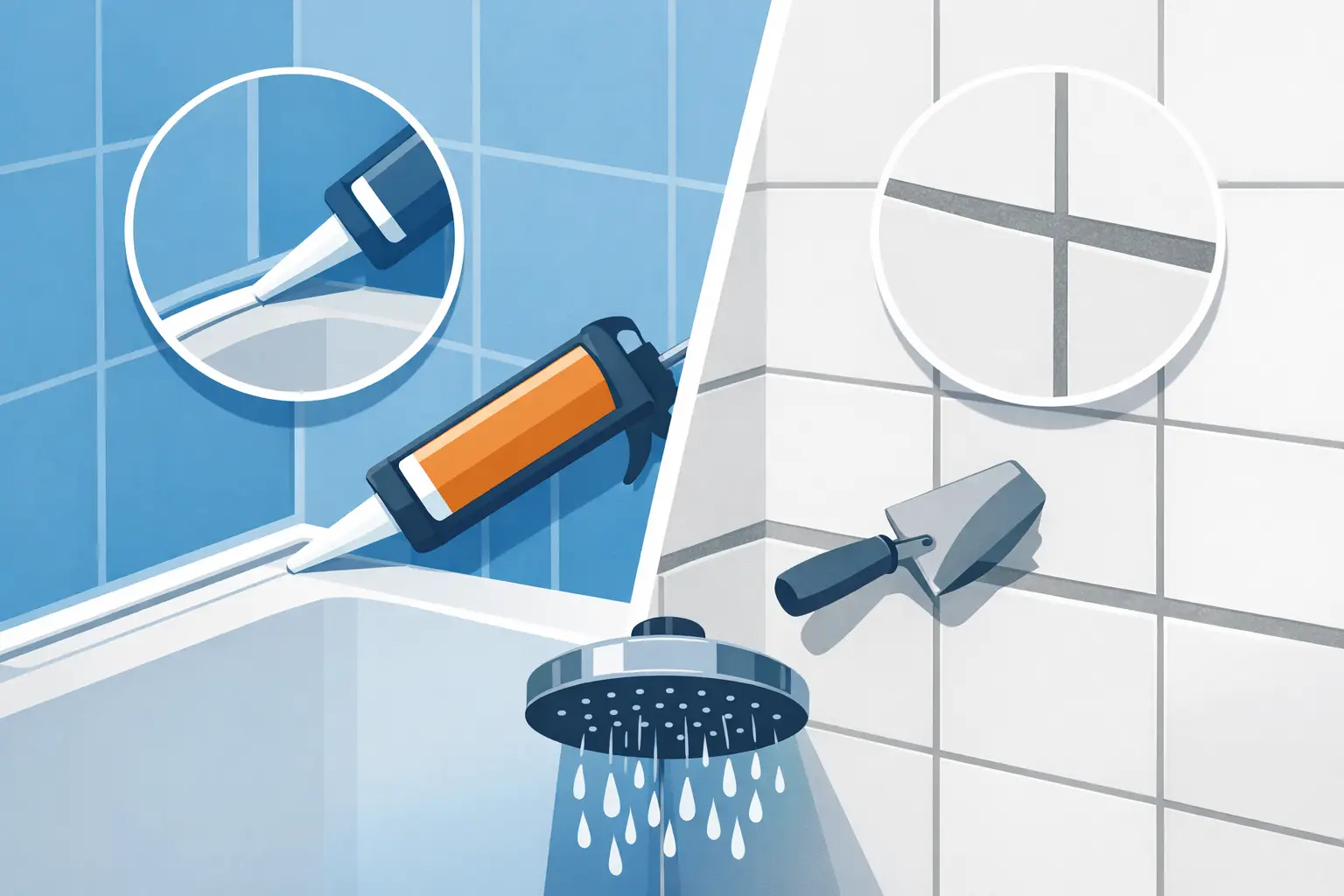
A shower can look perfectly tiled and still fail where it matters most. In many bathrooms, the real trouble starts at the joints – corners cracking, edges darkening, and water finding a path behind the surface. That is why shower silicone vs grout is not a cosmetic question. It affects waterproofing, movement, hygiene, and how long your shower stays sound.
For homeowners and property managers, the confusion is common. Both materials fill gaps. Both are visible. Both can make a shower look neat when freshly applied. But they do very different jobs, and using the wrong one in the wrong place is one of the most common causes of early shower deterioration.
Shower silicone vs grout: the core difference
Grout is designed to fill the joints between tiles. It locks the tiled surface together visually, supports a clean finished layout, and helps protect the edges of the tiles. In showers, it is usually used in the regular spacing between wall tiles and floor tiles.
Silicone, by contrast, is a flexible sealant. It is made to handle movement and maintain a watertight seal in areas where rigid materials will eventually crack. In a shower, that matters most at internal corners, wall-to-floor junctions, and around fittings where different surfaces meet.
The simplest way to think about it is this: grout is for tile joints on the same plane, while silicone is for changes of plane and movement joints. One provides a crisp, durable fill between tiles. The other absorbs slight structural movement without splitting open.
Why grout should not replace silicone
A shower is not static. Buildings settle, frames expand and contract, and everyday use creates vibration and stress. Even a well-built bathroom has minor movement over time. Grout is rigid, so when it is installed in corners or junctions that move, it often cracks.
Once that crack appears, water and soap residue can work their way into the gap. At first, it may look minor. Then you start noticing discolouration, mould, loose edges, or persistent damp smells. In some cases, failed joints contribute to much larger repair work later.
This is where precision matters. A shower can have excellent tiles and quality grout, but if rigid grout has been used where flexible silicone belongs, the finish is already under pressure.
Why silicone should not replace grout everywhere
The opposite mistake is just as problematic. Some people see silicone as the more waterproof option and assume it should be used across all tiled joints. That creates a different set of issues.
Silicone does not deliver the same clean, uniform tiled finish that grout does across full surfaces. It can look uneven over larger joint runs, attract soap scum more readily, and make the overall tile work appear less refined. It is also not intended to perform as the primary filler between every tile in a standard shower layout.
From a finish perspective, grout gives tiled walls and floors their structure and visual definition. When installed properly, it complements tile alignment, pattern, and spacing in a way silicone simply does not.
Where grout belongs in a shower
Grout should be used between tiles on flat, continuous surfaces. That includes wall tiles lined up across the same face and floor tiles laid on the same plane. These joints benefit from grout’s firm set, clean lines, and colour consistency.
Well-installed grout helps create the finished look people expect from quality tiling. It frames each tile neatly, supports the design, and contributes to a more polished appearance overall. In practical terms, it also makes the tiled area easier to maintain when the joints are sound and properly sealed where required.
That said, not all grout performs equally. Older cement-based grout can become porous, stained, or brittle over time, particularly in heavily used showers. When this happens, regrouting can restore both function and appearance, provided the underlying issue is addressed and the correct junctions are sealed with silicone.
Where silicone belongs in a shower
Silicone should be applied where two surfaces meet and movement is expected. In most showers, that means vertical internal corners, the join where wall tiles meet floor tiles, and around penetrations or fixtures that require a flexible seal.
These areas are under more stress than standard tile joints. A flexible sealant allows the shower to move slightly without breaking the seal. That is the reason silicone remains a standard part of quality shower finishing and repair.
It also plays an important visual role when done properly. A neat silicone line should look deliberate, clean, and well matched to the tiled finish. Poorly applied silicone stands out immediately. Good silicone work disappears into the design and protects the shower at the same time.
What usually fails first
In many older showers, silicone is the first visible point of failure. It may peel, shrink, trap mould, or lose adhesion at the edges. That does not mean silicone is the weak option. More often, it means it has aged, been installed poorly, or is trying to compensate for movement and moisture issues around it.
Grout failure shows up differently. You may see cracking, hollow spots, missing sections, powdering, or stains that never fully lift. Once grout deteriorates, water can start travelling into places it should not.
The real issue is not choosing one material over the other. It is making sure each material is doing the job it was designed for.
The hygiene factor most people overlook
Bathrooms are judged quickly by how clean they feel. Stained grout lines and blackened silicone can make even a modern shower look tired. That is one reason this topic matters beyond waterproofing.
Grout can hold onto soap residue, minerals, and grime if it is old or porous. Silicone can develop mould on the surface, especially when ventilation is poor or cleaning has been inconsistent. In both cases, deterioration affects hygiene and appearance at the same time.
For landlords and commercial property managers, this is particularly important. A shower that looks neglected can undermine the presentation of the whole space. Restoring grout and replacing failed silicone often delivers a more immediate visual improvement than people expect.
When a repair is enough and when it is not
If the tiles themselves are sound and the waterproofing system has not been compromised, replacing mouldy silicone and regrouting worn joints can significantly extend the life of a shower. This is often the most practical path when the problem is surface-level deterioration rather than structural failure.
However, it depends on what is happening beneath the finish. Loose tiles, persistent leaks outside the shower area, swelling skirtings, or movement in the substrate may point to issues that go beyond cosmetic repairs. In those cases, simply applying new grout or silicone over the top will not deliver a lasting result.
A proper assessment matters. Clean removal, precise preparation, and correct product selection are what separate a short-term patch-up from a durable repair.
Choosing the right finish for long-term performance
The best shower finish is never just about appearance, but appearance does matter. Crisp grout lines, smooth silicone joints, and accurately finished edges create a bathroom that feels clean, well built, and easier to maintain.
That is where specialist workmanship makes a difference. Matching the right grout colour, selecting mould-resistant sanitary silicone, and applying each material exactly where it belongs protects both the design and the structure of the shower. For a brand like A1 Grouting & Tiling, that balance between durability and finish quality is not an extra. It is the standard the work should meet.
So, which is better?
If the question is shower silicone vs grout, the honest answer is neither works better on its own. They are not competing products. They are complementary materials with different roles.
Grout is better between tiles on the same surface because it creates a firm, clean, consistent finish. Silicone is better at corners and junctions because it stays flexible and helps maintain a watertight seal where movement occurs.
Problems start when one is expected to do the other’s job. That is when showers begin to crack, stain, leak, or lose their finish sooner than they should.
If your shower has cracked corners, mouldy joints, or tired grout lines, the right fix is usually not more product. It is a more precise application of the right material in the right place. Get that right, and your shower will not just look better – it will perform the way it was meant to.