 10 years of water leakage warranty for Regrouting showers.

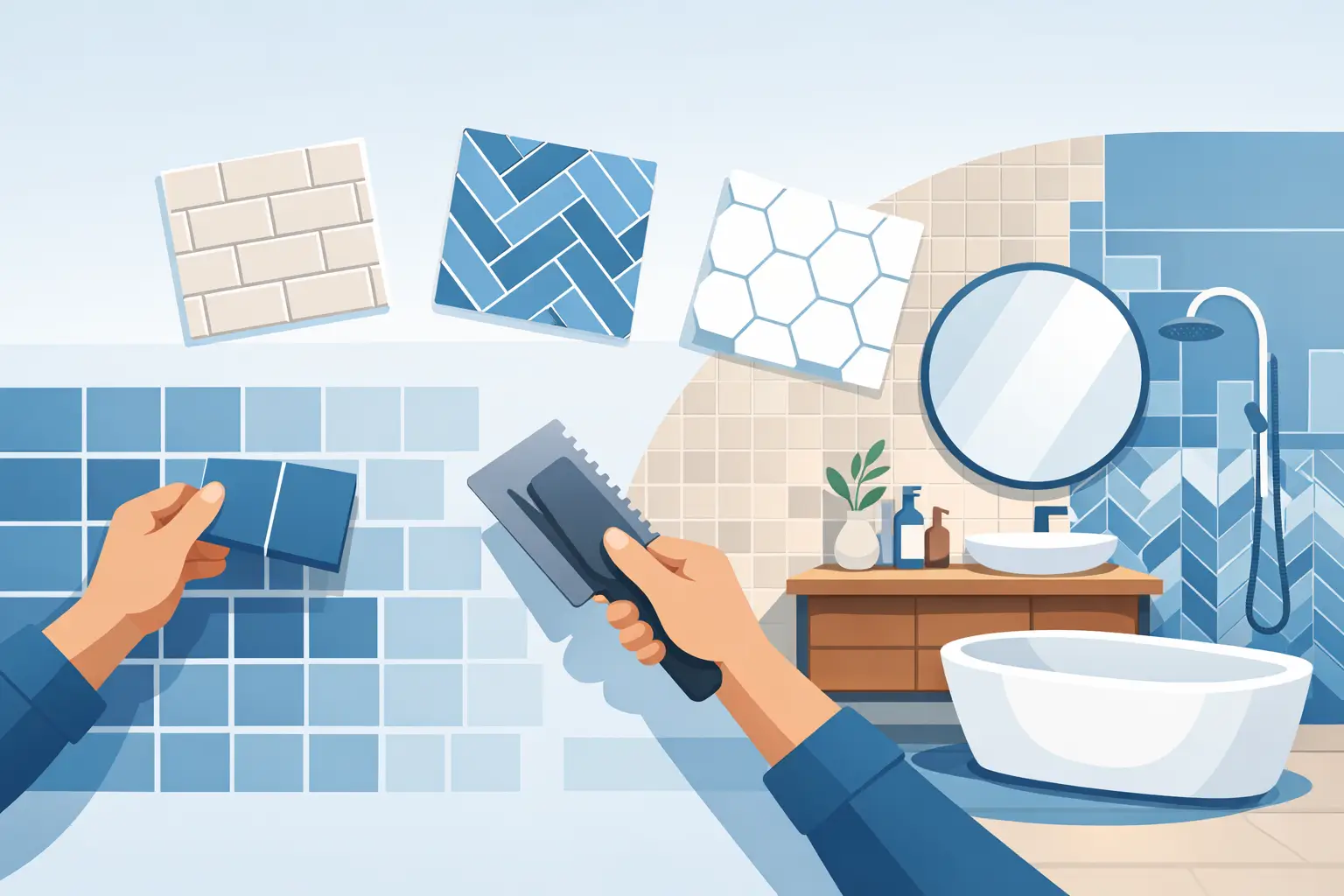
A bathroom can look newly renovated on paper and still feel ordinary the moment you walk in. Quite often, the difference comes down to layout. Custom bathroom tile layouts change how a space reads, how large it feels, and how well it performs over time. The right pattern does more than add visual interest – it supports drainage, reduces awkward cuts, and gives the whole room a cleaner, more considered finish.
For homeowners and renovators, that matters. Bathrooms are high-use spaces where every detail is exposed to moisture, cleaning products and daily wear. A tile layout that looks striking in a showroom may not suit the dimensions, fixtures or fall requirements of your actual bathroom. That is where precision and planning become just as important as tile choice.
Why custom bathroom tile layouts make such a difference
Standard grid layouts have their place. They are clean, practical and often cost-effective. But they are not always the best answer, especially in bathrooms with niches, feature walls, tight floor areas or unusual room proportions.
A custom layout allows the tile pattern to work with the room rather than against it. In a narrow bathroom, a horizontal stack bond can visually widen the space. In a bathroom with a low ceiling, vertically laid rectangular tiles can help create more height. A carefully centred pattern behind a vanity or inside a shower recess can turn a functional wall into a proper focal point.
There is also a practical advantage. When layout is planned properly from the start, cuts can be balanced at edges, grout lines can align across surfaces, and transitions between floor and wall tiles can feel intentional instead of improvised. These details are what separate an average tiling job from a polished finish.
Choosing a layout that suits the room
Not every bathroom suits the same tile pattern. The best result depends on the room size, natural light, tile dimensions, fixture placement and the level of visual detail you want.
Stack bond for a clean architectural look
Stack bond is one of the most precise-looking options. Tiles line up directly over one another, creating a crisp, modern effect. It works especially well with rectified tiles and minimalist bathrooms where clean lines are part of the design.
The trade-off is that stack bond leaves little room to hide inconsistency. If the substrate is out, if tile sizes vary, or if installation lacks precision, it shows quickly. This layout demands accurate set-out and a very steady hand.
Brick bond for softer movement
Brick bond, also known as offset laying, is familiar and versatile. It softens the look of rectangular tiles and can make a bathroom feel less rigid. It suits classic and contemporary spaces, depending on tile style.
That said, large format tiles in a half-offset pattern can create lippage if the tiles have even a slight bow. In many bathrooms, a one-third offset is the smarter choice. It keeps the look while reducing height variation between tile edges.
Herringbone for feature areas
Herringbone adds movement and detail without relying on bold colours or busy finishes. It is often used on shower feature walls, splashback areas or bathroom floors where a more decorative touch is wanted.
It is also more labour-intensive. There are more cuts, more alignment points to check and less tolerance for error. When done well, it looks exceptional. When rushed, it can look uneven very quickly.
Large format layouts for a streamlined finish
Large format tiles can make a bathroom feel open, calm and easier to maintain because there are fewer grout joints. They are a strong option for modern renovations and commercial fit-outs where a refined, low-maintenance finish matters.
The challenge is that larger tiles require flatter surfaces and careful handling. On bathroom floors, especially in shower areas, fall and drainage still need to work properly. Sometimes the best solution is to use large format tiles on main areas and smaller tiles or custom-cut pieces where floor gradients become more complex.
The role of symmetry, set-out and grout lines
A beautiful tile means very little if the layout starts in the wrong place. One of the most common issues in bathrooms is poor set-out, where tiny slivers of tile end up at corners, around niches or beside door frames. It makes the whole room feel off balance.
Good custom bathroom tile layouts begin with measured planning. That includes identifying the main sight lines, deciding where full tiles should sit, and working out how the pattern finishes at walls, edges and fixtures. In many bathrooms, the centre point is not the geometric centre of the room. It may be the vanity wall, the shower entry or the rear wall you see first when the door opens.
Grout line placement matters too. Consistent spacing gives the installation rhythm and order. Aligning grout joints between wall and floor tiles, or carrying lines neatly through a niche, creates a far more refined result than most people expect. These details are subtle, but they are exactly what make a bathroom feel professionally finished.
Layout should support waterproofing and maintenance
Design matters, but bathroom tiling is not just about appearance. Layout decisions affect maintenance, cleaning and long-term durability.
Smaller mosaic tiles on shower floors, for example, offer better slip resistance and can follow falls more easily. Larger tiles may look sleeker, but if they are not cut and laid correctly, drainage can suffer. Water that pools instead of running cleanly to the waste is not a styling issue – it is a performance issue.
The same goes for grout joints and transitions. More intricate layouts often mean more grout, which can mean more cleaning over time. That does not make them the wrong choice, but it is worth weighing beauty against upkeep. In family bathrooms, investment properties and commercial settings, many clients prefer layouts that still look custom without creating unnecessary maintenance.
This is where experienced installation makes a real difference. Precision tiling is not only about straight lines. It is about setting out a layout that respects movement joints, substrate condition, waterproofing details and the realities of daily use.
Where custom layouts have the biggest impact
Not every surface needs a complex pattern. In many bathrooms, the most effective approach is selective customisation.
A feature wall inside the shower can add character without overwhelming the room. A vertically stacked layout behind the vanity can create a strong visual anchor. A framed niche with aligned grout joints can make a practical detail feel integrated rather than added on later.
Floor layouts can also shift the whole mood of a bathroom. A diagonal set can make a smaller room feel broader. A herringbone floor can bring texture and movement to a neutral scheme. A continuous tile line from floor into shower can help the space feel larger and more cohesive.
The best result often comes from restraint. One standout layout, supported by quieter surrounding tiles, usually feels more premium than trying to make every wall a feature.
What to avoid when planning custom bathroom tile layouts
A custom look should still feel resolved. One of the biggest mistakes is choosing a pattern before considering tile size and room proportions. A layout may look excellent in a sample photo but become too busy, too cut up or too hard to execute in a compact bathroom.
Another issue is ignoring fixture placement. Vanities, tapware, mirrors and niches all interrupt the tile field. If these are not considered early, even expensive tiles can end up looking awkwardly placed. The strongest bathrooms are designed with these elements together, not one after the other.
It is also worth being realistic about installation quality. Some layouts are forgiving. Others are not. If you are investing in a custom pattern, it needs to be installed with proper preparation, accurate levelling and careful finishing. That is where workmanship protects both the visual result and the long-term performance.
For clients who want a bathroom that looks sharp and stays that way, the value is in getting the fundamentals right first. At A1 Grouting & Tiling, that means combining design-conscious set-out with the practical standards needed for wet areas, durability and easy maintenance.
A layout should feel intentional, not just different
The strongest bathroom finishes are the ones that still look right years later. Trends change, but proportion, balance and quality installation hold their value. Custom does not have to mean complicated. It means the layout has been considered for your room, your tile choice and the way the space will actually be used.
If you are planning a bathroom upgrade, think beyond the tile itself. The pattern, alignment and finish quality will shape the result every bit as much as colour or material. When the layout is right, the bathroom feels cleaner, sharper and far more complete from the moment you step inside.