 10 years of water leakage warranty for Regrouting showers.

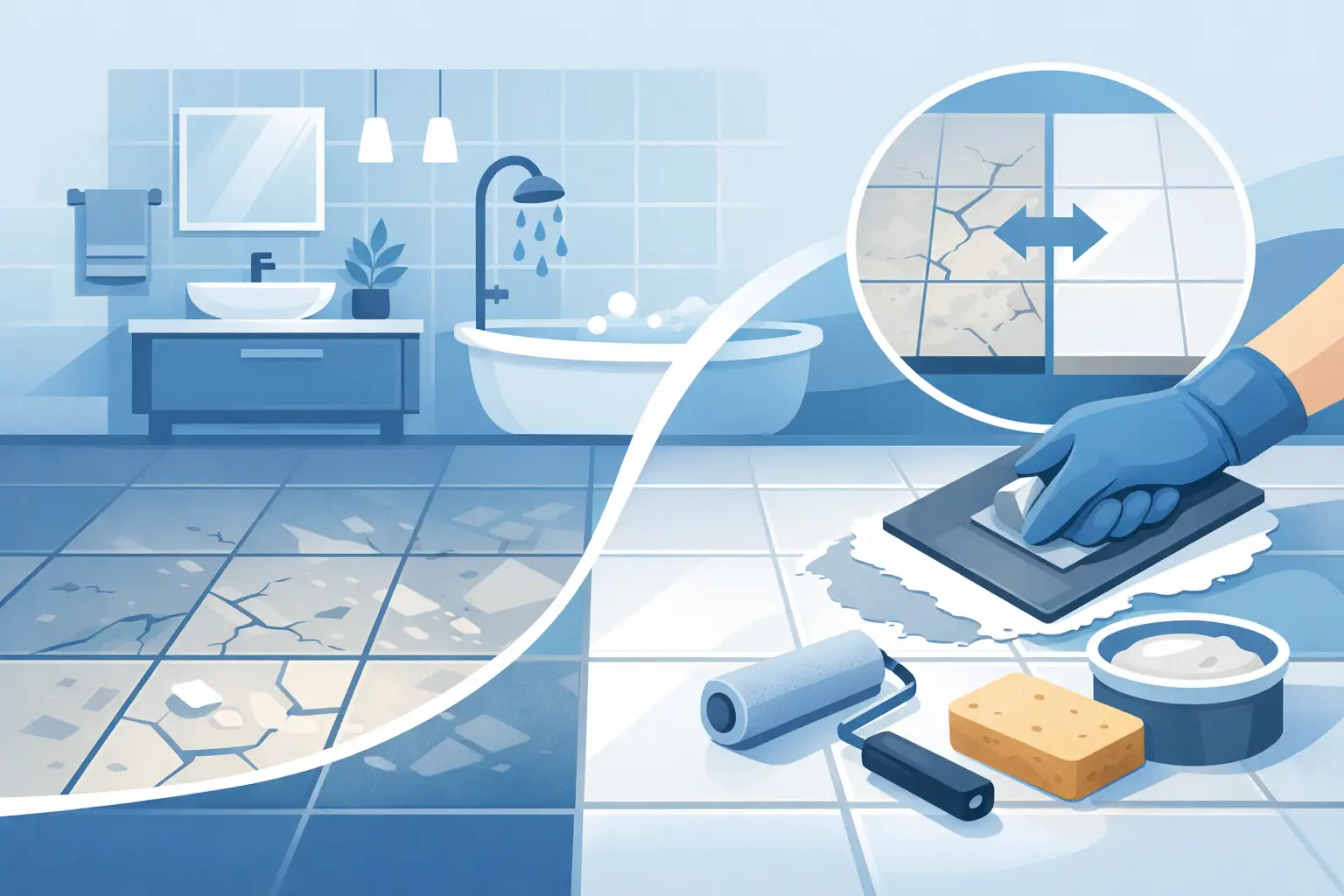
A bathroom floor can make the whole room feel tired long before the fittings actually fail. Stained grout, chipped glaze, dull tiles and years of cleaning products can leave the surface looking dated even when the floor is still structurally sound. That is where bathroom floor tile resurfacing comes into the picture. Done in the right setting, it can lift the look of a bathroom without the disruption of a full strip-out.
The key phrase there is in the right setting. Resurfacing is not a magic fix for every bathroom floor, and that is where many property owners get caught out. A finish may look impressive on day one, but if the substrate is moving, the grout is failing or moisture has already worked its way underneath, cosmetic improvement alone will not last.
What bathroom floor tile resurfacing actually means
Bathroom floor tile resurfacing usually refers to renewing the visible surface of existing tiles rather than removing and replacing them. Depending on the condition of the floor, that might involve deep cleaning, stain removal, grout restoration, minor tile repairs, surface preparation and the application of a specialised coating or refinishing system.
In some cases, people use the term more loosely to describe a broader bathroom floor refresh. That can include regrouting, replacing isolated damaged tiles, repairing loose sections and restoring the overall appearance so the floor presents like new. From a workmanship point of view, this distinction matters. A coating can improve appearance, but the long-term result depends on what sits underneath it.
A well-assessed resurfacing project starts with the floor’s condition, not the desired colour chart. If the tile bed is stable and the existing tiles are still well bonded, resurfacing may be a sensible option. If there is movement, drummy tiles, cracked grout across multiple joints or signs of water penetration, repair or replacement is often the smarter investment.
When resurfacing is a smart option
The best candidates for bathroom floor tile resurfacing are floors that are cosmetically tired but fundamentally sound. The tiles may be dated in appearance, the grout may be discoloured and the finish may have lost its original crispness, yet the floor remains solid underfoot.
This can make resurfacing appealing for homeowners preparing a property for sale, landlords wanting to improve presentation between tenancies, or renovators working within a tighter budget and timeline. It can also suit commercial amenities where downtime needs to be kept to a minimum.
The value is not just cost. There is also less demolition, less mess and less interruption to surrounding finishes. In an occupied property, that can be a practical advantage. If the bathroom floor ties into existing wall tiles, vanities or door clearances that are staying in place, resurfacing may avoid the knock-on complications that come with full replacement.
Still, the success of the job depends on restraint as much as ambition. Good resurfacing improves what is already serviceable. It should not be used to hide defects that will continue to worsen.
When bathroom floor tile resurfacing is the wrong fix
There are floors that simply need more than a cosmetic refresh. If tiles are loose, hollow sounding or cracked through the body, if the grout is breaking down across large sections, or if moisture issues are causing ongoing deterioration, resurfacing is unlikely to perform as intended.
Bathrooms are wet areas, and floors deal with regular expansion, contraction, cleaning chemicals and foot traffic. A coating or refinished surface needs a stable base to bond properly. Any movement below the surface can lead to peeling, cracking or premature wear.
Older bathrooms also deserve closer scrutiny. What looks like a simple ageing issue can sometimes point to waterproofing failure or long-term moisture exposure. In that case, resurfacing may improve the look briefly while the underlying problem remains unresolved. For owners planning to stay in the property, that usually becomes a false economy.
This is why an honest assessment matters more than a fast quote. A quality-focused contractor should tell you when resurfacing is suitable and when a proper repair or retile is the more durable path.
The steps that shape a durable result
Surface restoration is won or lost in preparation. The visible finish gets the attention, but the prep work determines whether that finish holds up in real bathroom conditions.
The process usually begins with a close inspection of tile adhesion, grout integrity and any signs of moisture damage. The floor then needs a thorough clean to remove soap residue, body oils, mineral build-up and old sealers. Without this stage, coatings and repair materials cannot bond consistently.
Any cracked or missing grout should be dealt with before resurfacing moves ahead. Likewise, isolated broken tiles may need replacing, and minor chips may need specialist repair. If these details are skipped, the finished floor may look improved from a distance but still feel compromised up close.
After cleaning and repair, the tile surface is prepared to accept the new finish. The exact method depends on the material and resurfacing system being used, but the aim is always the same – create a clean, stable, properly keyed surface. Only then should the final resurfacing product be applied.
Curing time is another point worth respecting. Property owners understandably want the bathroom back in use quickly, but rushing re-entry can mark the finish before it has fully hardened. A polished result depends on both skilled application and disciplined aftercare in the first days.
Appearance matters, but so does slip resistance
A refreshed bathroom floor should look sharper, cleaner and more current. That said, bathrooms are practical spaces first. Any resurfacing decision should consider how the floor will perform when wet, how easy it will be to maintain and whether the finish suits the rest of the room.
Gloss can look striking, but it is not always the best fit for a floor. In many bathrooms, a softer satin or low-sheen finish offers a more balanced result, giving the room a clean, refined appearance without exaggerating water marks or increasing slip concerns.
Colour choice deserves care as well. Lighter finishes can brighten a bathroom and make it feel more spacious, but they may show grime differently depending on the tile profile and grout lines. Darker tones can add contrast and sophistication, though they can also highlight soap residue if the bathroom is not well ventilated.
A craftsmanship-led approach weighs these details properly. The goal is not just a floor that photographs well on completion day, but one that continues to present well with ordinary use.
Resurfacing versus retiling
For some clients, the real question is not whether resurfacing works, but whether it makes more sense than replacement. The answer depends on budget, condition and long-term plans for the property.
Resurfacing is generally faster and less invasive. It suits bathrooms where the layout is staying the same and the existing tiled floor is still in decent condition. It can be a practical way to improve visual appeal without opening up a larger renovation.
Retiling, however, offers a clean slate. It is usually the better option where there are structural issues, waterproofing concerns, widespread damage or a clear need for a full design upgrade. It also allows for changes in tile format, pattern, level correction and a completely new finish standard.
Neither choice is automatically better. The right one depends on whether the floor needs transformation at surface level or correction at construction level.
Choosing the right specialist
Bathroom floor work asks for more than a general makeover mindset. It needs a tradesperson who understands tile behaviour, grout performance, moisture risk and finish quality. That combination matters because bathrooms punish poor workmanship quickly.
When you speak with a specialist, ask how they assess suitability, what preparation is included and what result you can realistically expect. If the discussion jumps straight to appearance without addressing substrate condition, that is a warning sign.
Experienced operators know that durability and presentation go together. At A1 Grouting & Tiling, that standard starts with precision preparation and ends with a finish that feels clean, intentional and built to last.
Making the right call for your bathroom floor
Bathroom floor tile resurfacing can be a worthwhile solution when the floor is sound, the expectations are realistic and the work is carried out with proper care. It can refresh the room, reduce disruption and extend the life of a surface that still has good bones.
But the best result does not come from covering problems. It comes from identifying them early, choosing the right level of repair and giving the floor the attention it actually needs. If your bathroom feels worn out, start with the condition of the tiles, not just the finish you want to see. That is usually where a better result begins.