 10 years of water leakage warranty for Regrouting showers.

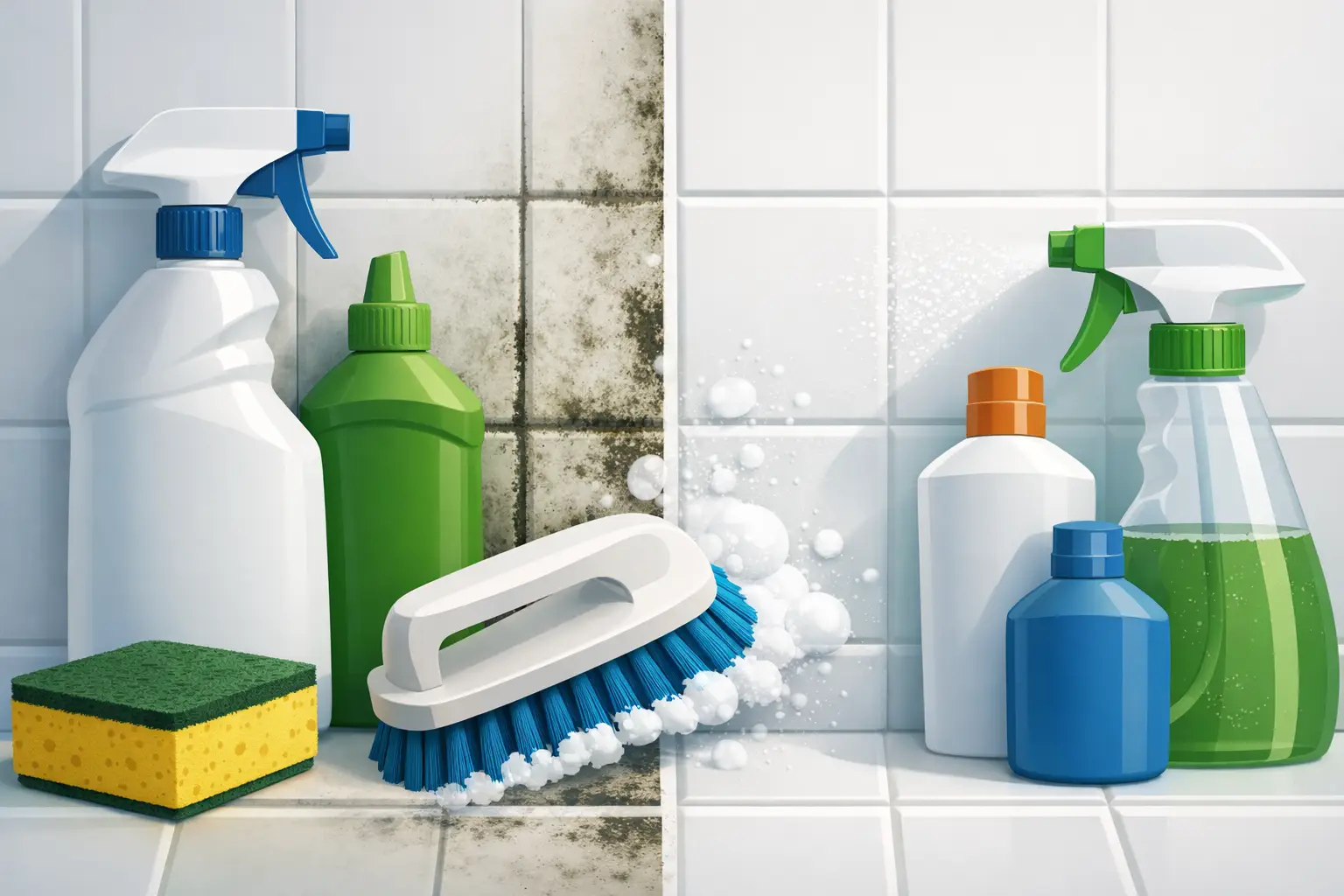
A shower can look freshly tiled and still feel unclean if the grout lines are spotted with mould. That is why homeowners and property managers often start by searching for the best grout cleaners for mould – not just something strong, but something that lifts staining without damaging the finish or making the problem worse a week later.
The catch is that mould in grout is not always a simple surface issue. Sometimes it is light growth sitting on soap residue. Sometimes it has worked into porous, ageing grout that has already started to break down. The right cleaner helps, but the best result depends on matching the product to the condition of the grout, the type of tile, and how far the contamination has spread.
What makes the best grout cleaners for mould actually effective?
A good mould cleaner does two jobs at once. It removes visible staining and it treats the organic growth causing the discolouration. If it only bleaches the surface, the grout may look cleaner for a few days while the underlying issue remains.
In bathrooms, this matters most around showers, corners, wall-to-floor junctions and any area that stays damp. Grout is naturally more porous than tile, so it holds moisture more easily. Once ventilation is poor or old sealant starts to fail, mould has exactly the environment it needs.
The best products are usually built around one of three approaches. Chlorine bleach gives fast whitening and strong stain removal. Oxygen bleach is gentler and better for households wanting a lower-odour option. Alkaline or specialty mould removers are often designed to break down soap scum, body oils and residue at the same time, which matters because mould rarely grows on clean grout alone.
1. Chlorine bleach-based grout cleaners
For stubborn black spotting in a shower, bleach-based products are often the fastest performers. They are particularly effective on white or light-coloured grout where mould staining is obvious and the goal is a visibly brighter finish.
The trade-off is that bleach can be harsh. It has a strong smell, needs careful ventilation, and is not ideal for every surface. Repeated use can also be tough on surrounding sealant, painted finishes and some coloured grouts. If the grout is already cracked, powdery or missing in places, bleach will not fix the underlying weakness.
2. Oxygen bleach cleaners
Oxygen bleach is a more measured option when you want effective cleaning without the harshness of chlorine. It is often better suited to general bathroom maintenance, especially in homes where regular upkeep matters more than dramatic one-off whitening.
These cleaners can lift mould staining and grime well, but they usually need more dwell time and a bit more agitation with a soft brush. For mild to moderate mould, they can be an excellent balance between cleaning power and surface care.
3. Gel mould removers for vertical grout lines
In showers, one practical problem is product runoff. Thin sprays often slide off wall grout before they have time to work. Gel formulas solve that by clinging to vertical joints, corners and silicone edges.
This makes them particularly useful on shower walls, around niches and along grout lines where black mould is concentrated. They are not always the fastest over large areas, but for targeted treatment they can outperform broader spray products simply because they stay in contact with the stain.
4. Alkaline tile and grout cleaners
When mould is mixed with soap scum and general bathroom build-up, an alkaline cleaner can be the smarter first step. These products are designed to cut through residue that ordinary bathroom sprays leave behind.
That matters because grout often looks mouldier than it is when layers of soap, shampoo and minerals trap dirt and moisture in the joints. Remove that film properly and you may find the mould issue is less severe than it first appeared. These cleaners are especially useful in family bathrooms and high-use commercial amenities.
5. Ready-to-use mould sprays
For convenience, ready-to-use mould sprays are hard to ignore. They are suitable for light maintenance and for treating early-stage spotting before it spreads.
The limitation is strength. Many work well as part of a cleaning routine but struggle with deeply embedded mould in old grout. If you are cleaning the same patch every fortnight, the product may not be the real issue. The grout itself may be absorbing moisture and holding contamination below the surface.
6. Heavy-duty professional-grade mould removers
Some specialty products are formulated for more serious restoration work. These are stronger, more targeted cleaners used when standard supermarket products have not made much difference.
They can be highly effective, particularly in neglected showers or tenanted properties where mould has built up over time. But stronger does not always mean better for a DIY job. Professional-grade products need careful handling, proper ventilation and attention to compatibility with tile, grout and sealant.
7. Natural-acid based cleaners
Some people reach for vinegar as a first response to mould. It can help with mineral deposits and mild residue, but it is rarely the best option for mouldy grout and should be used cautiously.
Acidic cleaners can affect some surfaces, and vinegar is not a complete answer for porous grout with embedded growth. It also does little for structural grout failure. If the goal is lasting hygiene and a clean finish, purpose-made grout and mould cleaners are generally a safer and more effective choice.
8. Steam cleaning as a grout cleaning method
Steam is not a chemical cleaner, but it deserves a place in the conversation because it can be useful for loosening grime and reducing surface contamination. For light mould and regular bathroom maintenance, it can support a cleaning routine well.
Still, steam has limits. It does not replace a proper mould treatment in every case, and excessive moisture is not helpful if the bathroom already struggles with drying. On deteriorated grout, steam can also reveal how worn the joints really are.
How to choose the right grout cleaner for your space
The best product depends on what you are looking at. If the grout is sound, the mould is mostly surface-level, and the staining is localised, a bleach-based or gel mould remover may be enough. If the area is large and affected by soap scum as much as mould, an alkaline cleaner often makes more sense.
Tile type matters too. Natural stone needs extra caution because some cleaners can mark or etch the surface. Coloured grout may also respond differently from white grout, especially with repeated bleaching. In renovated bathrooms with premium finishes, preserving the appearance of the tile and trim is just as important as killing the mould.
That is why test patches matter. A product can look ideal on the label but behave differently on older grout, unsealed joints or heavily used shower walls.
When cleaning is enough – and when it is not
This is the part many articles skip. A cleaner can only work on what is there. If the grout is intact and only discoloured, cleaning may restore both hygiene and appearance. If the joints are cracked, recessed, crumbling or constantly damp, the mould problem is often a symptom rather than the main fault.
In showers, recurring mould can point to failed grout, aged silicone, trapped moisture or water movement behind the surface. You can scrub it repeatedly and still end up with the same dark patches returning. At that stage, regrouting or replacing sealant is usually the more durable fix.
For landlords and commercial property managers, this matters financially as well as visually. Repeated cleaning with no lasting result adds labour, complaints and downtime. A proper restoration approach often costs less over time than constant spot treatment.
Best practice for using grout cleaners safely
Even the best grout cleaners for mould need to be used with care. Good ventilation is essential, especially in enclosed bathrooms. Gloves are sensible, and mixing chemicals is never worth the risk.
Use the product exactly as directed, allow proper dwell time, and avoid aggressive scrubbing tools that can gouge grout or scratch tile. A stiff grout brush is usually enough. Once cleaned, rinse thoroughly and let the area dry fully.
Drying is not a minor step. Mould thrives where moisture lingers, so airflow matters. Exhaust fans, open windows and wiping down wet shower surfaces can make a noticeable difference between one clean and a cleaner bathroom that stays that way.
The result most people actually want
Most people are not looking for a chemistry lesson. They want grout that looks clean, stays cleaner, and does not let down the whole bathroom. The right cleaner can absolutely help, especially when the grout is still in good condition.
But if mould keeps returning, the most effective solution may not be a stronger bottle under the laundry sink. It may be restoring the grout properly so the finish looks sharp, performs as it should, and supports a cleaner, longer-lasting space. That is often where expert regrouting delivers the difference between a temporary improvement and a finish you can trust.
If your grout responds well to cleaning, maintain it early and keep moisture under control. If it does not, that is useful information too – because a bathroom should not have to be scrubbed back to acceptable every weekend.