 10 years of water leakage warranty for Regrouting showers.

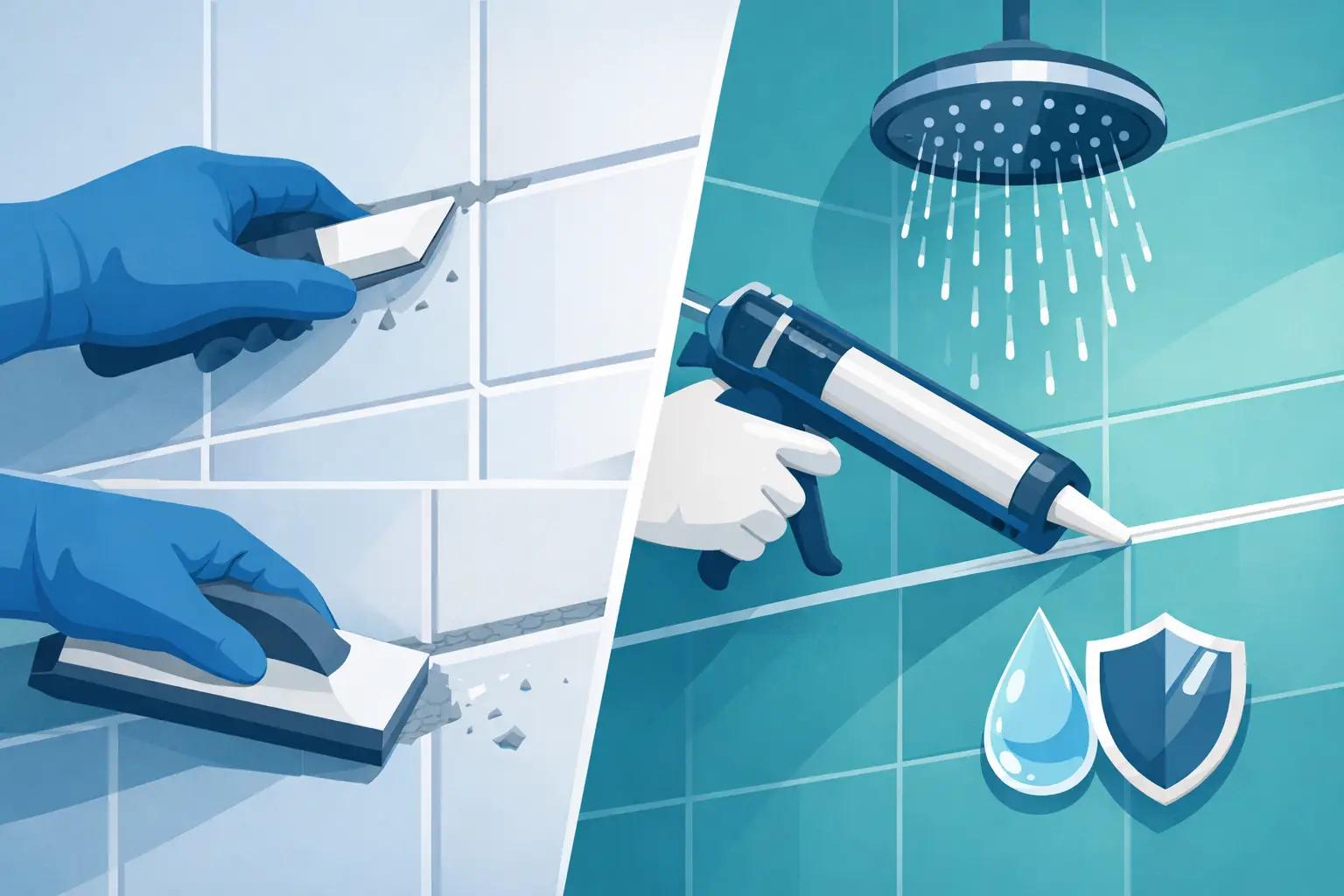
A shower can look tired long before the tiles themselves need replacing. Darkened grout lines, cracked corners and loose silicone are more than cosmetic distractions – they can hold moisture, encourage mould and allow water to reach areas it should not. The decision between regrouting versus resealing shower joints comes down to one question: which material has failed?
Grout and sealant do different jobs. Treating one as a substitute for the other may freshen the appearance briefly, but it will not deliver the clean, durable finish a bathroom needs. A proper assessment identifies the source of the problem first, then applies the repair that protects both the tiled surface and the structure behind it.
Regrouting versus resealing shower joints: the key difference
Grout is the cement-based material installed between tiles. It provides a neat, stable finish, helps support the tiled surface and closes the joints between tiles. Over time, grout can crack, become powdery, stain deeply or develop small gaps through normal movement, cleaning wear and ongoing exposure to water.
Resealing usually refers to replacing the flexible silicone sealant around the edges of the shower. This includes the junction where the wall meets the floor or shower tray, vertical internal corners, and areas around fixtures or screens. These are movement joints. Silicone remains flexible so it can accommodate slight movement between surfaces without splitting.
Neither task is a shortcut for the other. Applying new silicone over failing grout will not repair unstable tile joints. Likewise, forcing rigid grout into a shower corner where silicone belongs can lead to cracking as the bathroom moves. Precision matters because every joint has a specific purpose.
When shower regrouting is the right repair
Regrouting is generally the best option when the grout between tiles is damaged, worn or impossible to clean properly, while the tiles remain soundly fixed. It can dramatically improve the appearance of a shower without the disruption and cost of a full retile.
Look closely at the joints between the tile faces. Crumbling sections, hairline cracks, persistent mould staining and missing grout are common signs that regrouting may be required. Grout that remains damp, sheds when rubbed or has opened up around several tiles also deserves professional attention.
A quality regrouting job is not simply a matter of spreading new grout over old lines. The failed material needs to be carefully removed to an appropriate depth, the joints cleaned and prepared, and fresh grout installed with consistent depth and alignment. Once cured, suitable sealing and finishing measures help support a cleaner, more resilient result.
Regrouting is particularly valuable in showers where the tiled layout is still attractive but the overall presentation feels neglected. Restored grout lines sharpen the pattern of the tiles, brighten the room and create the kind of flawless finish that makes a bathroom feel properly maintained.
What regrouting cannot fix
Regrouting will not correct a failed waterproofing membrane, a leaking pipe, loose tiles or major structural movement. If tiles sound hollow, move under pressure, or show extensive cracking across the surface, there may be an issue below the tiles that needs further investigation.
It also cannot solve water escaping through deteriorated silicone in corners or around a shower screen. Those flexible joints require resealing as part of the repair. An experienced tiling specialist assesses the shower as a complete wet area rather than focusing on one visible defect.
When resealing is the better choice
Resealing is appropriate when the silicone around the perimeter of the shower has lifted, split, shrunk, discoloured or developed mould that cannot be removed. The most common locations are wall-to-wall corners, wall-to-floor junctions and the line where the shower screen meets the tiled surface.
A thin black line along the silicone may look like a cleaning problem, but mould can become embedded behind or within old sealant. Painting over it or adding a bead of silicone on top will not produce a reliable finish. The old sealant should be fully removed, the area cleaned and dried, and new quality bathroom-grade silicone applied with clean, even edges.
The visual difference can be immediate. Fresh sealant creates crisp transitions between surfaces and removes the grubby, uneven outline that can make an otherwise well-kept shower look dated. More importantly, it restores a flexible barrier in the areas most exposed to movement and spray.
Resealing has limits too
Silicone is not a waterproofing system on its own. If water is already entering behind the tiles due to damaged grout, failed waterproofing or poor drainage, new sealant may improve the edge finish without addressing the underlying concern.
Similarly, resealing does not repair grout joints across the wall or floor. Where both materials are worn, completing only one part of the work can leave the shower vulnerable and visually inconsistent.
Signs your shower may need both services
In many established bathrooms, the right answer is not regrouting or resealing – it is both. Grout and silicone tend to age under the same daily conditions: heat, steam, cleaning products, water exposure and natural movement. If one material is visibly failing, inspect the other closely.
A combined repair is often sensible when grout is cracked or stained across the tiled field and silicone is blackened or separating at the corners. It is also worth considering after years of heavy use in a family bathroom, rental property or commercial amenity area, where a piecemeal repair could mean further call-outs soon after.
Completing both tasks together delivers a more uniform result. The grout lines are restored, the movement joints are properly sealed and the shower has a clean, considered finish from tile face to corner. It is a practical investment in hygiene, presentation and long-term maintenance.
Why surface preparation determines the result
The durability of shower repairs depends heavily on preparation. Moisture, soap residue, oils and loose material can prevent grout or silicone from bonding as intended. Rushing this stage is one reason some repairs crack, discolour or lift prematurely.
For regrouting, the existing joints must be opened carefully without chipping tile edges. Dust needs to be removed before fresh grout is applied, and the finished joints must be allowed to cure correctly. For resealing, every trace of old silicone should be removed, particularly in corners where mould and moisture can hide.
The shower must also be dry before new sealant is installed. This can require allowing adequate drying time after cleaning or investigating whether a leak is keeping the substrate wet. A clean bead of silicone is only as reliable as the surface beneath it.
Avoid the common quick fixes
DIY repair products have a place for very minor touch-ups, but they can create complications when used over a failing surface. Grout pens may temporarily lighten discolouration, yet they do not rebuild missing or cracked joints. Silicone applied over old silicone can trap mould and detach quickly. Heavy bleach use may whiten a stain while weakening surrounding sealant or grout over time.
The other common mistake is using the shower too soon. Both grout and silicone need sufficient curing time before regular water exposure. Following the product and installer guidance protects the repair during its most vulnerable stage.
Where leaks are suspected, avoid repeatedly patching the same area. Water damage can spread beyond what is visible on the tile surface, affecting adjacent walls, flooring or cabinetry. Early professional repair is usually the cleaner, more cost-effective path.
Choosing a finish built to last
The right repair begins with an honest diagnosis. If the tiled joints are breaking down, regrouting restores the body and definition of the tiled surface. If the flexible perimeter joints have failed, resealing protects the areas designed to move. When both have deteriorated, a combined approach gives the shower the strongest and most polished result.
At A1 Grouting & Tiling, shower restoration is approached with attention to the details that customers see every day and the protection they rely on behind the finish. Professional shower regrouting can also be supported by a 10-year water leakage warranty, giving homeowners and property managers added confidence in the workmanship.
A well-repaired shower should not draw attention to cracked lines, mouldy corners or uneven sealant. It should feel clean, look refined and allow you to enjoy the space with confidence every time the water turns on.