 10 years of water leakage warranty for Regrouting showers.

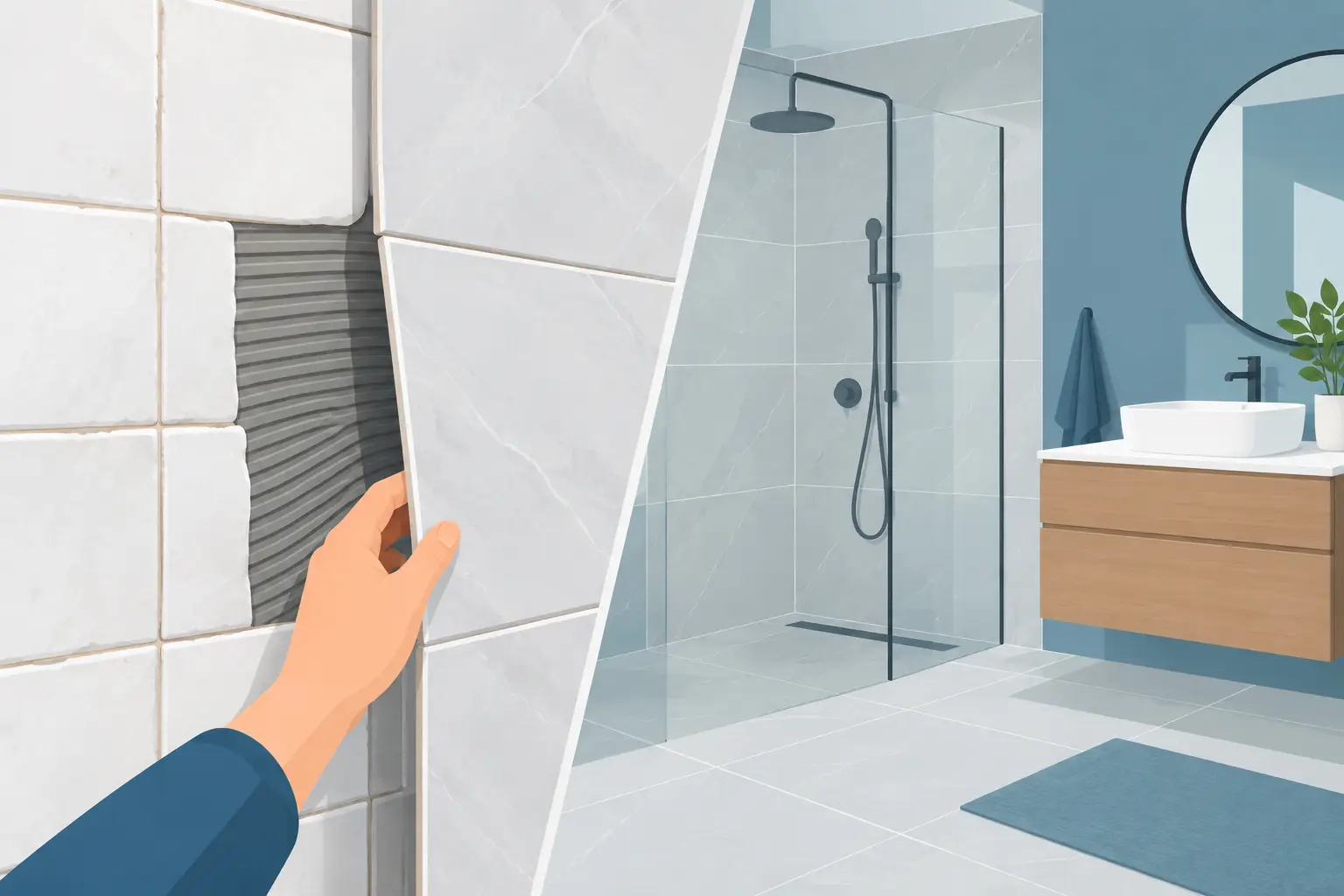
A dated tiled floor or bathroom wall can make an otherwise well-kept property feel tired. So, can you tile over tiles rather than face the dust, disruption and cost of removing them? Often, yes – but only when the existing tiled surface is sound, clean and suitable for the extra weight. This is not a shortcut that should be decided by appearance alone. The quality of the surface beneath the new tiles will determine whether the finished room looks flawless for years or begins to crack and lift.
Can You Tile Over Tiles Safely?
Tiling over existing tiles is known as overlay tiling. It can be an effective renovation method for floors, splashbacks and some wall areas, particularly where the old tiles are firmly bonded and the substrate has no moisture or structural concerns.
The key condition is that the original tiled surface must be stable. New adhesive can only bond as well as the layer beneath it. If older tiles are loose, drummy, cracked due to movement or separating from the wall or floor, installing another layer over the top simply hides a problem that will continue to develop.
A professional assessment should include tapping across the surface to identify hollow-sounding tiles, checking grout joints and inspecting for cracks that run across multiple tiles. A single chipped tile may be repairable. Widespread cracking or hollow areas usually point to adhesive failure, substrate movement or moisture damage – issues that need to be corrected before new tiles go down.
When Tiling Over Existing Tiles Makes Sense
Overlay tiling can save considerable time and mess when the base is in excellent condition. It avoids demolition, reduces rubbish and can allow a renovation to progress more efficiently. For landlords, homeowners and commercial property managers working to a practical schedule, that can be a genuine advantage.
It is most suitable when the existing tiles are well adhered, reasonably level and free from water damage. A kitchen splashback is often a straightforward example, provided the old surface is properly prepared. Internal floor areas can also be good candidates when the extra height will not affect doors, cabinetry or adjoining rooms.
The choice of new tile matters too. Modern porcelain and ceramic tiles offer a broad range of refined finishes, from large-format stone looks to patterned feature tiles. However, large tiles demand a particularly flat base. If the existing floor has unevenness, lipping or dips, those imperfections can compromise alignment and leave the final result looking less precise than it should.
The Checks That Cannot Be Skipped
Before committing to tile over tile, consider the whole assembly, not just the visible finish. An experienced tiler will assess whether the room can accommodate another layer and whether the existing surface can support it reliably.
Tile adhesion and surface condition
Every old tile should be solidly bonded. Loose tiles must be removed, and any voids repaired with an appropriate levelling product. Grease, soap residue, wax, mould and general grime also need to be removed thoroughly. Adhesive cannot form a dependable bond over contamination.
Glazed tiles are non-porous, so they need mechanical and chemical preparation. This generally involves cleaning, abrading the glossy surface where required and applying a compatible bonding primer before using a high-quality tile adhesive. Skipping this stage is one of the most common reasons overlay tiles fail.
Floor height, doors and transitions
A new tiled layer adds height. That may sound minor, but it affects door clearances, skirting, kickboards, appliances and transitions into nearby rooms. A floor that becomes too high can create an awkward step at a doorway or leave a bathroom door scraping across the finish.
In commercial spaces, transition heights also affect accessibility and safety. Entries, thresholds and changes between floor coverings should be planned carefully so the completed surface remains practical as well as attractive.
Drainage and waterproofing in wet areas
Bathrooms, laundries and balconies need more scrutiny. The existing floor must continue to fall correctly towards the drain. Adding tile thickness can reduce the effective depth of a floor waste or alter the fall enough for water to pond instead of draining away.
A tiled surface is not waterproof on its own. In showers and wet areas, the waterproofing membrane sits beneath the tiles. If there are signs of leaking, damaged grout, mould returning at joints, swollen walls or water escaping outside the shower, tiling over the top is not a repair. The source of the moisture must be investigated first.
For shower renovations especially, removing the old tiles may be the responsible option if the waterproofing system is compromised. It allows the substrate, membrane, drainage and wall structure to be inspected and restored properly rather than covered over.
When Removing Old Tiles Is the Better Investment
Removal is more disruptive, but it gives you a clean starting point. It is generally the better choice where tiles are loose, the floor is uneven, cracks suggest movement, or moisture has affected the area behind the surface.
It is also preferable when you want to improve drainage, change the shower layout, install a linear drain or create a level-entry bathroom. These upgrades rely on accurate falls and a sound waterproofing system. They cannot be achieved properly by simply adding another finish layer over the old one.
Older homes can reveal surprises once tiles are removed, including deteriorated screed, damaged wall linings or previous repair work that has not held up. Finding those problems before the new installation begins protects the finish, the structure and the value of the renovation.
How a Professional Tile-Over-Tile Installation Works
A successful overlay installation is methodical. First, the existing surface is tested for soundness and checked for level, drainage and height restrictions. Any damaged or hollow tiles are removed and repaired so the base is stable.
The area is then deep-cleaned to remove residue that could interfere with adhesion. Depending on the tile type and condition, the surface may be mechanically abraded and primed with a product designed for non-porous substrates. Adhesive selection is equally important. It needs to suit both the old tiled surface and the size, weight and material of the new tiles.
Careful setting-out comes next. This is where a quality installation separates itself from a rushed cosmetic update. Tile lines should be balanced around doorways, feature walls, drains and fixtures, with cuts planned to avoid narrow, awkward pieces at the edges. On floors, the installer must also manage lippage so adjacent tiles sit cleanly and evenly.
Once the adhesive has cured, grout is applied with attention to joint consistency and clean edges. The final finish should be easy to maintain, visually aligned and properly sealed where the chosen materials require it. Silicone movement joints around corners, fixtures and changes of plane are also essential, particularly in bathrooms and kitchens.
Is It Cheaper to Tile Over Tiles?
In many cases, yes. Avoiding demolition can reduce labour, waste removal and the time needed to prepare a bare substrate. But cheaper upfront is not always better value. If the old installation is failing, overlay tiling can lead to a second renovation much sooner than expected.
The right comparison is not simply removal versus no removal. It is the cost of doing the work once, correctly, against the risk of covering defects that may later affect new tiles, grout and surrounding finishes. A detailed site inspection provides clarity before materials are ordered and work begins.
Choosing a Finish That Lasts
If your existing tiled surface passes the necessary checks, tiling over tiles can deliver a dramatic transformation without unnecessary demolition. Choose a finish that suits the room’s use: durable porcelain for busy floors, easy-clean wall tiles for bathrooms, and carefully selected grout colours that complement the design while remaining practical to maintain.
Where there is any doubt about adhesion, waterproofing or drainage, pause before covering the surface. Precision preparation is what protects a beautiful finish. A qualified tiling specialist can identify the difference between a sound base ready for renewal and a hidden problem that deserves proper repair.