 10 years of water leakage warranty for Regrouting showers.


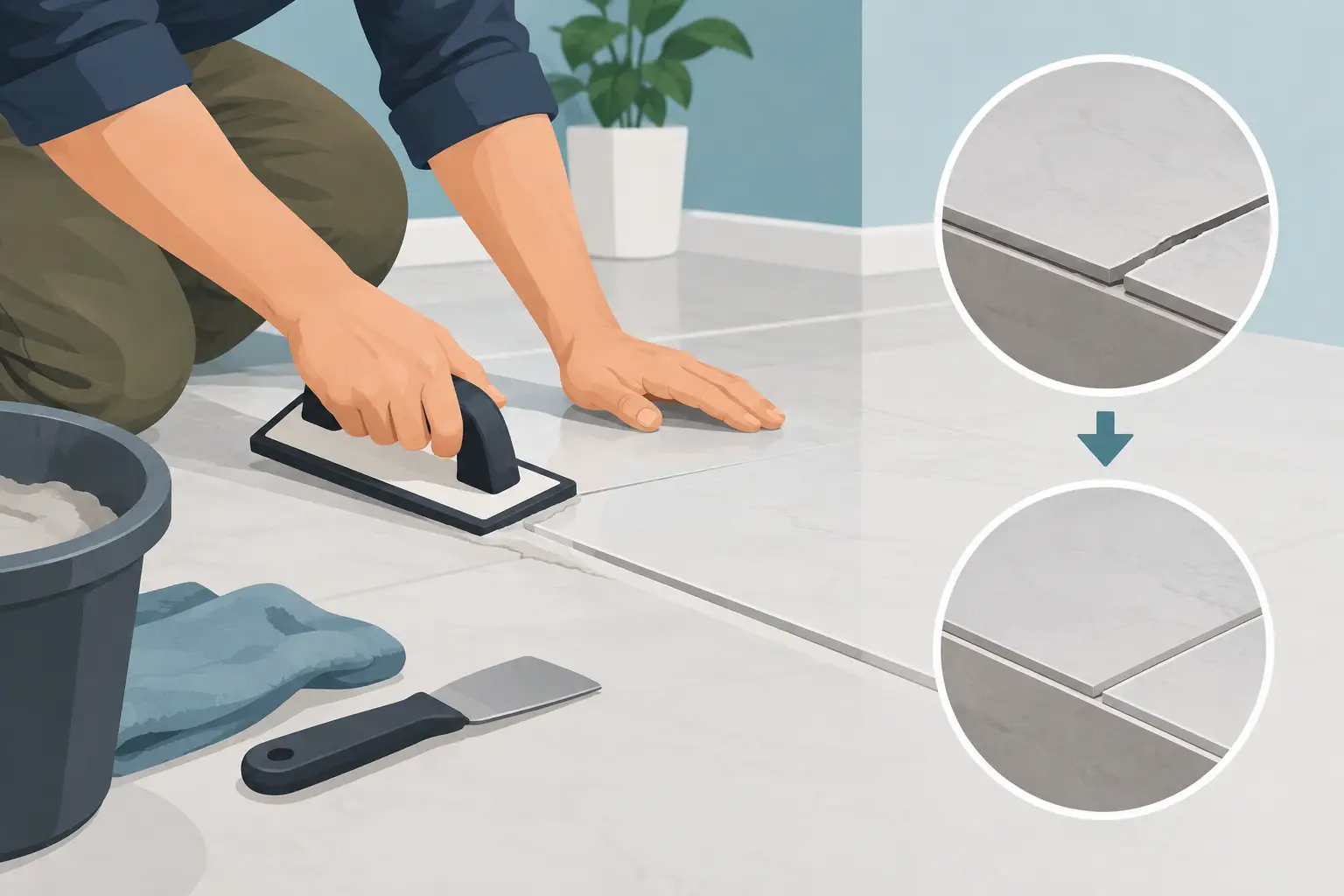
An uneven tile edge catches the light, collects grime and can make an otherwise beautiful bathroom, kitchen or floor feel unfinished. Knowing how to fix uneven tile edges starts with understanding what has moved, what was installed out of level, and whether the problem is cosmetic or a warning sign of failed tile adhesive beneath the surface.
A precise repair can restore the clean lines and refined finish that make tiled areas easy to maintain and enjoyable to use. The right approach, however, depends on the cause. Trying to grind, fill or force a tile into place without addressing that cause can create a bigger repair later.
What causes uneven tile edges?
Uneven adjacent tiles are often described as lippage. This is the raised edge where one tile sits higher than the tile beside it. Some lippage can be more noticeable with large-format tiles, glossy finishes or tiles laid across an uneven substrate, because light travels across the surface and highlights every change in level.
Not every uneven edge means the tiles are loose. A tile may have been installed at a slightly different height from day one, particularly where the floor or wall was not properly prepared. In other cases, the edge has lifted over time because adhesive coverage was poor, moisture has entered the area, movement has occurred in the substrate, or a heavy impact has cracked the bond.
Grout can also make the issue appear worse. Cracked, recessed or discoloured grout draws attention to tile lines, while grout that has been applied over a movement problem may break away again soon after repair. That is why an inspection should look beyond the joint itself.
Check whether the tile is loose before repairing it
Start by gently tapping the affected tile and those around it with the handle of a screwdriver or a similar non-metallic tool. A solid tile generally produces a firm, consistent sound. A hollow sound can indicate a void in the adhesive bed, although it is not always proof that the tile needs to come up.
Look for movement at the edge when light pressure is applied. Check for cracked grout, hairline cracks through the tile, water staining, mould, or changes in the level of neighbouring tiles. In a shower, balcony or other wet area, these signs deserve prompt attention. Water can travel behind tiles and damage the substrate long before it becomes visible from the room.
If the uneven section is near a doorway, expansion joint or transition between rooms, substrate movement may be involved. Repairs in these areas need allowance for movement. A hard grout fill alone is rarely a reliable solution.
When an uneven edge can be repaired in place
A minor height difference on a firmly bonded tile may be managed without removing the tile. This is most suitable where the edge is only slightly proud, there are no cracks, and the surface is not creating a trip risk or catching bare feet.
For certain natural stone tiles or unglazed finishes, careful professional honing may reduce a very small lip. This is specialised work. Grinding a glazed ceramic or porcelain tile can permanently damage its surface, expose a different-coloured body beneath the glaze and leave an obvious dull patch. It may solve one raised edge while creating a far more visible defect.
Sometimes the practical answer is to improve the surrounding grout lines and seal the area where appropriate, rather than alter a sound tile. This will not remove true lippage, but it can improve the appearance of a slight variation and make cleaning easier. It is only appropriate once the tile is confirmed stable and the underlying installation is sound.
How professionals fix uneven tile edges caused by loose tiles
Where a tile has lifted, rocks underfoot or has failed adhesive beneath it, removal and reinstallation is usually the most dependable repair. The existing grout is carefully removed from around the tile first, helping to protect adjacent tiles from chipping or cracking during removal.
The tile is then lifted with controlled tools and the old adhesive is removed from both the substrate and, where the tile is being reused, the back of the tile. This stage matters. New adhesive applied over a rough, contaminated or uneven bed will simply repeat the original problem.
Before the replacement tile is installed, the substrate is checked for cracks, moisture damage, unevenness and signs of waterproofing failure. The surface must be properly prepared and brought to the correct plane. A quality tile adhesive is then applied with the right coverage for the tile type and location, with the tile set level to the surrounding finish.
Once the adhesive has cured, the joint is regrouted in a matching colour and finished cleanly. In wet areas, the condition of silicone joints and waterproofing details should also be assessed. A neat repair is not just about making the tile sit flat. It is about restoring a surface that performs properly under daily use.
Fix uneven tile edges on walls with care
Wall tile lippage can look particularly noticeable around feature lighting, mirrors and shower screens. It can also interfere with fittings that need a flat surface, such as trim pieces, shelving and tapware plates.
The repair method is similar to floor tile work, but wall tiles bring extra considerations. Removing one tile can disturb waterproofing or crack a neighbouring tile if it is rushed. Decorative tiles, mosaics and patterned layouts also need careful alignment so the repaired area blends naturally with the original design.
If the uneven edge sits along an external corner, the issue may involve damaged trim rather than the tile alone. Replacing the trim and resetting the edge tiles may be the best way to achieve a straight, refined finish. A visible corner is not the place for a thick line of grout or silicone used to disguise poor alignment.
Why DIY shortcuts often fail
It is tempting to fill a raised edge with grout, silicone or an epoxy product. These materials have their place, but they cannot correct a tile that is physically sitting too high, loose or inadequately supported. A thick grout patch may crack, stain differently from the surrounding joint and trap dirt along the edge.
Forcing adhesive beneath a loose tile through a drilled hole is another approach sometimes considered. It can work in limited circumstances, but it does not allow proper inspection of the substrate or waterproofing. If moisture damage, a cracked screed or poor adhesive coverage is present, the tile may fail again or conceal a developing problem.
Removing and relaying a tile is more involved, but it offers a clear view of what is happening underneath. For high-use floors, showers and commercial areas, this is often the better long-term investment.
Choosing the right repair for your tiled area
The best repair depends on the tile material, the size of the affected area and the room itself. A single uneven kitchen splashback tile may be a straightforward cosmetic correction. Several raised tiles across a bathroom floor may point to substrate movement or moisture, requiring broader remedial work.
Replacement tiles are another consideration. If spare tiles are available, an individual repair is often possible with an excellent visual result. Where tiles are discontinued, a specialist can assess whether a tile can be recovered, whether a similar match will blend successfully, or whether a more considered redesign is needed.
For landlords and commercial property managers, addressing uneven edges early can also reduce complaints, cleaning difficulties and trip hazards. In public-facing spaces, a tile repair should be planned around access, curing times and the need to keep the area safe while work is completed.
The finish should look intentional
Quality tiling is defined by more than a straight grout line. It relies on a sound substrate, correct adhesive coverage, carefully managed levels and crisp finishing at every junction. When one tile sits proud of another, the eye notices it because it interrupts that sense of order.
A professional assessment provides clarity before work begins: whether the issue can be refined, whether a tile needs to be reset, and whether there is a deeper moisture or movement concern to address. At A1 Grouting & Tiling, the focus is always on repairs that protect the surface beneath while restoring the polished, durable finish your space deserves.
If an uneven tile edge is catching your eye now, treat it as an opportunity to correct the detail properly before it becomes a larger disruption.