 10 years of water leakage warranty for Regrouting showers.


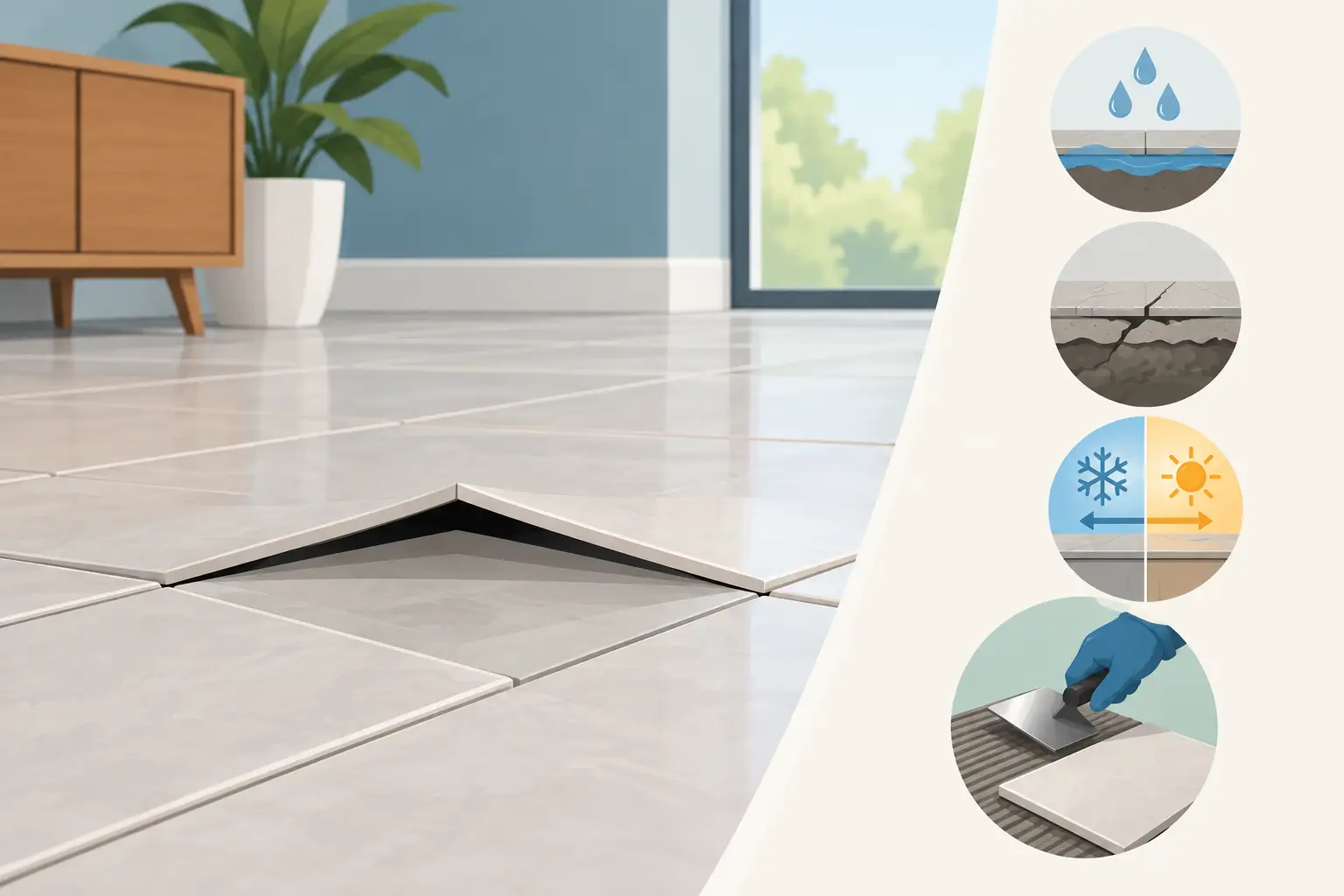
A tiled floor can look flawless one day, then suddenly develop a raised ridge, a hollow section or tiles that have lifted right off the slab. It is alarming, particularly when the tiles seem to have moved without anyone touching them. Understanding what causes tile tenting floors helps you act early, protect the surrounding tiles and avoid a repair becoming a larger flooring project.
Tile tenting is not simply a cosmetic issue. Lifted tiles can crack under foot, create a trip hazard and place pressure on nearby grout joints, skirting and walls. The right repair starts with identifying why the floor has moved, not just reattaching the tiles that have popped up.
What is tile tenting?
Tile tenting occurs when tiled flooring lifts or buckles upwards under pressure. The name comes from the peaked shape the tiles can form, much like the roofline of a tent. In some cases, one tile loosens. In more severe cases, a row or section of tiles lifts together, often accompanied by cracking grout or a sharp popping sound.
Tiles themselves are extremely stable materials. They do not generally expand and contract at the same rate as the building beneath them, nor do they flex well. When movement, moisture or pressure has nowhere to go, the tiled surface can release that stress by lifting.
The cause is often hidden below the finish. A professional inspection considers the tile adhesive, grout joints, subfloor condition, movement joints and the room’s exposure to heat and moisture before recommending a lasting solution.
What causes tile tenting floors?
No allowance for movement
The most common cause is insufficient movement accommodation. Floors expand and contract with changes in temperature, humidity and building movement. Concrete slabs can also shrink and move as they cure and age. If tiles are installed tightly against walls, cabinetry, door frames or fixed structural elements, the tiled surface has no perimeter space to relieve that movement.
Without properly placed movement joints, pressure builds gradually across the floor. Eventually, the bond between the tile and adhesive can fail, forcing tiles upwards. This is particularly common across large tiled areas, open-plan living spaces, commercial interiors and sun-exposed rooms.
Movement joints are deliberate gaps finished with a flexible sealant rather than rigid grout. They are designed to move discreetly while keeping the floor neat and protected. They may be needed at room perimeters, changes in substrate, doorways and throughout larger expanses of tiling. Their placement depends on the room, tile type, subfloor and environmental conditions.
Poor adhesive coverage or incorrect installation
A tile needs consistent adhesive support across its back. If adhesive has been applied unevenly, has skinned over before the tile was laid, or leaves large voids beneath the tile, the installation is more vulnerable to failure.
Poor coverage does not always cause tenting immediately. A floor can appear sound for years before normal foot traffic, thermal movement or a minor substrate shift exposes the weakness. Hollow-sounding tiles, loose grout and isolated cracked tiles may be early indicators that the bond is not performing as it should.
Correct adhesive selection matters as well. The product must suit the tile material, tile size, room conditions and substrate. Large-format porcelain, for example, demands careful preparation and installation techniques to achieve a flat, fully supported finish. Precision at this stage protects both the appearance and the long-term performance of the floor.
Moisture beneath or around the tiled surface
Water can contribute to tile tenting, although it is not always the sole cause. A leak beneath the floor, rising moisture from a slab, failed waterproofing or water entering through external doors can weaken adhesive and affect the substrate. Bathrooms, laundries, balconies and ground-floor areas deserve particular attention.
Moisture-related failure may come with other clues: darkened grout, persistent damp odours, efflorescence, mould, loose tiles or damage to adjacent finishes. In these situations, replacing the lifted tiles without locating the moisture source is unlikely to provide a reliable result.
A repair should address the complete system. That may mean investigating plumbing, waterproofing, drainage, exterior thresholds or slab moisture before any replacement tiles are installed. A clean finish is only as dependable as the surface beneath it.
Subfloor movement and cracking
Buildings move. Concrete can crack, timber subfloors can flex, and renovations can introduce new loads or changes to existing structures. Minor movement is normal, but tiled finishes need to be installed in a way that manages it.
A crack in a concrete slab can transfer through the adhesive bed and into the tiled surface. On timber floors, excessive deflection can loosen tiles or crack grout over time. Older homes and properties with extensions may have junctions where different parts of the building move independently.
The repair approach depends on the extent and cause of that movement. A localised crack may be managed with suitable preparation and an appropriate membrane, while widespread instability may require more substantial subfloor work. An experienced tiler will not promise a permanent finish without first assessing whether the base is stable enough to support it.
Heat and direct sun exposure
Australian conditions can place significant thermal stress on tiled floors. Areas near large north- or west-facing windows, conservatories, enclosed patios and entryways can heat up quickly, especially where dark tiles are used. Direct sun causes the tiled surface to expand, while shaded sections remain cooler.
That difference can create pressure across a floor, particularly if movement joints are missing or blocked by rigid grout. Underfloor heating can also be a factor when the system is not designed, commissioned or operated with the tile installation in mind.
Heat alone does not mean a floor will tent. A properly specified and installed tiled floor should accommodate expected temperature changes. Problems arise when heat exposes shortcomings in the installation or when the floor has been restrained at its edges.
Signs you should not ignore
Tenting can happen suddenly, but warning signs often appear first. If tiles sound hollow when lightly tapped, grout is cracking in straight lines, tiles feel uneven, or a section of floor is beginning to lift at an edge, arrange an assessment before the area fails further.
A popping or cracking noise from beneath the floor is another reason to act promptly. Keep people away from visibly raised tiles, particularly in busy walkways, kitchens and commercial spaces. A lifted tile can have sharp edges and may break further under weight.
Do not try to force the tiles flat by standing or placing heavy objects on them. This can crack surrounding tiles, damage the substrate and make it harder to determine the original cause.
How tile tenting is repaired properly
A quality repair begins with controlled removal of the affected tiles. The aim is to protect usable surrounding tiles where possible, but this depends on the severity of the tenting and the bond condition across the floor. Once the area is open, the adhesive bed and subfloor can be inspected for moisture, cracking, voids and signs of movement.
The next step is resolving the cause. This may involve repairing a leak, preparing a cracked substrate, removing restrictive grout at the perimeter, or introducing correctly located movement joints. If the failure is widespread, a larger section may need to be lifted and retiled rather than patching isolated tiles into an unstable floor.
Replacement tiles are then installed with suitable adhesive coverage, accurate alignment and carefully finished grout joints. Matching existing tiles can be straightforward when spares are available, but older or discontinued tiles may require a considered design solution. In some cases, a transition, border or complementary tile can create an intentional finish rather than an obvious patch.
Can tile tenting be prevented?
Prevention is largely decided before the first tile is laid. The subfloor must be clean, sound and suitably flat. The right adhesive, preparation products and tile-laying method must be selected for the area. Movement joints must be planned as part of the finished design, not treated as an afterthought.
For existing floors, regular checks are worthwhile in high-moisture and high-traffic areas. Repair cracked grout, water leaks and loose tiles early. Avoid sealing movement joints with rigid materials during renovations, and be cautious when changing floor levels, installing heavy fixtures or extending tiled areas into adjoining rooms.
At A1 Grouting & Tiling, repair work is approached with the same attention to detail as a new installation: identify the source of failure, prepare the surface correctly and restore a finish that looks refined and performs with confidence. If your floor has started to lift, an early professional assessment can preserve more of the original tiling and return the space to a safe, polished condition.