 10 years of water leakage warranty for Regrouting showers.

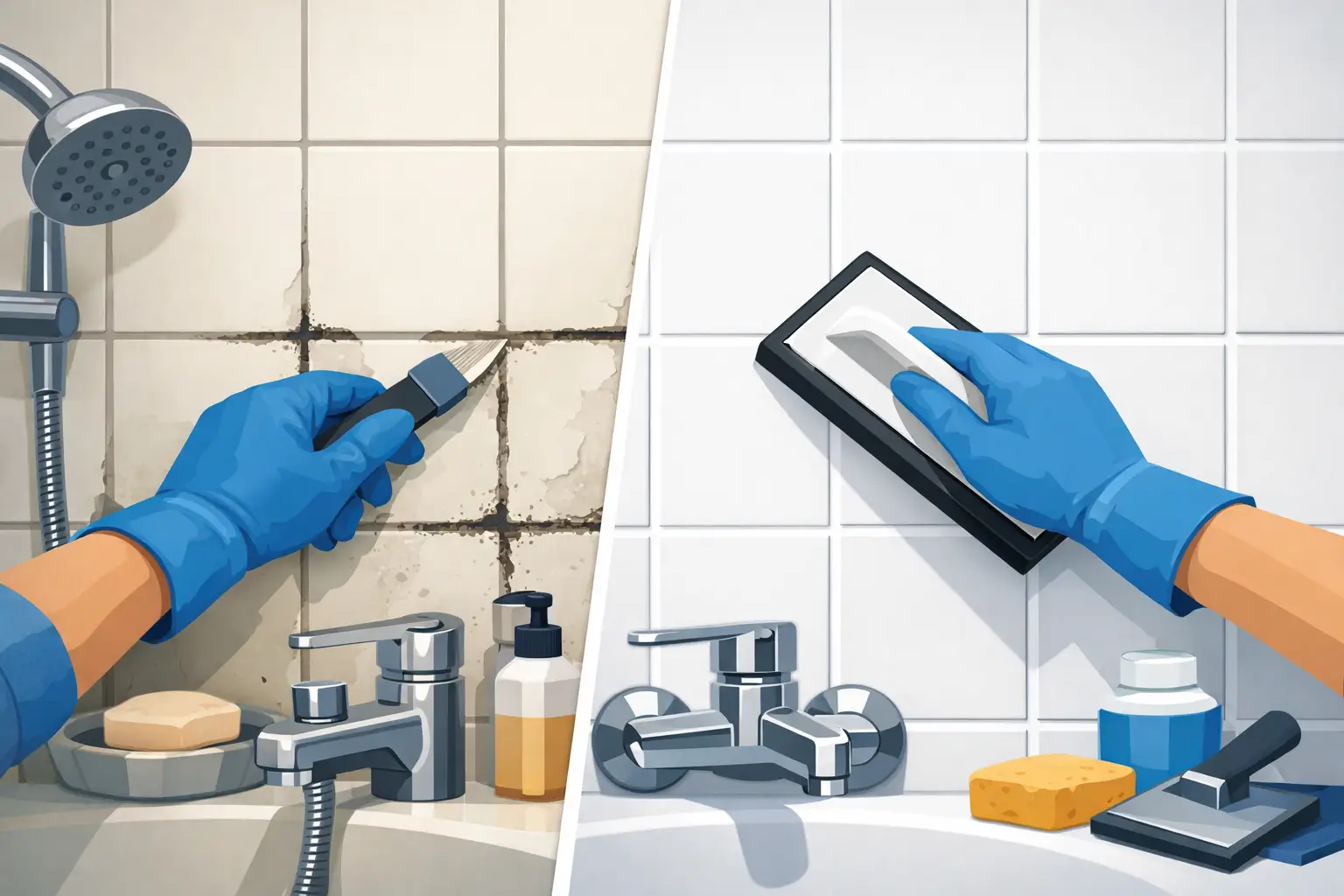
A bathroom can look tired long before the tiles themselves are past saving. In most cases, the biggest shift in bathroom regrouting before and after comes from the grout lines and silicone joints – the areas that quietly collect mould, crack under movement, and make the whole room feel older than it is.
That is why regrouting is often one of the smartest restoration decisions a property owner can make. When handled with precision, it does more than freshen the surface. It improves hygiene, restores visual consistency, and helps protect wet areas from ongoing moisture damage without the cost and disruption of a full renovation.
What bathroom regrouting before and after really changes
The most obvious difference is appearance. Old grout tends to discolour unevenly, especially in showers and around floors where moisture, soap residue and everyday wear build up over time. Even high-quality tiles can lose their impact when surrounded by stained, crumbling or patchy joints.
After regrouting, the lines are clean, defined and uniform again. The tiles look sharper because the framing around each tile is restored. White tiles appear brighter, darker tiles look more intentional, and the whole bathroom feels better maintained. In many bathrooms, that visual improvement is immediate enough to make the room seem newly renovated.
The second change is hygiene. Damaged grout is porous and difficult to keep clean. Once grime and mould settle into weakened joints, regular scrubbing only goes so far. Fresh grout and properly applied silicone create a cleaner, more sealed finish that is far easier to maintain.
Then there is performance. Regrouting is not only cosmetic. In showers especially, deteriorated joints can allow moisture to move where it should not. While not every shower issue can be solved with regrouting alone, replacing failed grout and silicone at the right time can prevent minor problems from developing into far more expensive repairs.
Signs your bathroom needs regrouting
Some bathrooms make the decision obvious. If grout is cracked, missing, loose or visibly mould-stained, regrouting is worth considering. The same applies when silicone has peeled away, shrunk, or turned black around corners and edges.
Other signs are more subtle. You may notice tiles still look dull after cleaning, or that the bathroom never feels fully fresh no matter how often it is scrubbed. In rental properties and commercial settings, tired grout can also create the impression of neglect, even when the space is otherwise structurally sound.
A key point here is that not all grout problems mean full tile replacement is necessary. If the tiles are secure and the substrate is still in reasonable condition, regrouting can deliver a strong visual and practical upgrade without pulling the room apart.
Before regrouting: what the bathroom typically looks like
Before regrouting, most bathrooms show a combination of age, moisture exposure and cleaning fatigue. The grout lines may be darker in some sections and faded in others. Corners often carry the heaviest mould build-up. Floor joints can appear powdery or worn down, and shower recesses may have silicone that is split or lifting.
This creates a bathroom that feels hard to clean even when it is technically clean. The finish becomes visually busy for the wrong reasons. Instead of crisp tile lines and balanced surfaces, the eye goes straight to defects.
For homeowners preparing a sale, that matters. For landlords between tenancies, it matters even more. Bathrooms influence how a property is judged, and tired grout can make an otherwise solid room look like it needs major work.
After regrouting: the finish homeowners notice first
After regrouting, the room tends to feel brighter, tighter and more polished. The tile layout becomes clear again. Joints look deliberate instead of worn, and corners appear neat rather than neglected. With fresh silicone in place, the bathroom also has a more complete finish, particularly around showers, basins and junctions.
The best results do not look overworked. They look clean, balanced and professionally restored. That matters because grout should support the tile design, not distract from it. Whether the bathroom features large-format porcelain, classic ceramic wall tiles or patterned feature sections, precise grout lines help the whole design read properly.
There is also a practical sense of relief that comes with it. Once moulded joints and failing silicone are removed, the room feels easier to manage. Day-to-day cleaning becomes more straightforward, and the bathroom no longer gives the impression that it is slipping downhill.
Why professional regrouting usually delivers better before and after results
The difference between a quick patch-up and a proper regrout is usually visible within weeks. Surface touch-ups may temporarily improve colour, but they do not remove failed material or address deeper deterioration. If damaged grout is simply covered over, the finish often breaks down again quickly.
Professional regrouting involves removing compromised grout, preparing the joints correctly, and applying new material with consistency across the entire tiled area. Silicone replacement also needs care, especially in wet zones where finish quality and sealing performance both matter.
This is where craftsmanship makes a visible difference. Straight lines, consistent depth, careful colour matching and tidy detailing all influence the final result. A bathroom does not need to be extravagant to look refined. It needs the fundamentals done properly.
Bathroom regrouting before and after in showers
Shower areas usually show the most dramatic transformation. They carry the heaviest moisture load, so they are often the first place where grout and silicone fail. Before regrouting, showers can look permanently stained, with darkened corners, rough joints and uneven seal lines.
After regrouting, the improvement is not only visual. A properly restored shower feels cleaner and more reliable. It presents as a maintained wet area rather than a problem waiting to worsen. For many property owners, that confidence is as valuable as the cosmetic lift.
It is worth noting that regrouting is not a cure-all for every leaking shower. If there are structural issues, substrate failure or significant movement, broader repairs may be required. But where the primary issue is deteriorated joints and sealant, regrouting can be a highly effective solution.
Is regrouting better than renovating?
It depends on the condition of the bathroom and your goals. If tiles are loose, layouts are badly dated, or waterproofing has comprehensively failed, a full renovation may be the right path. But if the tiles are still in good condition and the problem is mainly worn grout, regrouting can deliver excellent value.
That is especially true when you want a strong visual improvement without the cost, mess and downtime of replacing everything. Regrouting preserves the existing tile installation while lifting the standard of the finish. For investment properties, family homes and commercial washrooms alike, that can be a very practical outcome.
A1 Grouting & Tiling regularly works with clients who want that middle ground – a bathroom that looks significantly better and performs properly, without stepping straight into a full strip-out.
How long do the results last?
Longevity comes down to workmanship, materials, ventilation and how the bathroom is used. High-traffic family bathrooms and heavily used commercial areas naturally face more wear than a lightly used ensuite. Even so, quality regrouting should hold up well when completed correctly and cared for properly.
Routine maintenance helps. That means using suitable cleaning products, avoiding unnecessarily harsh scrubbing, and keeping the room ventilated to reduce persistent moisture. Good workmanship at the start makes those habits far more effective, because a sound finish is easier to keep sound.
When the before and after transformation adds real value
The strongest value often comes from timing. Regrouting before mould becomes severe, before silicone fully fails, and before moisture problems escalate is usually far more cost-effective than waiting. It protects presentation, helps extend the life of the tiled area, and reduces the chance of more invasive repairs later.
It also has a clear impact on how a bathroom is experienced. A well-restored bathroom feels cleaner, more considered and more durable. That matters whether you are improving your own home, preparing a property for market, or maintaining a commercial space that reflects on your business.
If your tiles still have life in them, tired grout does not have to define the room. Sometimes the most impressive before and after result is not a brand-new bathroom at all – it is an existing one brought back to the standard it should have kept all along.