 10 years of water leakage warranty for Regrouting showers.

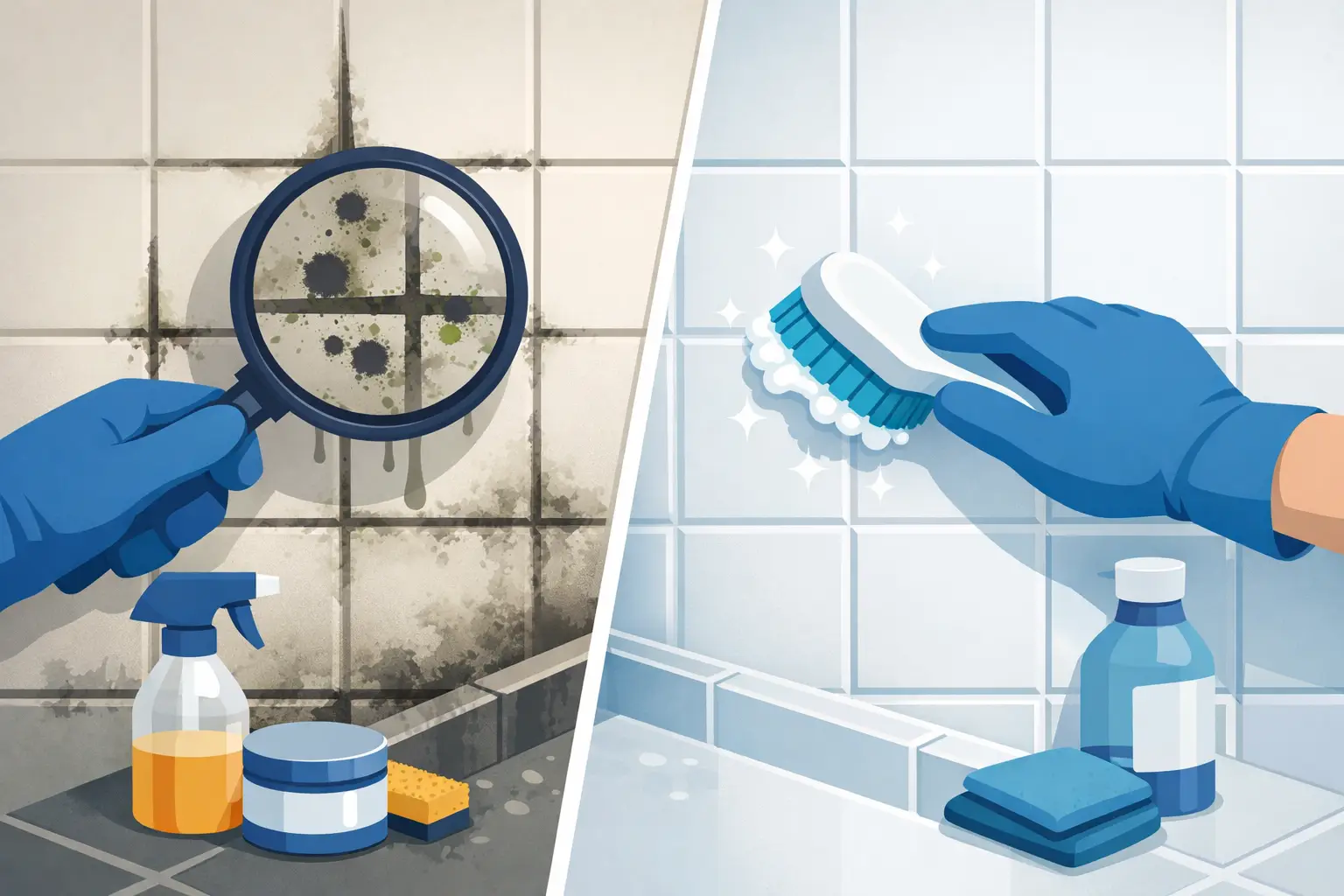
That black staining in the shower line is usually the moment people ask: can mouldy grout be restored, or is it already past the point of saving? The answer depends on whether the mould is sitting on the surface, has penetrated the grout, or is a sign of deeper moisture failure behind the tiles. In many cases, grout can be restored to a clean, sound finish. In others, replacement is the only way to achieve a hygienic and lasting result.
Grout is porous by nature. Once moisture, soap residue and poor ventilation combine, it creates the ideal environment for mould to grow. The visual issue is obvious, but the bigger concern is what that staining says about the condition of the tiled area. A neat surface can still be compromised underneath, and a quick scrub will not fix damaged grout joints.
Can mouldy grout be restored or only cleaned?
This is where many property owners get misled. Cleaning and restoring are not the same thing. Cleaning removes surface contamination. Restoration means bringing the grout back to a condition that looks presentable, performs properly and holds up over time.
If the grout is structurally sound, firmly bonded and only affected by light to moderate surface mould, restoration is often possible. That may involve deep cleaning, mould treatment, drying, resealing and in some cases colour sealing to improve the finish. If the grout is cracked, soft, crumbling, missing in sections or repeatedly growing mould despite cleaning, restoration becomes far less realistic.
A shower is the best example. If water is constantly entering through failed joints, old silicone or fractured grout lines, the mould you see may only be part of the problem. In that case, proper regrouting is not just a cosmetic upgrade – it is a practical repair that protects the substrate and improves hygiene at the same time.
What determines whether mouldy grout can be restored?
The first factor is depth of contamination. Surface mould can usually be treated. Deep staining that has soaked into aged, unsealed grout is harder to reverse fully. Some grout may lighten after treatment but never return to an even, clean appearance.
The second factor is the age and integrity of the grout. Older grout often becomes more porous, brittle and uneven. Once that happens, even a successful clean may only provide a short-term improvement. Moisture will keep returning to weak joints, and mould tends to follow.
The third factor is the source of moisture. Bathrooms, laundries and commercial wet areas that stay damp for long periods will continue to struggle unless the moisture issue is addressed. Poor ventilation, leaking shower screens, failed silicone and worn grout all contribute.
Finally, there is the finish standard you expect. If you are preparing a property for sale, improving a rental, or upgrading a bathroom you use every day, a patchy result is usually not enough. A proper restoration should improve both presentation and performance.
Signs your grout can still be saved
Grout is often restorable when the joints remain hard, intact and evenly packed between tiles. If the discolouration is mostly on the surface, there are no major cracks, and the surrounding silicone is still serviceable or can be replaced separately, cleaning and restoration may be worthwhile.
You may also notice that mould appears mainly in corners, around soap build-up or in spots where airflow is poor. That pattern often suggests a maintenance and ventilation issue rather than full grout failure. In these cases, a professional treatment can make a substantial difference.
Another good sign is when water is still beading or drying normally rather than soaking in immediately. That suggests the grout has not completely lost its protective qualities. Once resealed, it may continue to perform well.
When restoration is the wrong option
If grout feels sandy, flakes out when touched, or has visible gaps, it is no longer doing its job. The same applies if mould returns quickly after repeated cleaning. That usually means moisture is sitting deeper in the joint or behind the tiled surface.
Persistent blackening around the base of the shower, corners, niches and wall-to-floor junctions often points to failed silicone as well. These movement joints should not be ignored. If they have pulled away, split or gone mouldy through the full bead, cleaning them rarely delivers a durable fix.
There is also a practical point many people overlook. Aggressive DIY mould removal can damage grout further. Harsh chemicals, stiff scrubbing and repeated bleach use may strip the surface, weaken the joint and leave the area looking lighter in some places and darker in others. By the time the grout has been attacked several times, restoration may become more difficult than it needed to be.
How professionals restore mouldy grout properly
A quality restoration starts with assessment, not chemicals. The tiled area needs to be checked for loose grout, hollow tiles, damaged seals and signs of water ingress. Treating mould without understanding the substrate is how temporary fixes happen.
If the grout is suitable for restoration, the process generally begins with specialised cleaning to remove soap scum, mineral build-up and organic growth. This matters because mould often clings to residue rather than the grout alone. Once the surface is clean, an appropriate mould treatment can be applied to kill remaining spores and lift staining as far as the material allows.
From there, the area must be dried properly. Sealing damp grout traps the problem rather than solving it. Once dry, the grout may be resealed to reduce porosity and improve resistance to future staining. In some cases, colour sealing is the better finish, especially where the grout is unevenly discoloured but still sound. This can create a cleaner, more consistent appearance while adding surface protection.
Where joints are too far gone, selective removal and regrouting may be required. That often delivers a far superior result to trying to rescue badly deteriorated grout across the entire area.
Why mould keeps coming back after cleaning
Mould recurrence is usually a moisture problem, not a cleaning problem. Bathrooms with poor ventilation, daily steam build-up and little drying time naturally put more pressure on grout lines. Add body oils, shampoo residue and soap film, and the surface becomes an easy place for mould to return.
Leaking plumbing, damaged waterproofing or shower recesses that do not drain correctly can also keep grout damp below the surface. In that situation, even a strong mould treatment may only give short-lived improvement.
This is why a polished finish and a hygienic finish are closely linked. Clean-looking tiled surfaces need sound joints, effective sealing and proper moisture control. One without the others rarely lasts.
Can you restore mouldy grout yourself?
For light surface mould, a careful DIY clean may help. Good ventilation, a suitable mould cleaner and gentle scrubbing can improve the look of the grout. But there is a limit to what home treatment can achieve.
The challenge is knowing whether you are dealing with staining, structural wear, failed sealing or water penetration. Most DIY methods focus on appearance. Professional restoration focuses on condition. That difference matters because the best-looking result in week one can be the most disappointing by week four if the underlying issue remains.
There is also the matter of finish quality. In visible areas such as showers, splashbacks and tiled floors, inconsistent grout colour stands out immediately. If you want a result that looks refined rather than simply less dirty, expert restoration or regrouting is usually the smarter path.
Protecting restored grout for the long term
Once grout has been restored, maintenance should be simple and consistent. Ventilation is the first priority. Run the exhaust fan during and after showers, open windows where possible, and avoid leaving wet surfaces to sit for hours.
Regular light cleaning works better than occasional heavy cleaning. Removing soap residue and moisture before mould establishes itself is easier on the grout and more effective over time. Resealing at the right interval also helps protect porous joints, especially in high-use wet areas.
If silicone starts to peel, grout begins cracking, or discolouration returns in isolated patches, act early. Small defects are far easier to correct before they become widespread.
For homeowners, landlords and property managers, the real question is not only can mouldy grout be restored, but whether the finished result will be clean, durable and worth the investment. When the grout is still sound, restoration can refresh the entire tiled space. When it has already failed, replacement is the better standard. The value lies in choosing the option that delivers a finish you can trust every day.