 10 years of water leakage warranty for Regrouting showers.

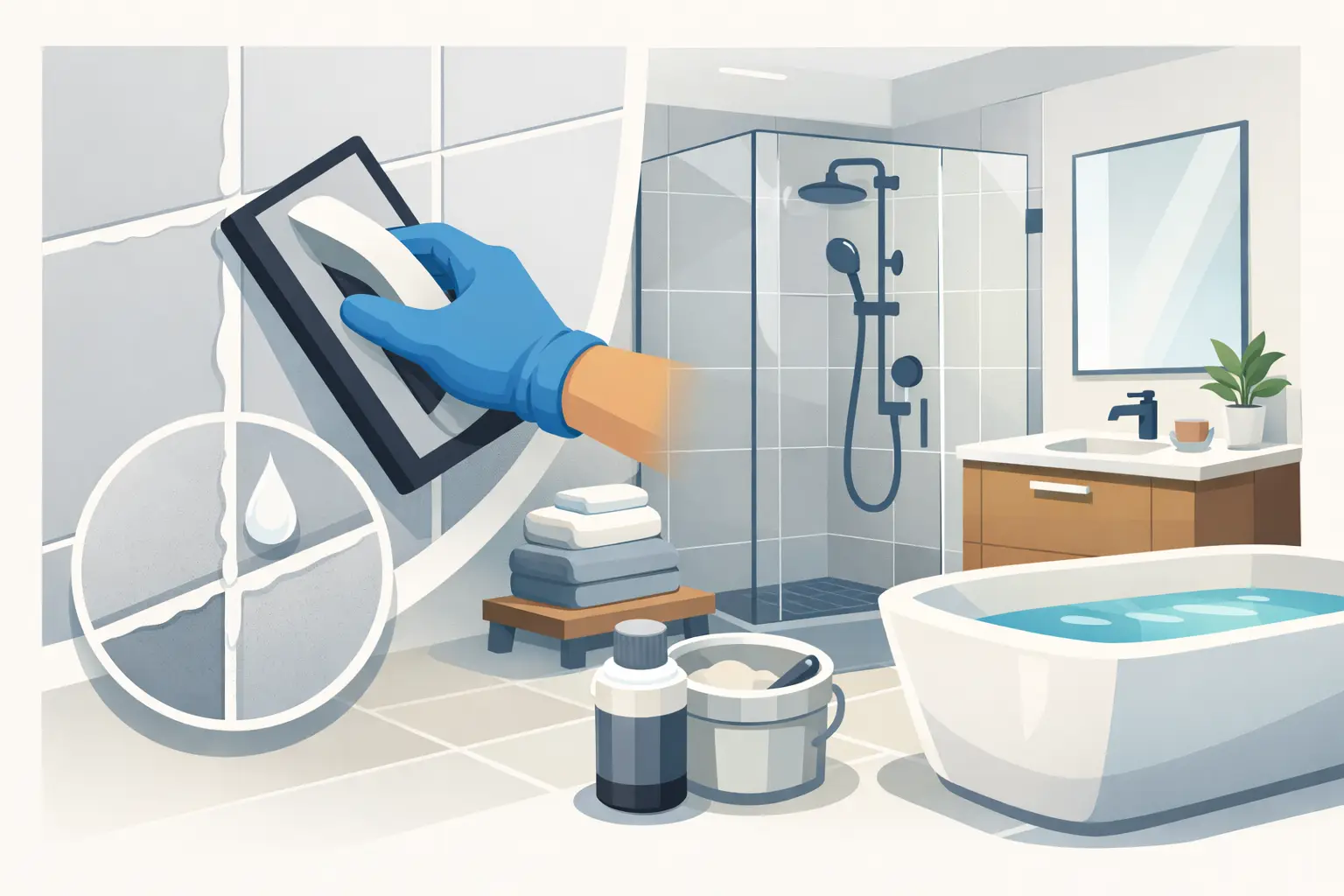
A bathroom can be finished with beautiful tiles, straight lines and carefully chosen fittings, yet still look tired if the grout stains, cracks or attracts mould. This epoxy grout review looks beyond the sales claims to assess where epoxy grout earns its premium price, where it may not be necessary, and why installation quality matters as much as the product itself.
For showers, splashbacks, busy kitchen floors and commercial areas, epoxy grout can deliver an exceptionally clean, durable finish. It is not a miracle cure for movement, failed waterproofing or damaged tiles, however. The right result starts with an honest assessment of the surface beneath it.
What epoxy grout is and why it performs differently
Traditional cement-based grout is mixed with water and cures as a porous material. It can look excellent when new, but it naturally absorbs some moisture and can hold onto soap residue, oils and spills. Sealers help, although they need ongoing attention and do not make cement grout completely stain-proof.
Epoxy grout is made from epoxy resins, fillers and a hardener. Once cured, it forms a dense, low-porosity joint that is highly resistant to stains, moisture and many household chemicals. It is particularly effective in places that face repeated water exposure or regular cleaning.
That difference is easy to see over time. A white cement grout line in a family shower can discolour from body oils, shampoo residue and mineral deposits. Quality epoxy grout is far less likely to absorb those contaminants, making routine cleaning more effective and helping the tiled surface retain its original colour.
Its strength is another advantage. Epoxy grout resists abrasion and is less prone to the powdery, worn appearance sometimes seen in older cement grout. On tiled floors in entryways, kitchens, cafés or common areas, that resilience can protect both the presentation and service life of the installation.
Epoxy grout review: the benefits homeowners notice
The biggest benefit is hygiene. Because epoxy grout does not readily absorb moisture, it gives mould and mildew less opportunity to establish within the joint. It still needs cleaning, especially around shower corners and soap-heavy areas, but the surface is much easier to maintain than neglected porous grout.
Colour consistency is a close second. Epoxy grout is available in a broad range of colours and retains its finish well when correctly installed. This is valuable for light-coloured grout, where even minor staining can make a bathroom or kitchen feel unclean. It is also an excellent choice for design-led tiling, including feature walls, large-format tiles and carefully aligned patterns where every grout line is visible.
Durability also supports long-term value. The upfront cost is higher than standard cement grout, but a grout joint that resists staining, cracking and deterioration can reduce the need for premature restoration. For a renovation intended to hold its finish for years, that can be a worthwhile investment.
Epoxy grout is especially well suited to shower walls, shower floors, bathroom floors, kitchen splashbacks, laundry areas, commercial bathrooms and food-service environments. In these settings, its resistance to water, grease and regular cleaning creates a practical advantage rather than simply a premium finish.
The trade-offs that a good review should not ignore
Epoxy grout is not automatically the best choice for every tiled surface. It costs more to purchase and takes more skill to install. Unlike cement grout, it begins curing through a chemical reaction, so the installer has a limited working time. If excess material is not cleaned thoroughly at the correct stage, a stubborn residue can remain on the tile face.
This is why epoxy grout is rarely a forgiving DIY material, particularly on textured tiles, natural stone, mosaics or large bathroom areas. The surface must be prepared properly, batches need to be mixed accurately, and cleaning must be methodical. A rushed application can undermine an otherwise premium product.
Movement is another consideration. Grout is not designed to bridge areas where the building, wall lining or tile assembly moves. Changes of plane, such as the joint between a shower wall and floor, generally require a suitable flexible sealant rather than rigid grout. Expansion joints must also be planned correctly on larger floors and in areas exposed to heat or structural movement.
Most importantly, epoxy grout is not waterproofing. A shower can have perfectly applied epoxy grout and still leak if its waterproof membrane has failed, the substrate is damaged or the plumbing is compromised. Tiles and grout form the visible wearing surface. The waterproofing system behind them is what protects the structure.
Where epoxy grout makes the most sense
For a shower regrouting project, epoxy grout is often a strong option when the tiles are sound, the existing grout has deteriorated, and there is no evidence of underlying waterproofing failure. Removing failed grout, preparing clean joints and applying a high-quality replacement can transform the appearance of the shower while improving its resistance to staining and moisture.
It is also a smart choice for households that want lower-maintenance surfaces. Busy families, rental properties and homes with light grout colours can benefit from joints that do not absorb everyday spills so readily. In commercial interiors, the value becomes even clearer where frequent cleaning, foot traffic and presentation standards place greater demands on tiled areas.
There are cases where a premium cement grout may be sufficient. A low-traffic decorative wall away from water, for example, may not need epoxy performance. Likewise, an extensive tiling project may require a product selection that balances budget, tile type, joint width and expected use. Precision workmanship means choosing the right material for the job, not applying the most expensive option everywhere.
Installation quality determines the final finish
The condition of the joints must be assessed before any new grout is applied. Failed or contaminated grout needs to be removed to an appropriate depth, and dust, soap residue and loose material must be cleared out. Applying new grout over weak, mouldy or shallow joints may look better briefly, but it is not a lasting repair.
Tile type matters too. Some natural stones and highly textured tiles can be more difficult to clean during epoxy application. A professional will confirm the grout and tile are compatible, test where required, and work in manageable sections to avoid residue. Careful detailing around drains, corners, niches and fittings is essential, as these areas often show the first signs of deterioration.
At A1 Grouting & Tiling, the focus is not simply on filling joints. A quality regrouting or tiling result depends on clean preparation, accurate grout lines, correct flexible joints and a finish that complements the room. For shower regrouting, a proper inspection is particularly valuable because it helps separate a grout issue from a deeper water-ingress problem.
How to keep epoxy grout looking its best
Epoxy grout is low-maintenance, not no-maintenance. Regularly rinsing shower walls, wiping away standing water and using a squeegee after use will reduce soap build-up on both the tiles and grout. A mild pH-neutral cleaner is usually sufficient for weekly cleaning.
Avoid harsh abrasive pads and aggressive cleaners unless they are specifically suitable for the tile and grout system. The grout may be highly durable, but some tile finishes, sealants and metal fittings are not. Good ventilation also matters, as it reduces lingering moisture and helps keep the entire bathroom fresher.
If grout lines are cracked, missing, persistently mouldy or accompanied by loose tiles, do not assume a surface clean will solve the issue. Early assessment can prevent a minor restoration from becoming a larger repair.
Epoxy grout is best viewed as a high-performance finishing material: it keeps the visible joints cleaner, stronger and more refined, but it works at its best when paired with sound tiles, correct waterproofing and meticulous application. For bathrooms and tiled spaces where durability and presentation both matter, that combination is worth getting right from the start.