 10 years of water leakage warranty for Regrouting showers.

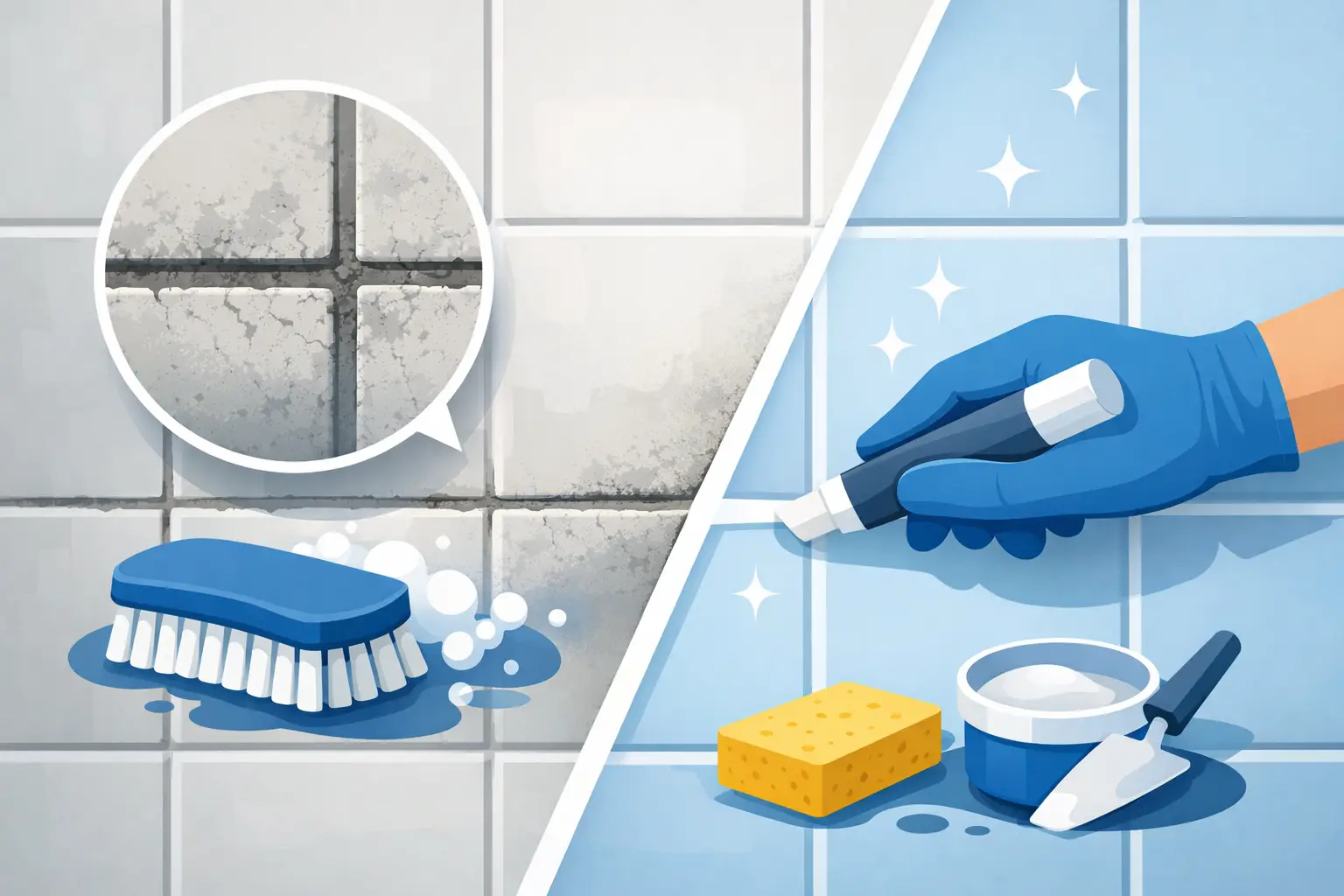
Grout has a way of ageing a tiled surface before the tiles themselves do. You can have a bathroom, kitchen splashback or tiled floor that still looks structurally sound, yet the whole area feels dull because the joints are stained, patchy or beginning to crumble. If you are wondering how to refresh tired grout lines, the answer depends on whether the problem is surface grime, embedded staining, mould, cracking, or grout that has simply reached the end of its service life.
Well-finished grout does more than tidy up the look of a room. It protects edges, helps keep moisture where it belongs, and gives the tiled surface a clean, deliberate finish. When grout starts to fail, the issue is rarely cosmetic for long.
How to refresh tired grout lines without making them worse
The first mistake many property owners make is treating every grout problem as a cleaning problem. Sometimes a deep clean is enough. Sometimes it is not even close. Harsh scrubbing, strong acidic products, or repeated DIY touch-ups can wear away joints, discolour surrounding tiles, and leave the area looking more uneven than when you started.
A better approach is to assess the grout before choosing a fix. If the lines are intact and only look dingy, cleaning and sealing may be all that is needed. If they are cracked, missing in sections, soft to the touch or showing mould that keeps returning, restoration usually requires more than a bottle of grout cleaner.
Start by identifying what the grout is telling you
Discoloured grout often comes from soap residue, body oils, cooking grease, dust, foot traffic or mineral build-up. In showers, persistent dark spotting can point to trapped moisture and mould rather than simple staining. On floors, grout that looks tired around doorways or high-traffic zones may be worn down as much as it is dirty.
Hairline cracks are another sign to take seriously. A small crack may seem minor, but it can allow water and dirt to penetrate below the surface. In wet areas, that can lead to bigger problems behind the tile line. If the grout feels sandy or flakes out when touched, it is no longer doing its job properly.
Cleaning tired grout lines the right way
If the grout is sound, a careful clean is the logical first step. This is where technique matters more than force. Use a pH-neutral cleaner designed for tiled surfaces, especially if the surrounding tiles are natural stone or have a delicate finish. Apply the cleaner, allow it time to work, then agitate gently with a soft-bristled brush.
What you want is a controlled lift of dirt, not aggressive abrasion. Over-scrubbing can roughen the grout surface and make it more likely to trap grime again. Wire brushes and overly caustic products are a poor trade-off. They may give a short-lived result, but they can shorten the life of the grout.
For shower joints with visible mildew, cleaning may improve the appearance, but recurring mould usually signals a moisture issue, poor ventilation, or grout that has become porous. In that case, appearance and hygiene are tied together. Cleaning helps, but it may not be the finish line.
When a grout whitener or colour refresh can help
If the grout is stable but still looks patchy after cleaning, a grout colourant or refresher can be effective. This is often a good option where the original grout has aged unevenly, particularly on older floors or splashbacks. A quality colour seal can restore consistency and sharpen the overall look of the tiling.
That said, this only works when the grout underneath is still firm. Colouring over loose, cracked or contaminated grout is a cosmetic layer over a structural issue. It may improve things briefly, but it will not deliver a durable result.
When refreshing grout means repairing it
There is a point where grout stops responding to maintenance and starts asking for repair. If sections are missing, joints are crumbling, or old repairs are visibly mismatched, spot regrouting may be the better answer. This involves removing failed grout in the affected areas and replacing it with fresh material matched to the surface and environment.
Spot repairs can work well in isolated problem zones, but only if the surrounding grout is still in good condition. If multiple joints are failing across the same area, patching can leave an inconsistent finish. In those cases, a more complete grout restoration often provides a cleaner visual result and better long-term value.
Wet areas need a higher standard
Bathrooms and showers deserve extra caution. Tired grout lines in a dry tiled entry are one thing. Tired grout lines inside a shower are another. In wet areas, grout failure can contribute to water ingress, mould growth and damage to surrounding finishes.
This is why shower regrouting needs to be treated as a precision repair, not a quick cosmetic upgrade. Silicone joints, movement areas and waterproofing considerations all matter. A neat-looking result is only part of the job. The surface also needs to perform properly under regular moisture exposure.
Why sealing matters after grout restoration
Once grout has been cleaned or repaired, sealing is often what helps preserve the result. A suitable penetrating sealer can reduce the rate at which grout absorbs moisture, soap residue and everyday dirt. That makes ongoing maintenance easier and helps the grout retain a cleaner appearance for longer.
Sealing is not a cure-all, and not every grout type requires the same treatment, but in many residential and commercial settings it adds worthwhile protection. It is especially helpful in showers, kitchens and floor areas that see repeated use.
A common misconception is that sealed grout does not need maintenance. It still does. Sealer slows contamination and moisture uptake, but regular cleaning and good ventilation remain part of keeping grout in strong condition.
Professional restoration versus DIY fixes
There are DIY products marketed as fast answers for every grout issue, from whitening pens to paint-on coatings and heavy-duty stain removers. Some can improve mildly tired grout for a while. The challenge is that DIY methods often treat the visible symptom while missing the condition of the joint underneath.
Professional grout restoration is less about masking and more about diagnosing correctly. That includes identifying whether the grout can be cleaned, whether it needs removal and replacement, whether silicone joints have failed, and whether the tiled area needs sealing once restored. The result is not just brighter grout lines, but a more durable and refined finish.
For property managers and landlords, this matters because presentation and longevity go hand in hand. For homeowners and renovators, it matters because poor grout work can undermine the look of an otherwise well-designed room. Precision in the joints is what gives tiled surfaces their finished appearance.
How to keep refreshed grout lines looking new for longer
Maintenance does not need to be complicated, but it does need to be consistent. Use a suitable tile and grout cleaner rather than harsh chemicals. Wipe down wet areas regularly, especially showers. Keep ventilation working properly so moisture does not linger. On floors, remove grit and dust before it gets worked into the grout underfoot.
It also helps to deal with early warning signs quickly. A little discolouration is easier to manage than deeply embedded staining. A small crack is easier to repair than widespread grout breakdown. Timing affects cost, appearance and the amount of work needed.
Knowing when it is time to call a specialist
If your grout still looks tired after proper cleaning, or if it is cracked, mould-affected, loose or unevenly patched, it is usually time for a professional assessment. The same applies if the tiled area is in a shower or another moisture-prone space where performance matters as much as presentation.
At that stage, the goal is not simply to make old grout look acceptable. It is to restore the surface properly so it looks sharper, stays cleaner and performs as it should. That is where specialist workmanship makes the difference, and why many clients turn to A1 Grouting & Tiling when they want a finish that is both visually polished and built to last.
Refreshing grout lines is often one of the most effective ways to lift a tiled space without a full renovation. Done well, it brings back cleanliness, definition and confidence in the surface. And when the work matches the quality of the surrounding tiles, the whole room feels finished again.