 10 years of water leakage warranty for Regrouting showers.

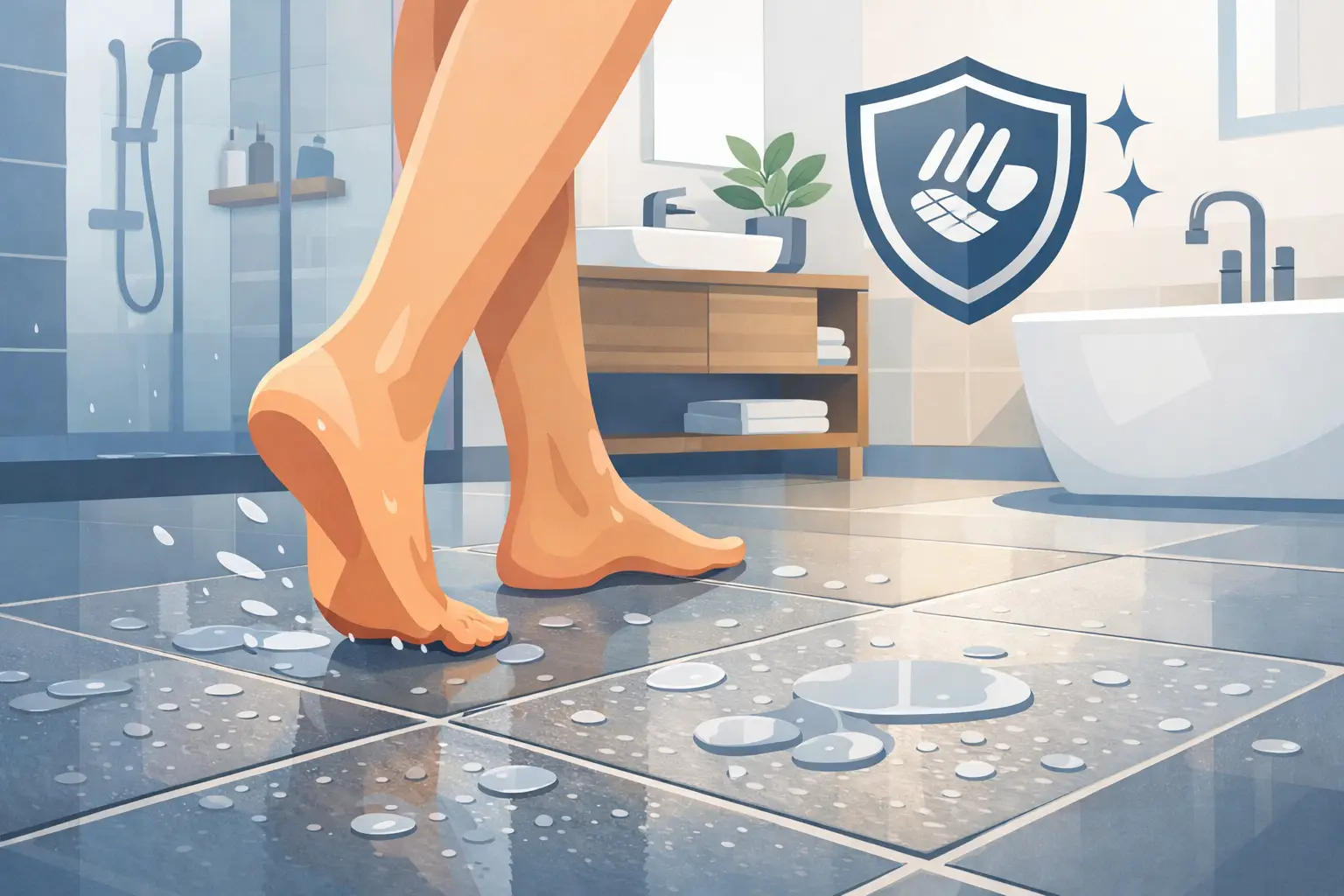
A bathroom can look immaculate on installation day and still become a hazard the first time water hits the floor. That is why slip resistant bathroom tiles matter so much. The right tile choice does more than reduce the chance of slips – it helps create a bathroom that feels considered, durable and easier to live with over the long term.
For homeowners, renovators and property managers, the challenge is rarely finding a tile that looks good. It is finding one that delivers grip without making the space feel commercial, hard to clean or visually heavy. In bathrooms especially, safety and finish quality need to work together.
Why slip resistance matters in a bathroom
Bathrooms combine smooth surfaces, regular moisture, soap residue and fast changes between dry and wet conditions. That makes them one of the highest-risk areas in any home or commercial fit-out. A floor tile that performs well in a living room may be completely unsuitable once it is laid in a shower recess or around a bath.
Slip resistance is not just about preventing obvious accidents. It also affects how confident a space feels to use every day. Families with young children, older residents, tenants and guests all benefit from a floor that feels secure underfoot. In investment properties and commercial settings, that practical consideration also supports duty of care and long-term usability.
The key point is this – bathroom tiles should be selected for where they will be installed, not just how they appear on a display board.
What makes bathroom tiles slip resistant?
Slip resistant bathroom tiles usually achieve grip through surface texture, finish and material composition. A polished tile tends to have less traction when wet, while a matte, structured or lightly textured surface generally provides better footing. Some porcelain and ceramic tiles are manufactured with anti-slip finishes specifically for wet areas.
That does not mean rougher is always better. Highly textured tiles can trap dirt, soap scum and mineral deposits more easily, particularly in showers. If the tile is too abrasive, it can also feel harsh under bare feet. The best result often comes from a tile with enough texture to improve grip, but not so much that cleaning becomes a constant battle.
Tile size and grout layout also play a role. Smaller tiles create more grout joints, which can increase overall slip resistance because grout adds texture underfoot. This is one reason mosaic tiles are so common in shower floors. Larger format tiles can still work well in bathroom areas, but they need the right finish and careful installation to maintain both safety and drainage.
Understanding slip ratings for bathroom tiles
If you are comparing products, slip ratings help cut through the guesswork. In Australia, tiles may be tested under different classification systems, including wet pendulum ratings and oil-wet ramp ratings. For residential bathrooms, the most relevant issue is how the tile performs in wet barefoot conditions, especially inside showers and on main bathroom floors.
Manufacturers and suppliers may list ratings such as P ratings or R ratings. These can be useful, but they are only part of the picture. A rating should always be considered alongside the actual location, the gradient of the floor, drainage performance and how the tile will be maintained.
For example, a tile that is suitable for a general bathroom floor may not be appropriate for a shower base where water is constantly present. Likewise, a tile that works well in a private ensuite may not be the best choice for a busy commercial bathroom with heavier foot traffic and more frequent cleaning.
This is where expert advice matters. Reading a specification sheet is one thing. Applying it to a real renovation, with actual substrate conditions and layout constraints, is another.
Best areas to use slip resistant bathroom tiles
Shower floors
If there is one place where slip resistance should never be treated as optional, it is the shower floor. Water, soap and shampoo create a consistently slick surface, and even a well-designed shower can become risky with the wrong tile underfoot. Smaller mosaics or textured porcelain tiles are often strong choices here because they offer grip and allow proper falls to the waste.
Main bathroom floors
Outside the shower, a bathroom floor still needs to cope with splashes, steam and wet feet. The aim is to carry the feeling of safety through the whole room without compromising the overall design. Matte porcelain tiles are a common choice because they balance durability, appearance and easier maintenance.
Family bathrooms and accessible spaces
In homes with children, older residents or anyone with mobility concerns, the floor needs to inspire confidence. That may mean prioritising a slightly higher-grip finish over a more decorative polished option. In accessible bathroom design, this decision becomes even more important, especially where walkers, shower seating or assistance rails are part of the layout.
Choosing the right finish without losing style
A common concern is that slip resistant tiles will look dull or overly utilitarian. That might have been true years ago, but today there is far more design flexibility. Quality porcelain and ceramic ranges now come in stone-look, concrete-look and natural neutral finishes that suit both modern and classic bathrooms.
The strongest bathroom designs tend to use slip resistance as part of the specification from the beginning rather than treating it as a compromise later. When chosen well, a matte or lightly textured tile can actually make the room feel more refined. It softens glare, gives the floor a grounded appearance and often pairs beautifully with feature walls, brushed tapware and frameless shower screens.
Colour also affects practicality. Very dark tiles can show soap marks and hard water residue more readily, while very light tiles may reveal grime in high-traffic settings. Mid-tone neutrals often provide the most forgiving balance for everyday maintenance.
Installation matters as much as the tile itself
Even the best tile can underperform if it is installed poorly. Slip resistance is influenced not only by the tile surface but also by falls, drainage, grout joint consistency and substrate preparation. If water pools because the floor has not been formed correctly, the space becomes less safe regardless of the tile rating.
This is one of the biggest differences between a bathroom that looks good in photos and one that performs properly for years. Precision installation ensures the tile sits correctly, the grout lines are clean and even, and water moves where it should. It also protects the visual finish. Misaligned tiles, lippage and inconsistent joints can all affect underfoot comfort and cleaning.
At A1 Grouting & Tiling, that combination of technical accuracy and finish quality is central to how wet areas should be built and restored. In a bathroom, aesthetics and performance should never be separated.
Maintenance and long-term performance
Slip resistant surfaces need regular cleaning to stay effective. Soap residue, body oils and cleaning product build-up can reduce traction over time, even on tiles designed for wet areas. That means maintenance is part of the safety equation.
The good news is that well-chosen bathroom tiles should not require complicated care. A practical finish, quality grout and proper sealing where required can make ongoing upkeep far easier. If you are selecting tiles for a rental property or commercial bathroom, this matters even more. A surface that looks fantastic but becomes difficult to maintain can quickly lose its appeal.
Grout condition should also be monitored. Cracked, porous or deteriorated grout affects hygiene, appearance and water resistance. In some bathrooms, restoring grout lines and resealing joints can improve both safety and presentation without a full retile.
Common mistakes to avoid
One of the most frequent mistakes is choosing wall and floor tiles as if they are interchangeable. They are not. A tile that works beautifully on a shower wall may be far too slippery for the floor.
Another is prioritising showroom appearance over wet-area performance. Under retail lighting, polished surfaces can be striking. In a real bathroom, with steam and water on the floor, they may be the wrong fit.
There is also a tendency to focus only on the tile and ignore the rest of the system. Waterproofing, correct falls, drainage placement and grout selection all influence how safe and durable the finished space will be. The best bathrooms are built as complete assemblies, not as isolated design choices.
How to make the right choice
If you are planning a new bathroom or upgrading an existing one, start by looking at how the space will actually be used. Consider who uses it, how often it gets wet, how much cleaning it will realistically receive and what design outcome you want to achieve.
Then narrow your tile options based on wet-area suitability, not just appearance. Ask about slip ratings, surface finish, maintenance requirements and whether the tile is better suited to shower floors, general bathroom floors or walls only. A good tile selection should feel balanced – safe enough for daily use, refined enough to lift the room and durable enough to hold its finish.
The most successful bathrooms are rarely built around a single trend. They are built around sound choices, precise workmanship and materials that continue to perform after the renovation dust has settled.
A bathroom floor should never leave you second-guessing your footing. When slip resistance, design and expert installation are considered together, the result is a space that feels safer, cleaner and far more complete for years to come.