 10 years of water leakage warranty for Regrouting showers.

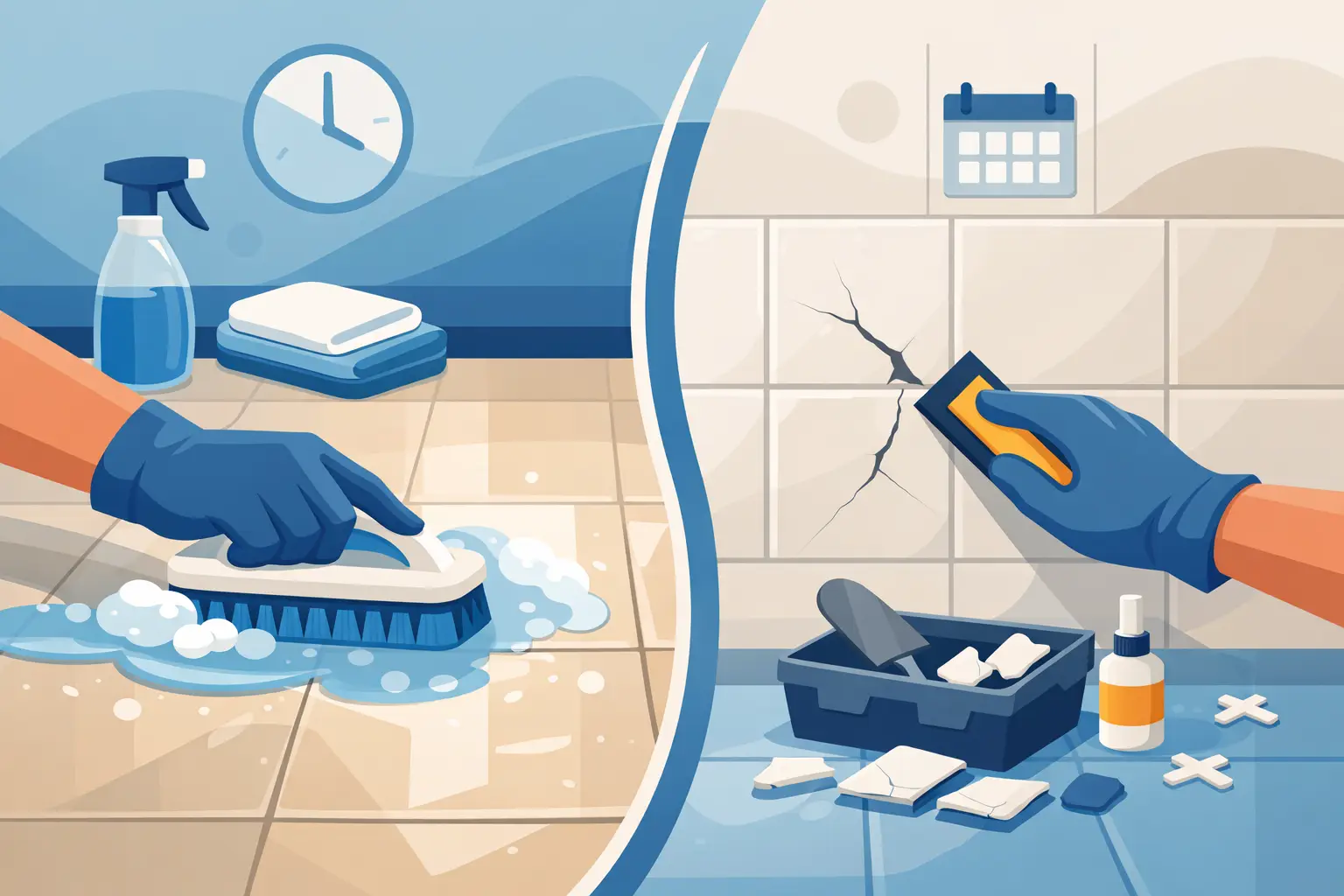
A tiled surface can look solid for years, right up until the signs become impossible to ignore. Grout starts darkening in the shower, a hollow tile shifts underfoot, or the floor never quite looks clean no matter how often it is mopped. That is usually the point where a professional tile cleaning and repair service stops being a cosmetic extra and starts becoming the smarter, more cost-effective option.
For homeowners, landlords and commercial property managers, tiled areas do more than cover a surface. They shape how a room feels, how easy it is to maintain, and in wet areas, how well it performs over time. When tiles and grout are neglected, the problem rarely stays on the surface. Moisture finds its way into weak points, finishes lose their sharpness, and what began as a small defect can turn into a broader repair.
What a tile cleaning and repair service actually covers
Many people assume cleaning and repair are separate jobs. In practice, they often overlap. A quality service looks at the tiled area as a whole – the tile face, grout lines, joints, substrate movement and any signs of water entry or wear.
Professional cleaning goes well beyond a standard scrub. It targets built-up soap residue, embedded grime, stains, mould and discolouration that ordinary household products often leave behind. The goal is not just to make tiles look brighter. It is to restore a cleaner, more hygienic finish without damaging the surface.
Repair work addresses the issues that cleaning alone cannot solve. That may include cracked grout, deteriorated silicone, loose or drummy tiles, chipped edges, minor tile replacement, sealing, or corrective work in showers and floors where moisture is already affecting performance. In many cases, the best result comes from combining both. There is little value in deep-cleaning a tiled area if failed grout or movement joints are left untreated.
The signs your tiled area needs professional attention
The clearest sign is when the space still looks tired after regular cleaning. If grout remains patchy, dark, powdery or stained, the issue is often deeper than surface dirt. Bathrooms are a common example. Steam, soap build-up and trapped moisture can gradually change both the appearance and condition of grout lines.
Another red flag is cracking. Fine cracks in grout may seem minor, but they can indicate movement, water exposure or age-related breakdown. In showers, this matters even more. Once water starts getting behind tiled surfaces, repairs become more complex and expensive.
Loose tiles, hollow sounds underfoot, lifting corners or recurring mould around joints also point to a need for repair, not just cleaning. The same applies to balconies, laundries and kitchen floors where moisture and foot traffic place ongoing stress on the surface. In commercial spaces, worn tiled areas can also affect presentation. A floor that looks stained or poorly maintained changes how clients, tenants and visitors read the entire property.
Why DIY often falls short
There is nothing wrong with routine maintenance at home. Regular sweeping, mopping and appropriate bathroom care all help extend the life of tiled surfaces. But once staining is set in or grout has started to fail, off-the-shelf products can do more harm than good.
Harsh cleaners may strip sealers, etch certain tile finishes or weaken grout further. Aggressive scrubbing can roughen the surface and make it easier for dirt to cling in future. Even when DIY methods seem to improve the appearance, they rarely address what is happening underneath.
Repair work has similar limits. Reapplying grout over compromised joints or patching silicone without resolving the source of moisture usually leads to repeat failures. A proper repair is not only about filling a gap. It is about preparing the area correctly, choosing suitable materials and ensuring the finish is both functional and visually consistent.
The value of combining cleaning with repair
This is where a professional approach makes a noticeable difference. Cleaning reveals the true condition of the surface. Repair then restores the integrity of the installation. Together, they improve appearance, hygiene and durability in one coordinated process.
That matters particularly in showers and bathrooms, where presentation and water resistance go hand in hand. Clean grout lines and neatly finished joints make the whole room look sharper, but they also reduce the risk of moisture getting where it should not. In kitchens and living areas, repaired grout and stable tiles improve safety, make maintenance easier and preserve the visual quality of the space.
For landlords and property managers, this combined approach can also be more efficient than partial fixes. Refreshing tiled surfaces without a full renovation is often enough to lift the standard of a property, reduce tenant complaints and avoid larger remedial costs later. For owner-occupiers, it is a practical way to bring back the finish of a bathroom, floor or splashback without replacing everything.
What to expect from a quality tile cleaning and repair service
The right service begins with assessment, not assumptions. Different tile types, grout conditions and usage patterns call for different methods. Porcelain, ceramic, natural stone and mosaic finishes all require a considered approach, and wet areas should always be checked for signs of water damage or failed sealing.
A workmanship-focused provider will look closely at the detail. Are grout lines crumbling or simply discoloured? Is mould sitting on the surface, or has moisture penetrated behind the tile? Are movement joints missing? Is the silicone neat, intact and suitable for the space? These details matter because appearance and performance are linked.
You should also expect a clean, careful process. In occupied homes and commercial settings alike, preparation and finish quality count. Protection of adjacent surfaces, tidy removal of failed materials, precise regrouting and colour consistency all contribute to a result that looks intentional rather than patched together.
For businesses such as A1 Grouting & Tiling, the standard is not merely to restore function. It is to deliver a refined finish that improves the room visually while strengthening long-term performance.
Where repair is enough and where replacement may be smarter
Not every damaged tiled area needs to be ripped out. In fact, many surfaces respond extremely well to targeted restoration. If the majority of tiles are sound and the main issues are deteriorated grout, stained joints, isolated cracks or minor movement, repair and deep cleaning can achieve a substantial transformation.
There are limits, though. If widespread water damage has affected the substrate, if tiles are extensively delaminating, or if the installation was done poorly from the start, more extensive remedial work may be the better investment. The same applies when matching replacement tiles are unavailable and the finished look would be compromised.
This is where honest advice matters. A reputable specialist should not recommend full replacement when restoration will do the job properly, and they should not promise a cosmetic fix where structural issues remain unresolved. The right recommendation depends on condition, budget, expected lifespan and the standard of finish you want to achieve.
Why timing matters
Tile and grout problems rarely improve by waiting. A cracked joint in a shower can become a waterproofing issue. A loose floor tile can spread movement to surrounding tiles. Staining that begins as residue can settle into porous grout and become much harder to remove.
Early intervention usually keeps the scope tighter and the outcome cleaner. It also protects the appearance of the space. Once grout is heavily degraded or moisture has caused surrounding damage, even high-quality repair work may involve more disruption and cost.
For commercial properties, timing also affects presentation and operations. Addressing problem areas before they become obvious to customers or tenants helps maintain a professional standard. For homes, it can mean restoring a bathroom or living area before a minor defect turns into a renovation-scale issue.
Choosing a service that protects long-term value
The cheapest quote is rarely the best measure of value in this kind of work. Tile care is detail work. The finish is only as good as the preparation, the materials and the skill behind it. A service worth booking should offer more than a quick cosmetic improvement. It should give you confidence that the tiled area will be easier to maintain, better protected and stronger in daily use.
That means looking for technical knowledge, attention to finish quality and a clear understanding of wet area performance. It also means choosing a team that sees tiled surfaces as part of the overall presentation of the property, not just as a repair task to tick off.
When the work is done properly, the result is immediate but also lasting. Tiles look cleaner, grout lines appear sharper, and the room feels better cared for. More importantly, the surface is returned to a standard that supports hygiene, durability and everyday confidence. If your tiles are showing signs of wear, movement or discolouration, acting sooner gives you more options and usually a better finish.