 10 years of water leakage warranty for Regrouting showers.

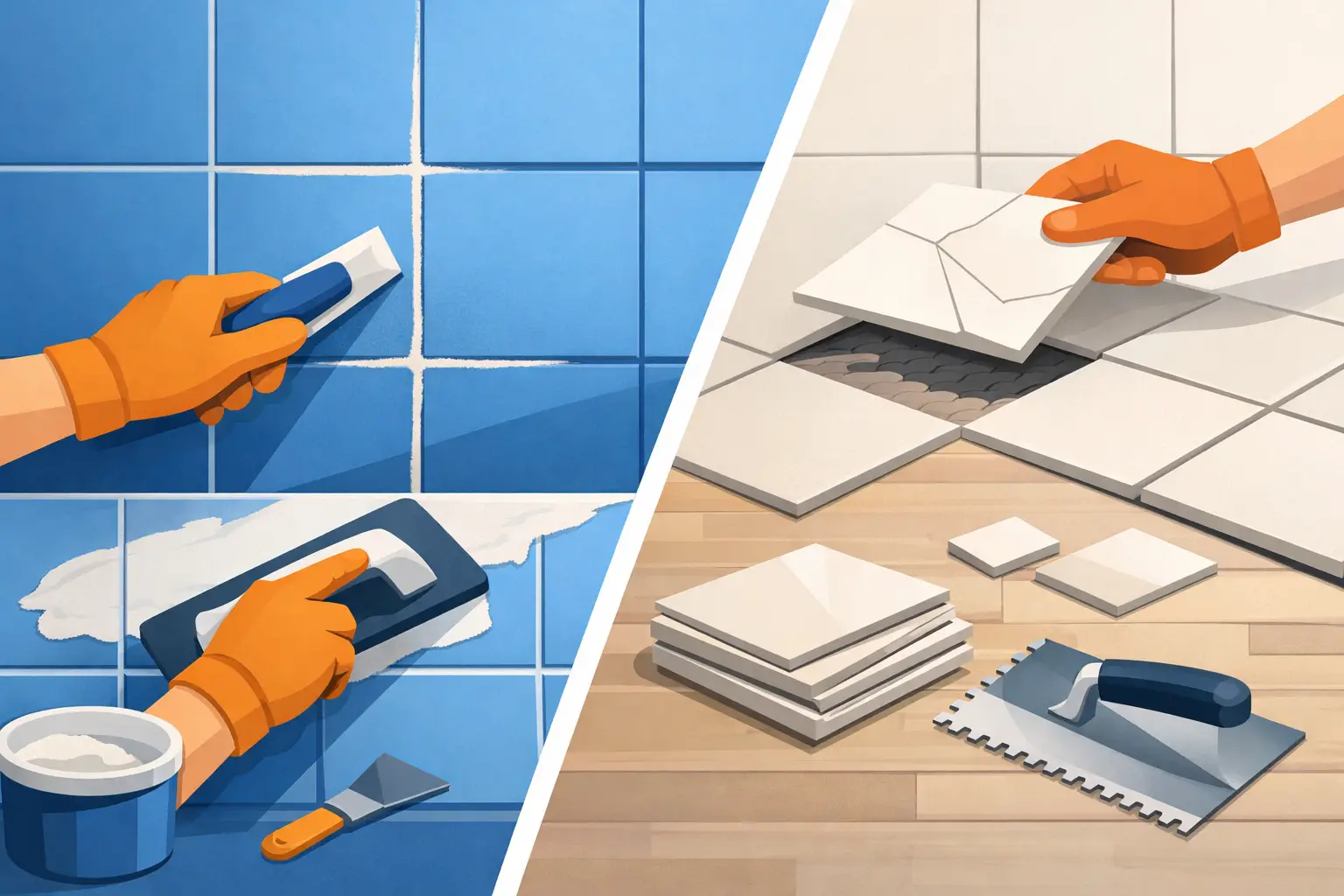
A bathroom can look tired long before the tiles themselves are beyond saving. Stained grout lines, hairline cracks, mould around joints, and loose sealant can make the whole space feel older, dirtier, and less reliable than it really is. That is why so many property owners ask, is regrouting cheaper than replacing tiles? In many cases, yes – and by a wide margin – but the right answer depends on what is failing, how far the damage has spread, and whether the finish still suits the space.
If the tiles are sound and the problem sits mainly in the grout joints, regrouting is usually the more cost-effective option. It restores the appearance of the tiled area, improves hygiene, and can help protect against moisture issues without the disruption of demolition. Replacing tiles becomes the better investment when the tiles are cracked, drummy, outdated beyond rescue, or when the substrate underneath has been compromised.
Is regrouting cheaper than replacing tiles in most cases?
As a rule, regrouting costs less because it keeps the bulk of the existing installation in place. There is no need to strip out every tile, remove adhesive, prepare the substrate from scratch, and install a completely new surface. Labour is more contained, material costs are lower, and the project timeline is generally shorter.
Tile replacement is not just about buying new tiles. It often includes demolition, disposal, waterproofing checks, substrate repairs, new adhesives, new grout, silicone work, and the labour needed to bring the whole area back to a clean, aligned finish. Once those elements are added up, a full replacement can cost several times more than a well-executed regrouting job.
That said, cheaper upfront does not always mean better value. If grout failure is only a symptom of deeper movement, water damage, or poor original installation, regrouting alone may not solve the issue for long. The savings only hold when the underlying tiled surface is still structurally sound.
What regrouting actually fixes
Regrouting is ideal for tiled areas that look worn but remain fundamentally intact. Over time, grout can discolour, crack, become porous, or harbour mould and soap residue. In showers especially, this can make a once-clean finish look neglected, even if the tiles themselves are still in excellent condition.
Professional regrouting removes deteriorated grout and replaces it with fresh material that improves both appearance and performance. In the right setting, it can transform a bathroom, laundry, kitchen splashback, or tiled floor without the mess and cost of a full renovation.
It is particularly effective when the main concerns are cosmetic ageing, minor grout shrinkage, localised cracking, or hygiene problems caused by old, porous joints. When paired with new silicone in movement joints and corners, the result is often a cleaner, sharper, more watertight finish.
When replacing tiles is the smarter spend
There are times when regrouting is not enough. If tiles are loose, cracked, lifting, or hollow sounding across large sections, the issue may sit beneath the surface. You may be dealing with adhesive failure, substrate movement, water ingress, or poor installation practices from the outset.
In those cases, replacing the grout alone can tidy the look temporarily, but it will not correct the reason the tiled surface is failing. The same applies when waterproofing has been compromised, when there is significant moisture damage behind shower walls, or when tiles have become so dated that even fresh grout will not lift the overall appearance.
Replacement also makes sense when matching existing tiles is impossible and isolated repairs would leave an uneven finish. For landlords and commercial property managers, this decision often comes down to lifecycle value. A patch-up that needs further work in twelve months is rarely the cheapest option in practice.
The real cost difference comes from labour and scope
The biggest gap between regrouting and replacing tiles is usually labour. Regrouting is skilled work, but it is targeted work. It focuses on joints, seals, preparation, and finish quality rather than complete removal and reinstatement.
Replacing tiles involves more trades, more surface preparation, more waste removal, and more time out of action for the space. In a shower, for example, the cost can rise quickly if removal damages the substrate or reveals waterproofing issues that must be rectified before new tiles go on.
This is why two bathrooms of the same size can have very different replacement costs. Once demolition begins, hidden problems can appear. Regrouting tends to be more predictable because the scope is narrower, provided the tiles are in good condition.
How to tell which option your space needs
The decision should start with condition, not just budget. If the grout is cracked but the tiles are firm, aligned, and free from major damage, regrouting is often the logical first option. It gives the area a visual reset and restores the joints that help protect the installation.
If you notice movement underfoot, loose wall tiles, persistent damp smells, swelling in adjacent materials, or recurring cracks that keep returning after previous repairs, a deeper problem may be present. In that situation, replacement may be the safer and more durable path.
Age matters too, but not in a simple way. Older tiles are not automatically a candidate for replacement. Many tiled surfaces are worth preserving if the layout is still attractive and the installation remains stable. On the other hand, a newer tiled area with poor workmanship may need more than cosmetic repair.
Is regrouting cheaper than replacing tiles if you want a fresh look?
Usually, yes – but there is a limit to what regrouting can achieve cosmetically. Fresh grout can dramatically sharpen the look of tiled surfaces, especially when old joints are stained or uneven. It brightens lines, improves cleanliness, and makes the whole installation feel more deliberate and refined.
For many homeowners, that is enough. A well-restored shower or floor can look significantly newer without changing the tiles at all. This is often the sweet spot for budget-conscious renovations, pre-sale improvements, and rental property updates where appearance and practicality both matter.
But if the tiles themselves are heavily chipped, outdated in style, or visually dragging down the room, regrouting will only take the finish so far. It can improve the frame, but it cannot change the picture.
Why workmanship matters more than the cheapest quote
Both regrouting and tile replacement depend on precision. Poor grout removal can chip tile edges. Inconsistent joint filling can leave weak points. Untidy silicone work can spoil an otherwise clean finish. And if the cause of failure is misread, even a cheaper repair can become expensive once the problem returns.
That is why specialist assessment matters. A quality-focused contractor will look beyond surface staining and ask whether the tiled area is worth restoring, whether moisture has travelled, and whether the finish can be brought back to a standard that lasts. Good workmanship is not just about making the area look better on day one. It is about delivering a result that performs properly over time.
For property owners, this is where value becomes clearer. A precise regrouting job on sound tiles can extend the life of a bathroom or floor for years at a fraction of replacement cost. A rushed job done without proper preparation can leave you paying twice.
The better question is not just cost – it is value
When people ask whether regrouting is cheaper than replacing tiles, they are usually trying to avoid overspending. Fair enough. But the better question is which option gives the strongest result for the condition of the space.
If your tiles are still solid, regrouting is often the smarter investment. It improves presentation, hygiene, and service life while avoiding the cost and disruption of starting over. If the installation is failing underneath, replacement may cost more now but save money, time, and frustration later.
At A1 Grouting & Tiling, that distinction matters because quality repairs should never be guesswork. The right solution protects the surface, lifts the finish, and gives you confidence that the job has been done properly.
If your tiled area looks worn, the best next step is not to assume the worst or choose the cheapest path blindly. It is to have the condition assessed with a trained eye. Sometimes the smartest upgrade is a precise restoration. Sometimes it is a clean replacement. Knowing the difference is where real value starts.