 10 years of water leakage warranty for Regrouting showers.

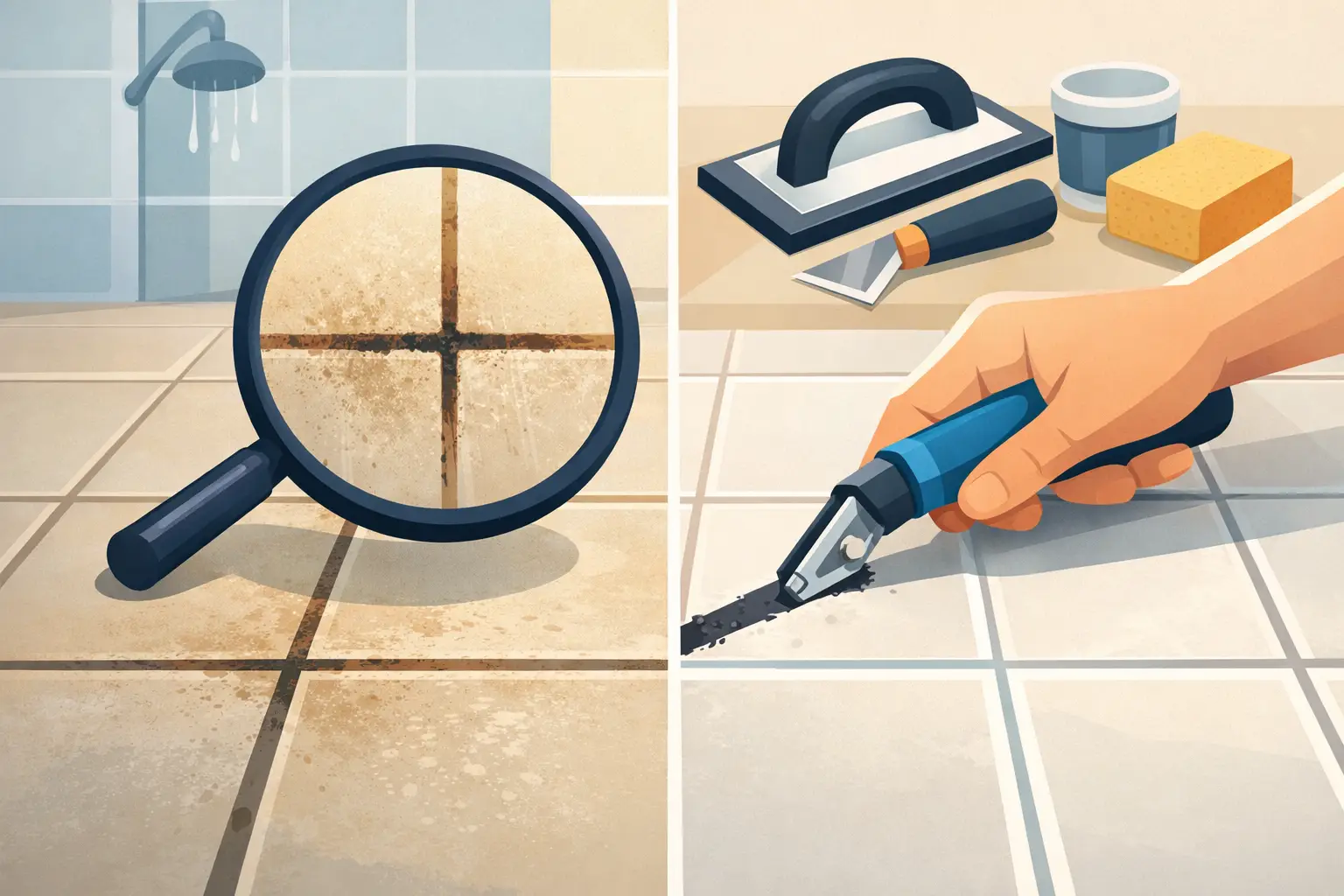
A tiled surface can look tired long before the tiles themselves are past their best. Dark shower joints, yellowed kitchen splashbacks and patchy floor grout can make an otherwise well-finished room feel unclean. Knowing when to replace stained grout lines, rather than repeatedly scrubbing them, helps protect the surface beneath and restores the sharp, polished finish your space deserves.
Grout is not simply a cosmetic filler between tiles. It supports the tiled finish, closes vulnerable gaps and, in wet areas, works alongside the waterproofing system to manage moisture. When it becomes stained, cracked or porous, the right solution depends on what has caused the problem and how far the damage has progressed.
When stained grout is more than a cleaning issue
Surface grime is common in high-use areas. Bathroom floors collect soap residue, showers develop mould, and kitchen grout can absorb cooking oils and spills. If the grout is still firm, even and intact, a professional clean or targeted treatment may be enough to improve its appearance.
Persistent discolouration is different. Grout that remains dark after cleaning may be deeply porous, permanently stained or affected by mould beneath the surface. Bleach and harsh chemicals can make grout look better temporarily, but they do not rebuild missing material or correct moisture-related damage. In some cases, repeated chemical cleaning can weaken already worn joints and leave the area looking patchy.
Look closely for cracking, crumbling edges, gaps around tiles, loose sections or grout that feels soft when pressed. These are signs that cleaning alone is unlikely to deliver a lasting result. In a shower, failed grout around corners, fixtures and wall-to-floor junctions requires particular attention, as these areas are regularly exposed to water.
Replace stained grout lines or choose regrouting?
The phrase “replace stained grout lines” can mean different levels of repair. In many cases, the tiles can remain in place while the old grout is carefully removed and replaced with fresh grout. This is known as regrouting. It is often the most efficient option where the tile installation is sound but the joints are worn, stained or damaged.
Regrouting gives tiled areas a genuine visual reset. Fresh, evenly finished grout restores the definition of the tile layout, improves hygiene and can dramatically brighten a bathroom, kitchen, entry or commercial floor. It also allows you to update the grout colour, whether that means returning to a clean light tone or choosing a darker shade that better suits a busy space.
Full tile replacement may be the better choice when tiles are loose, cracked, hollow-sounding or poorly bonded to the substrate. It may also be needed where water damage has affected the wall or floor behind the tiles, or where an outdated layout no longer meets the needs of the room. Regrouting cannot resolve structural movement, failed waterproofing or damaged backing materials.
The distinction matters. Regrouting a stable tiled surface can provide excellent value and a high-quality finish. Regrouting over an underlying failure, however, only postpones a more significant repair. A careful assessment should come before any work begins.
Shower grout needs a closer inspection
A stained shower is not always a leaking shower, but it should never be dismissed without checking the condition of the joints. Mould that repeatedly returns, missing grout, cracked corners and dampness outside the shower area can point to water finding a path where it should not.
Shower restoration requires precision because grout, silicone and tile junctions all have different roles. Grout is used between tiles, while flexible sealant is needed at movement joints, corners and changes of plane. Using the wrong material in the wrong location can lead to early cracking and water ingress.
For showers with sound tiles and suitable underlying conditions, professional regrouting can restore cleanliness and performance without the disruption of a full renovation. Where a complete shower regrout is appropriate, workmanship and preparation are just as important as the finish you see on day one.
What professional grout replacement involves
Quality regrouting is not a matter of applying new material over old stains. The existing damaged grout needs to be removed to an appropriate depth without chipping tile edges or compromising the surrounding installation. Dust, residue and loose material must then be cleared so the new grout can bond properly.
Once the joints are prepared, fresh grout is applied evenly and finished with clean, consistent lines. The colour should complement the tile rather than compete with it. Pale grout can make a compact bathroom feel brighter, while charcoal or mid-grey grout can add definition and is often more forgiving in busy areas. The best choice depends on the tile size, room lighting, cleaning routine and the overall look you want to achieve.
Sealant joints are then addressed where required. In wet areas, neat silicone application around corners, screens, fixtures and transitions helps create a clean, water-conscious finish. The result should look refined, not heavily patched or uneven.
At A1 Grouting & Tiling, the focus is on restoring both the appearance and long-term function of tiled surfaces. Careful preparation, accurate grout lines and a clean work area are essential parts of a finish that is built to last.
The right option for bathrooms, kitchens and floors
Every tiled area faces different demands. A shower experiences daily moisture and requires close attention to mould, cracked joints and sealant condition. A kitchen splashback may mainly suffer from grease and staining, making a detailed clean, recolouring or localised regrout more suitable.
Floor grout is exposed to foot traffic, dirt and abrasive particles. Entryways, laundries and commercial interiors can develop uneven wear patterns, particularly where light-coloured grout was chosen for a high-use zone. Regrouting can refresh these areas, but tile movement, slab cracks and loose tiles should be investigated first. Durable results rely on a stable base.
Balconies and other exterior tiled spaces need an even more cautious approach. Weather exposure, drainage, movement and waterproofing all affect the condition of grout. A surface-level repair may be appropriate for isolated deterioration, while widespread cracking can indicate a larger issue that needs to be addressed before fresh grout is installed.
How to keep fresh grout looking cleaner for longer
New grout should make maintenance easier, not create another demanding cleaning routine. Allow the material to cure as advised, then clean tiled areas regularly with suitable pH-neutral products. Avoid aggressive acids, abrasive powders and constant bleach use, as these can damage grout, silicone and some tile finishes over time.
In showers, ventilation makes a noticeable difference. Run the exhaust fan during and after use, wipe down excess water where practical and repair dripping taps or shower screens that direct water onto the same section of grout every day. In kitchens, clean spills promptly before oils, sauces and coloured liquids have time to settle into porous joints.
For floors, regular sweeping or vacuuming removes grit that can gradually wear the finish. A well-maintained grout line does not need to look sterile, but it should remain intact, even and easy to clean. That is the practical standard worth aiming for in a home, rental property or commercial space.
A fresh finish starts with the correct diagnosis
Stained grout can be a simple maintenance issue, a sign of worn joints or an early warning that water is reaching places it should not. The most cost-effective choice is rarely the quickest cosmetic fix. It is the repair that matches the condition of the tiles, grout, substrate and surrounding sealant.
A professional assessment gives you clarity before work begins: whether a targeted clean will do, whether regrouting can transform the space, or whether damaged tiles and moisture concerns call for a more complete repair. With the right preparation and precise workmanship, tired grout lines can become a clean, durable detail that lifts the entire room.