 10 years of water leakage warranty for Regrouting showers.

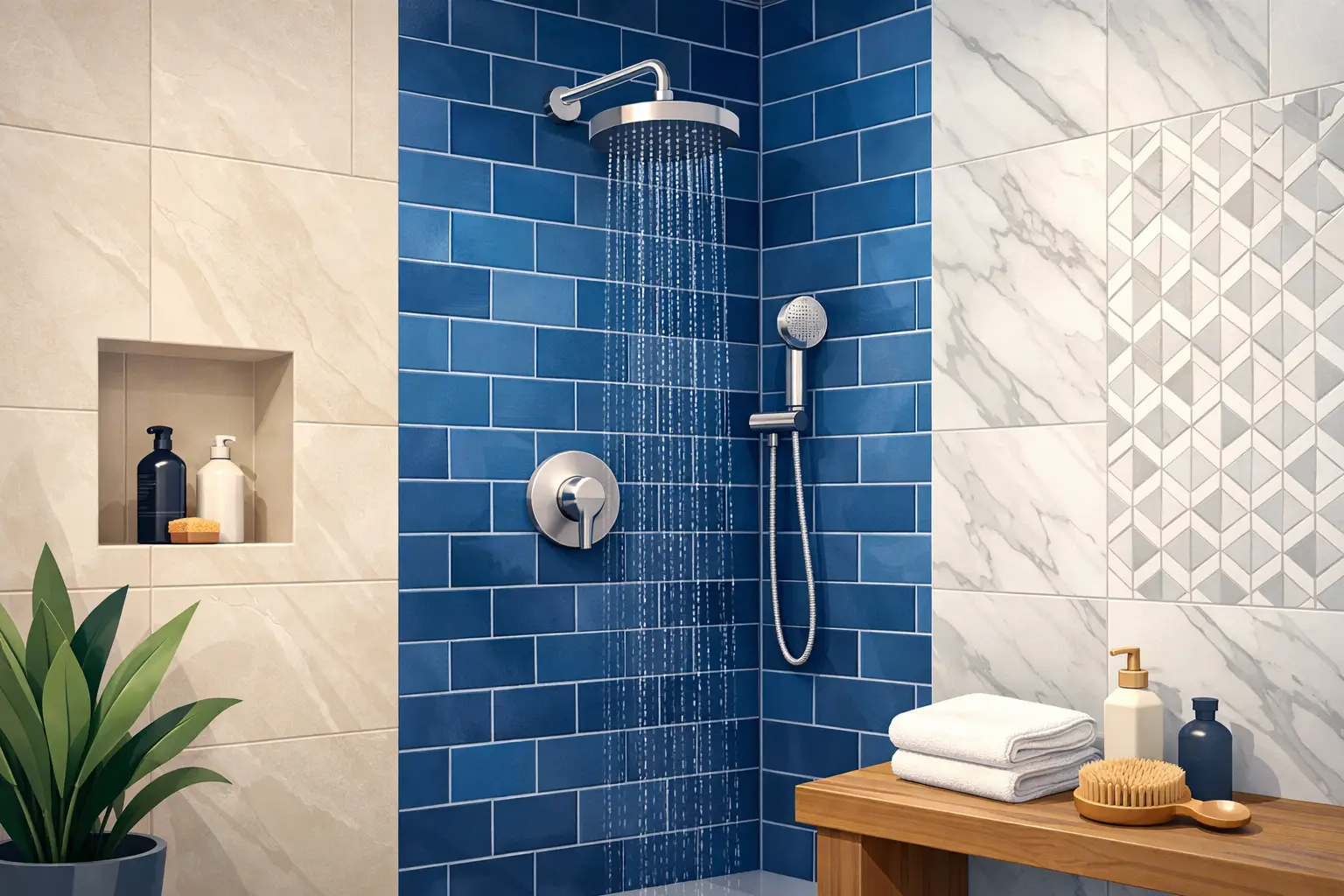
A shower wall can look exceptional on installation day and become difficult to maintain within a year if the wrong materials or finishes are chosen. The best tiles for shower walls are not simply the ones that suit a mood board. They need to work with the bathroom’s light, layout, ventilation and waterproofing while standing up to daily moisture, soap residue and cleaning.
For most Australian homes, porcelain is the strongest all-round choice. That said, ceramic, natural stone, glass and feature mosaics each have a place when selected and installed with care. The right result comes from balancing design with practical performance, then making sure every tile, cut, grout joint and seal is finished precisely.
What shower wall tiles need to handle
Unlike a splashback or a powder room wall, shower tiles are exposed to repeated water, steam and temperature changes. Water does not usually damage a quality tile itself, but it can find its way through cracked grout, failed silicone or poorly prepared wall surfaces. That is why tile selection should never be separated from proper waterproofing and workmanship.
A suitable shower wall tile should have low water absorption, a surface that is easy to clean, and a finish that suits the scale of the room. It should also be available with matching trims or allow clean, well-planned edge details. Those finishing details make a noticeable difference around niches, windows, tapware and shower screens.
Wall tiles do not need the same high slip resistance required for shower floors. This opens up more options for polished, gloss or textured surfaces. Still, a deeply textured tile can trap soap scum and make cleaning more time-consuming, particularly in a busy family bathroom or rental property.
The best tiles for shower walls by material
Porcelain: the reliable all-rounder
Porcelain tiles are often the best tiles for shower walls because they combine low porosity, excellent durability and a wide range of designs. They can replicate natural stone, concrete, timber and handmade ceramic looks without demanding the ongoing sealing and careful maintenance those materials may require.
Large-format porcelain creates a refined, contemporary finish with fewer grout joints. Fewer joints generally mean less routine cleaning, making it a practical option for main bathrooms, ensuite renovations and commercial amenities. Smaller porcelain tiles, including kit-kat and finger tiles, can create more visual movement where a feature wall is wanted.
Porcelain does require accurate preparation and installation. Large tiles particularly need flat, sound wall surfaces, correct adhesive coverage and careful levelling to avoid lipping between edges. When those fundamentals are handled properly, the result is crisp, durable and easy to maintain.
Ceramic: versatile and cost-conscious
Glazed ceramic wall tiles remain a dependable choice for shower walls. They are available in an enormous variety of colours, profiles and finishes, from classic white subway tiles to glossy handmade-look options with soft variation.
Ceramic is typically easier to cut than porcelain, which can help when a shower wall includes multiple fittings or detailed niches. It can also offer good value without looking basic. The trade-off is that ceramic is generally less dense than porcelain, so it is best reserved for wall applications and installed with appropriate adhesive, grout and waterproofing behind it.
A glossy ceramic tile can brighten a compact or low-light bathroom by reflecting light around the space. A satin or matt glaze is more understated and often better at disguising water spots. Neither is automatically better – it depends on the desired look and how much daily cleaning the room is likely to receive.
Natural stone: distinctive, but higher maintenance
Natural stone offers depth and variation that manufactured tile cannot perfectly duplicate. Marble, travertine, limestone and slate can make a shower feel considered and luxurious, especially in a carefully planned renovation.
However, stone is not a fit-and-forget choice. Many stone tiles are porous and need sealing before use and periodic resealing over time. Some are also sensitive to acidic cleaners, which can mark or dull the surface. Honed stone tends to be more forgiving than polished stone in a wet area, but it still needs a maintenance routine that suits the household.
Stone can be an excellent choice for owners willing to care for it properly. For a high-turnover rental, a children’s bathroom or a commercial space requiring simple maintenance, a stone-look porcelain tile often delivers a more practical long-term outcome.
Glass and mosaic tiles: best used with purpose
Glass mosaics bring colour, reflection and a decorative finish to a shower niche, feature strip or a small accent wall. They are naturally non-porous and can make a darker shower feel lighter. Their drawback is the number of grout lines, which means more cleaning and more detail to maintain.
Mosaic sheets can also follow curves and work well on smaller areas. They should be installed with the correct adhesive and grout system, as transparent glass can show adhesive colour and uneven coverage behind the tile. Used selectively, mosaics add character without overwhelming the room or creating unnecessary upkeep.
Tile size changes both the look and the maintenance
Tile size is one of the most influential decisions in a shower renovation. Large-format tiles give walls a calm, continuous appearance. They work especially well in contemporary bathrooms where the goal is a spacious, polished finish. A 600 x 1200 mm porcelain tile, for example, can reduce grout lines dramatically compared with a traditional smaller format.
The common concern that large tiles make a small bathroom feel smaller is not always true. When the layout is planned well and the tile runs continuously across key walls, large tiles can make a compact shower feel less busy. The limitation is practical: very small or irregularly shaped shower walls may produce narrow cuts that interrupt the design.
Smaller tiles offer greater flexibility around niches, tapware and corners. Subway tiles, square tiles and finger tiles can suit heritage homes, coastal bathrooms and more decorative schemes. Their main compromise is grout. More joints mean a stronger visual grid and more surface area to clean, so grout colour and quality matter just as much as the tile itself.
Choose a finish that matches real life
Gloss tiles reflect light and can make a shower feel clean and bright. They are a strong choice for smaller bathrooms, particularly in white, pale grey or soft neutral tones. On the other hand, gloss can reveal water marks more readily in some lighting conditions.
Matt tiles create a softer, more architectural appearance and are often better at concealing everyday marks. They can also work beautifully with brushed nickel, black or brass tapware. Avoid assuming that all matt tiles feel rough or difficult to clean – many quality matt porcelains have a smooth, practical surface.
Patterned or strongly veined tiles deserve extra planning. A bold marble-look porcelain may look impressive as a full shower surround, but busy veining can compete with a feature niche, patterned floor or statement tapware. In most bathrooms, one focal element is enough. The surrounding finishes should support it rather than fight for attention.
Grout and finishing details protect the investment
Even the most suitable wall tile can be undermined by poorly finished grout joints. Grout should be selected for its performance as well as its colour. A closely matched grout creates a quieter, more continuous surface, while contrast grout highlights the tile shape and pattern.
Light grout is not automatically a poor choice, but it needs quality installation and regular care. In a heavily used shower, a mid-tone grout can be more forgiving. Epoxy grout offers excellent stain and moisture resistance, though it requires experienced handling and is not necessary for every project. A premium cement-based grout can perform very well when it is correctly mixed, applied and maintained.
Movement joints and silicone junctions are equally important. Changes of plane, such as where two walls meet or where a wall meets the shower floor, need flexible sealant rather than rigid grout. These areas should be inspected over time, especially if there are signs of cracking, discolouration or mould.
Professional preparation is what turns good materials into a long-lasting shower. At A1 Grouting & Tiling, that means considering substrate condition, waterproofing, tile layout, grout lines and finishing details as one complete system, not separate tasks.
A considered choice will look better for longer
Start with how the shower will actually be used, then choose the tile that supports that routine. A large-format porcelain may be ideal for a low-maintenance modern ensuite, while a glazed ceramic subway tile may suit a character-filled family bathroom. Natural stone can be exceptional where its upkeep is understood and welcomed.
The best result is rarely about choosing the most expensive tile in the showroom. It is about selecting a material that suits the space and having it installed with the precision needed to keep the shower clean, watertight and visually refined for years to come.