 10 years of water leakage warranty for Regrouting showers.

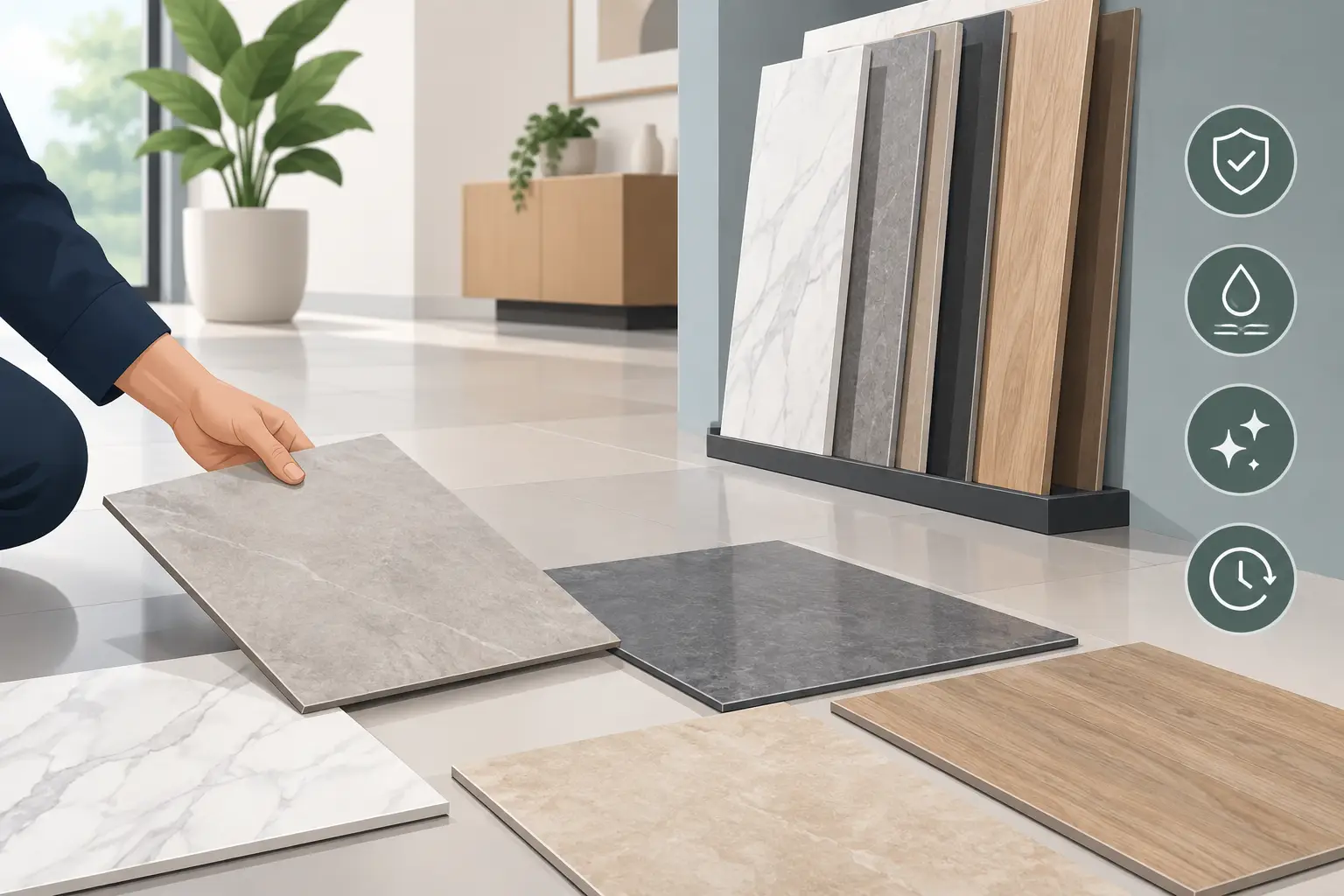
A floor can look flawless in a showroom and still be the wrong choice for your home. A pale polished tile may suit a quiet formal living area, yet become slippery near a pool door. A heavily textured tile can offer welcome grip outdoors, but may take more effort to keep clean in a busy kitchen. This guide to choosing floor tiles starts where good tiling work always does: with how the room is actually used.
The right tile brings together appearance, comfort, safety and long-term performance. It should suit the space, support the design of the home and be installed over a properly prepared surface. When those decisions work together, the result is a durable floor with a clean, refined finish.
Start with the room, not the display board
Before choosing a colour or pattern, consider the demands of the room. Bathrooms, laundries and entryways deal with regular moisture. Kitchens need a surface that withstands spills, dropped utensils and frequent cleaning. Living areas may prioritise warmth and visual flow, while balconies and outdoor spaces require materials that can handle sun, rain and changing temperatures.
Traffic also matters. A family hallway, rental property entrance or commercial reception area needs a harder-wearing surface than a little-used spare room. In high-traffic zones, choose tiles with a finish and body designed to resist scratching, staining and visible wear. A floor that looks beautiful on day one should still look cared for years later.
It is also worth thinking about what comes in on shoes. Homes near the beach, bushland or building sites can see plenty of sand, grit and dirt. Mid-tone tiles with subtle variation or a light stone-look pattern often hide everyday marks better than very dark glossy tiles or plain, bright white floors.
Choose a tile material for real life
Most residential floor tile decisions come down to porcelain, ceramic or natural stone. Each has a place, provided it is selected for the right setting.
Porcelain for dependable performance
Porcelain is a popular option for floors because it is dense, low-porosity and highly durable. It performs well in bathrooms, kitchens, hallways, living areas and many outdoor applications when the product is rated for exterior use. Modern porcelain also offers convincing concrete, timber, terrazzo and natural stone looks without the same level of maintenance required by some natural materials.
For busy households, porcelain is often the practical choice. It is resistant to moisture and staining, straightforward to maintain and available in a wide range of sizes, textures and colours. Not all porcelain tiles have the same slip rating or surface finish, however, so the specification still needs to match the location.
Ceramic for lighter-use indoor areas
Ceramic floor tiles can be an economical and attractive choice for lower-traffic internal rooms. They are available in many colours and decorative styles, making them useful where design is the main focus. Compared with porcelain, ceramic is generally less dense and may be less suitable for demanding floors, wet outdoor areas or spaces that receive heavy foot traffic.
The key is not to dismiss ceramic outright, but to use it where it will perform well. A correctly specified ceramic tile in a low-use internal room can offer an excellent finish and lasting value.
Natural stone for character and variation
Natural stone creates depth and individuality that manufactured products cannot perfectly replicate. Travertine, limestone, marble and slate each have their own movement, texture and colour variation. This can make a floor feel more considered and premium, especially in feature spaces or homes with a natural, architectural style.
Stone does require a more committed maintenance approach. Some varieties are porous and need sealing, while acidic spills can mark particular stones. Surface variation can also affect cleaning and installation requirements. Natural stone is a strong design choice when its character and care needs are understood from the beginning.
A guide to choosing floor tiles with the right finish
Tile finish affects both the look of the room and the way the floor performs. Gloss tiles reflect light and can make compact rooms feel brighter, but they can show water spots, footprints and smudges. They are generally better suited to walls or dry, low-traffic floors than wet entrances or family bathrooms.
Matt and satin finishes are widely used for floors because they offer a softer appearance and are more forgiving between cleans. They work particularly well with contemporary stone-look and concrete-look designs. A structured or textured finish provides extra grip, making it a sensible option for shower areas, pool surrounds, balconies and external paths. The trade-off is that deeper texture may hold more dirt, so it needs appropriate regular cleaning.
For wet areas, ask about the tile’s slip resistance rating rather than relying only on how the sample feels by hand. A tile can appear matt yet still be unsuitable for a constantly wet shower floor. The right rating depends on whether the area is internal or external, covered or exposed, and likely to be wet underfoot.
Size, layout and grout lines shape the final result
Large-format tiles can make an open-plan area feel calm and expansive because there are fewer grout joints across the floor. They suit modern interiors and can create an elegant continuous look from kitchen to dining and living spaces. However, large tiles demand a flat, well-prepared substrate. Even a quality tile can look uneven if the floor beneath it has not been properly assessed and prepared.
Smaller tiles, mosaics and patterned formats have a different strength. More grout joints can provide useful traction in shower floors, while a patterned layout can turn an entry or bathroom into a design feature. These formats may require more time to install and more grout to maintain, but the visual outcome can be worth it.
Tile direction matters too. Timber-look planks can be laid in a straight pattern for a clean, contemporary feel or in a staggered arrangement for a more traditional effect. Rectified tiles, which have precisely cut edges, can allow narrower grout joints. That crisp look relies on accurate set-out, level surfaces and careful installation.
Grout should be treated as part of the design, not an afterthought. A close colour creates a quieter, more continuous surface. A contrasting grout highlights the tile shape and pattern but can show discolouration more readily in busy areas. In showers, kitchens and floors exposed to regular moisture, quality grout selection and proper sealing details support hygiene, easier cleaning and long-term durability.
Consider the existing floor and installation conditions
A good tile choice can only perform as well as the preparation underneath it. Cracked concrete, movement in timber subfloors, uneven screeds and moisture issues all need attention before tiling begins. Skipping this stage can lead to cracked tiles, loose sections, drummy sounds or failed grout joints later.
Bathrooms and balconies require particularly careful waterproofing and drainage. Floor falls must direct water to the waste, and the chosen tile size needs to work with those falls. Very large tiles can be difficult to use on a shower floor where multiple directions of fall are required. Smaller formats are often a safer and more practical solution.
If new tiles are being laid over existing tiles, the existing surface must be stable, clean and suitable for the system being used. This approach can save demolition time in some projects, but it raises floor height and is not appropriate for every situation. Door clearances, drainage points, appliances and transitions to adjoining rooms should be checked before work begins.
Plan for cleaning, not just installation day
The best floor is one you can realistically maintain. For most homes, porcelain with a matt or lightly textured finish offers an excellent balance of style and low maintenance. Regular sweeping or vacuuming removes abrasive grit, while a pH-neutral cleaner helps avoid residue and unnecessary wear on grout and finishes.
Avoid choosing a highly textured white tile for a busy mud-prone entry simply because it looks striking in a display. Equally, do not assume a dark tile will hide everything. Dark floors can reveal pale dust, pet hair and mineral marks, particularly where water is hard. Samples should be viewed in the room’s natural and artificial light, not only under showroom lighting.
A few spare tiles should always be kept after installation. They are useful if a future repair is needed and help avoid the challenge of matching a discontinued batch years down the track.
Balance budget with long-term value
The tile price is only one part of the project cost. Preparation, waterproofing, adhesive systems, trims, grout, removal of old finishes and skilled installation all influence the finished floor. Choosing a cheaper tile that is poorly suited to the location can become expensive if it chips, stains, slips or requires early replacement.
Invest where performance matters most. Select a suitable tile, use quality installation materials and allow for precise preparation. A1 Grouting & Tiling approaches every floor as a finished surface system, because alignment, grout quality and edge details are what turn a tile selection into a polished result.
Bring home several samples, place them beside cabinetry and paint colours, and look at them at different times of day. The floor will carry the room for years, so the best choice is not simply the one that catches your eye first. It is the tile that feels right underfoot, performs confidently in the space and continues to look clean, balanced and well finished long after the renovation dust has settled.