 10 years of water leakage warranty for Regrouting showers.

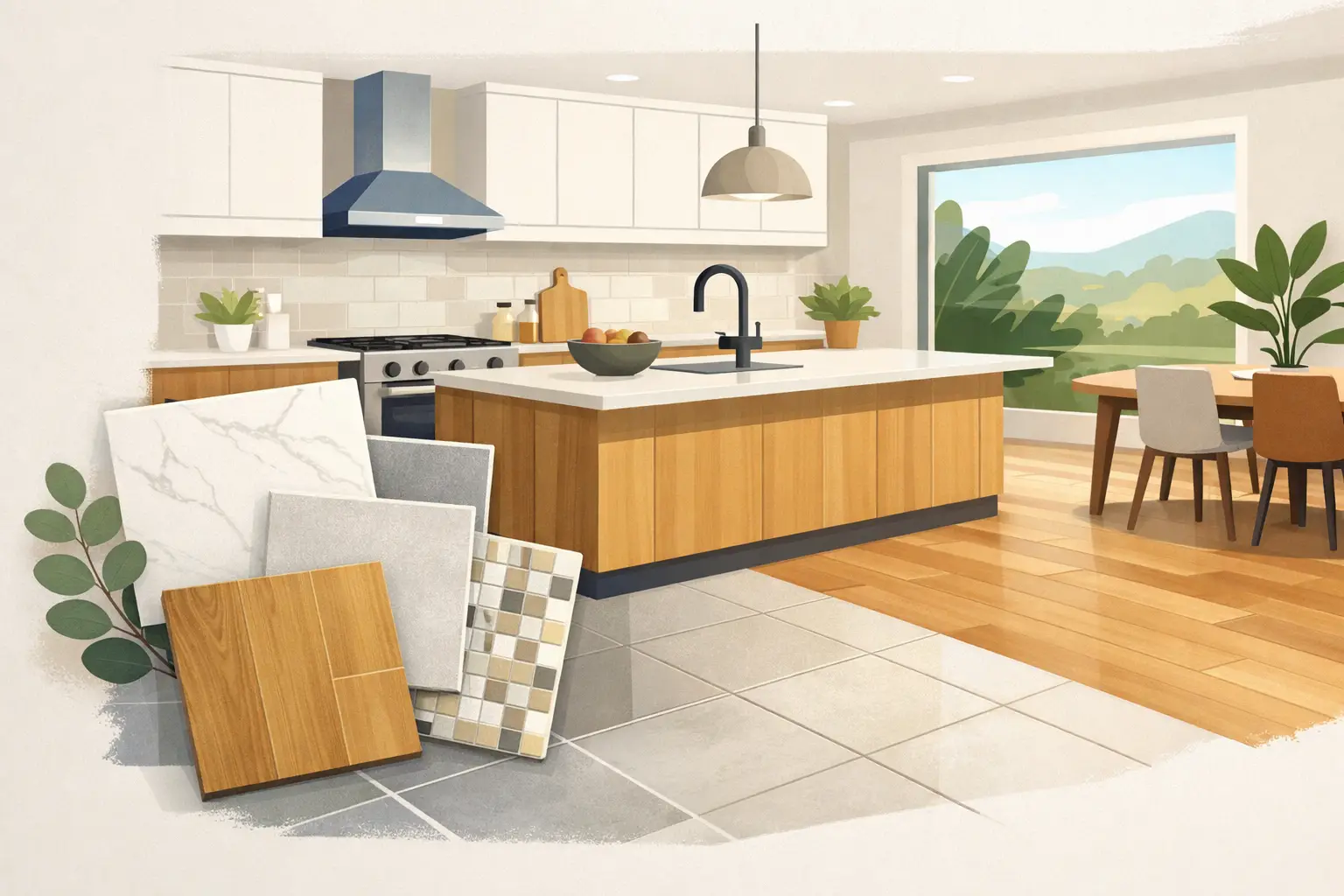
A kitchen floor works harder than almost any other surface in the home. It handles dropped utensils, muddy shoes, cooking spills, heat, regular mopping and constant foot traffic, all while setting the visual foundation for the room. The best tiles for kitchen floors need to balance everyday practicality with a finish that still looks refined years after installation.
For most Australian homes, porcelain tile is the strongest all-round choice. But the right result depends on more than tile material alone. Surface grip, tile size, grout selection, subfloor preparation and installation quality all affect how a kitchen floor performs over time.
What a Kitchen Floor Tile Needs to Handle
Kitchen flooring should be easy to clean, resistant to staining and capable of standing up to movement, moisture and impact. A beautiful tile that is too slippery, too delicate or poorly installed can quickly become a costly frustration.
Start by considering how the kitchen is used. A busy family kitchen with children and pets calls for a hard-wearing, forgiving surface. A rental property benefits from durable tiles and grout colours that minimise visible wear. In a high-end renovation, the priority may be a larger-format tile, carefully aligned for a calm, architectural finish, without compromising slip resistance.
The key characteristics are durability, low water absorption, stain resistance and a surface texture suited to the area. Kitchens do not normally face the standing water of a shower, but spills are inevitable. The floor should remain safe and manageable when wet.
Porcelain Tiles: The Best All-Round Kitchen Choice
Porcelain is widely considered one of the best tiles for kitchen floors because it is dense, tough and low maintenance. It has very low water absorption, making it well suited to cooking areas where water, oil, sauces and drinks are regularly spilled.
Modern porcelain also offers exceptional design flexibility. It can replicate natural stone, timber, concrete and terrazzo with convincing detail, while avoiding many of the sealing and care requirements associated with natural materials. Whether the goal is a soft stone-look floor for a Hamptons-style kitchen or a large concrete-look tile for a contemporary space, porcelain can deliver the look with dependable performance.
Choose a matte, honed-look or lightly textured porcelain finish rather than a highly polished surface. Polished tiles can look impressive in a showroom, but may become slippery when wet and can show smudges, crumbs and marks more readily. For a kitchen that feels elegant but remains practical, a quality matte finish is often the better investment.
Large-format porcelain tiles can make an open-plan kitchen feel more spacious because there are fewer grout joints interrupting the floor. They do, however, demand a level substrate and precise installation. If the floor is uneven, large tiles can develop lipping, where one tile edge sits higher than the next. Professional preparation and careful levelling are essential for a flawless finish.
Ceramic Tiles: A Practical Option for Lighter Use
Ceramic tiles can suit kitchens with lighter traffic or more modest renovation budgets. They are available in a broad range of colours, shapes and styles, including decorative formats that work well in smaller kitchens or period homes.
The trade-off is strength. Ceramic is generally less dense than porcelain, so it is more vulnerable to chips or cracks from heavy impacts. That does not make it a poor choice, but it does make porcelain the safer option for a main family kitchen, commercial kitchenette or heavily used investment property.
If ceramic is selected, look for a floor-rated product rather than a wall tile. Floor tiles are manufactured to withstand greater load and abrasion. This distinction matters, particularly with fashionable handmade-look or glossy tiles that may be intended only for vertical surfaces.
Natural Stone: Beautiful, but More Demanding
Natural stone brings individual character that manufactured tile cannot fully reproduce. Travertine, limestone, marble, slate and granite each offer variation in colour, veining and texture, creating a kitchen floor with genuine depth and visual warmth.
However, natural stone is not a fit-and-forget material. Many stones are porous and require sealing to help prevent staining. Acidic foods and cleaners can mark sensitive surfaces such as marble and limestone, while some stones need more regular maintenance than porcelain. A sealant reduces risk, but it does not make a porous stone completely stain-proof.
Slate can be a practical stone option when correctly sealed because its natural texture offers good grip. Marble is more suited to homeowners prepared to accept a lived-in patina and maintain it carefully. For households that want the visual appeal of stone with simpler upkeep, stone-look porcelain usually provides better long-term value.
Terrazzo and Concrete-Look Tiles for Modern Kitchens
Terrazzo-look porcelain is a popular choice for kitchens that need personality without an overly busy finish. It works particularly well with timber cabinetry, brushed metal fittings and soft neutral paint colours. The scattered pattern also helps disguise the occasional crumb or mark between cleans.
Concrete-look porcelain creates a clean, modern base for contemporary renovations. Greige, warm grey and soft charcoal tones can feel sophisticated, but very dark floors may show dust, pet hair and dried water spots. Very pale tiles can highlight food spills. Mid-tone shades are often the most forgiving for daily life.
Both styles are generally available in hard-wearing porcelain ranges, making them a practical way to achieve a design-led result without taking on the maintenance demands of poured concrete or traditional terrazzo.
Choosing the Right Tile Size and Layout
Tile size should reflect the dimensions of the kitchen, the amount of natural light and the desired visual effect. Large tiles, such as 600 x 600 mm or 600 x 1200 mm, create a streamlined appearance with fewer grout lines. They suit open-plan kitchens and can make a compact room feel less fragmented.
Smaller tiles have their place too. They can provide more grout joints for underfoot grip, work well on irregular floors and allow for decorative layouts such as herringbone or checkerboard. The additional joints mean more grout to maintain, so colour choice and quality application become even more important.
Layout deserves the same attention as tile selection. A centred, balanced set-out avoids narrow, awkward cuts along prominent walls or cabinetry. In a kitchen with an island, tile lines should be planned around key sightlines, not simply started from the nearest wall. This is where expert tiling makes the difference between an acceptable floor and one that looks deliberately composed.
Grout Is Part of the Floor, Not an Afterthought
Grout has a major impact on both appearance and cleaning. Bright white grout can create a crisp, high-contrast look, but on a kitchen floor it often shows cooking residue and foot traffic quickly. A mid-grey, warm grey, mushroom or tonal grout is usually more practical while still complementing the tile.
The width of the grout joint should suit the tile type and edge finish. Rectified porcelain tiles have precisely cut edges and can be laid with narrower joints, creating a more refined look. Non-rectified tiles need wider joints to accommodate their natural size variation.
For long-term hygiene and stain resistance, grout should be properly mixed, installed and sealed where appropriate. Cracked, recessed or poorly finished grout can collect dirt and moisture, undermining an otherwise premium floor. Regular cleaning with suitable products helps protect the finish, while prompt grout repairs prevent small defects from becoming larger maintenance issues.
Slip Resistance Matters More Than Shine
Kitchen spills are unavoidable, so do not choose a tile based on appearance alone. Ask about the tile’s slip rating and select a finish appropriate for an internal kitchen floor. A lightly textured matte porcelain generally offers a sensible balance of cleanability and grip.
Extremely rough tiles can trap dirt and make mopping harder, especially in the cooking zone. At the other end of the scale, glossy finishes may be difficult to live with around sinks, dishwashers and entry points. The ideal floor has enough texture to feel secure underfoot, without becoming a high-maintenance surface.
For homes where ageing residents, young children or frequent entertaining are factors, this balance becomes even more valuable. A safe floor should never look like a compromise.
Installation Determines How Long the Floor Lasts
Even the best kitchen tile can fail if it is installed over an unsuitable substrate. Loose or uneven flooring, inadequate adhesive coverage and poor movement-joint planning can lead to cracked tiles, hollow sounds, lipping or grout failure.
Before tiling begins, the existing surface should be assessed for level, stability and moisture concerns. Preparation may involve removing old finishes, repairing damaged areas or applying a levelling compound. These steps are not glamorous, but they are the foundation of a durable result.
A1 Grouting & Tiling approaches kitchen floors with the same focus on precise alignment, clean joints and lasting workmanship that every high-use tiled surface requires. Correct set-out, careful cuts around cabinetry and a neat final finish protect both the look and value of the renovation.
The right kitchen floor is one you do not have to worry about every time a glass tips over or a chair scrapes back. Choose a floor-rated, slip-conscious porcelain tile in a practical tone, pair it with well-selected grout, and give installation the attention it deserves. That combination delivers a kitchen that stays clean, feels considered and performs beautifully through everyday life.