 10 years of water leakage warranty for Regrouting showers.

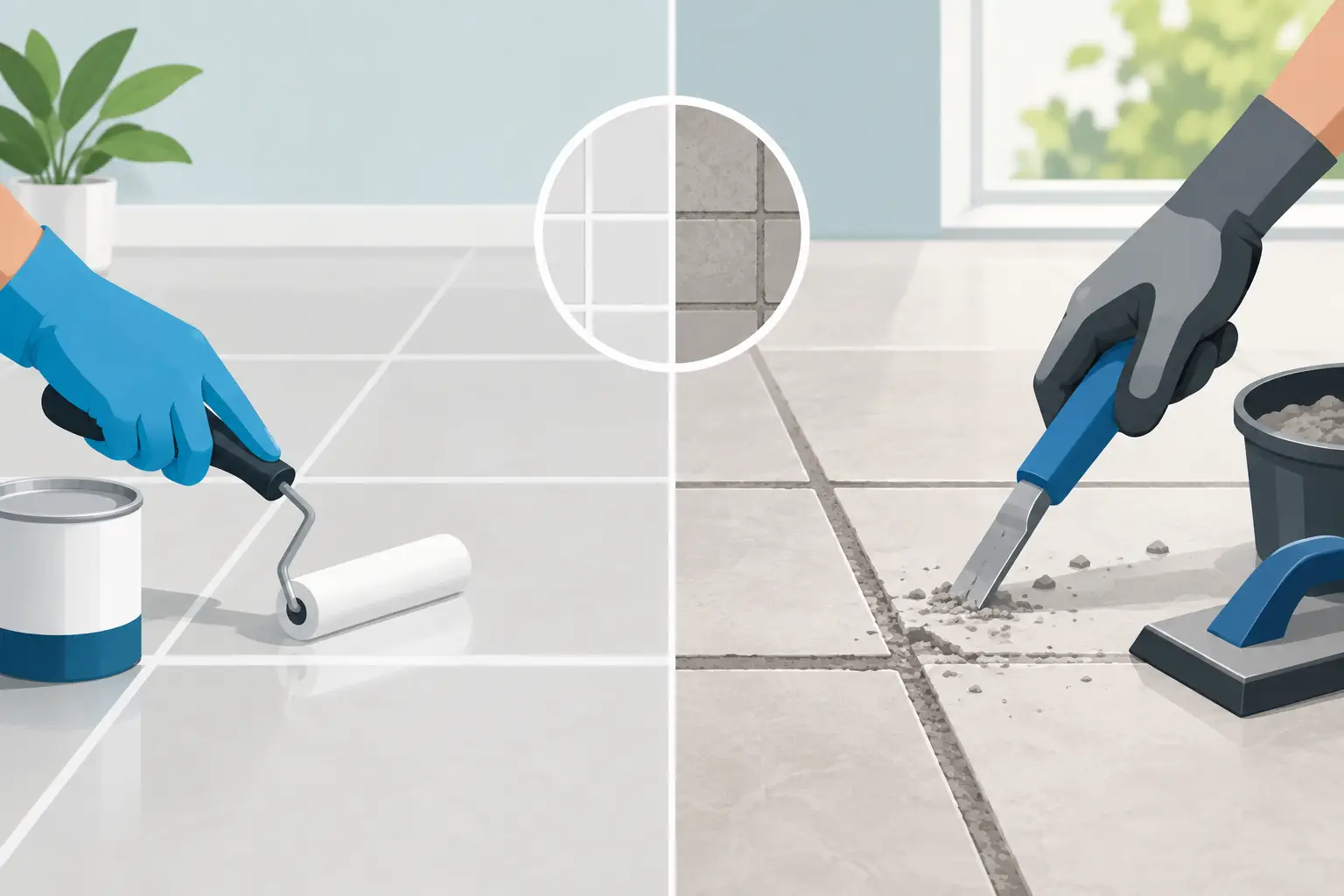
A shower can look tired long before its tiles have reached the end of their life. Darkened joints, persistent mould and fine cracks often raise the same question: grout sealing vs replacement – which solution will genuinely protect the space, rather than simply improve its appearance for a short time?
The right answer depends on the condition of the existing grout, the location of the tiled surface and whether moisture has already found a path behind the tiles. Sealing is a valuable preventative treatment for sound grout. Replacement, often called regrouting, is the more dependable repair when joints are deteriorated, loose or cracked. Knowing the difference helps homeowners, landlords and property managers invest in work that delivers a clean finish and lasting performance.
What grout sealing actually does
Grout is naturally porous, particularly cement-based grout. In kitchens, bathrooms, entry areas and commercial floors, those pores can absorb water, soap residue, cooking spills and everyday grime. Over time, this can leave grout looking patchy and discoloured, while making routine cleaning more difficult.
A quality penetrating sealer is applied to clean, dry, intact grout. It forms a protective barrier below the surface, helping to slow the absorption of moisture and stains. The grout retains its appearance, but becomes easier to maintain and less vulnerable to day-to-day contamination.
Sealing is particularly useful after new tiling or regrouting has properly cured. It is also a sensible maintenance step for low-wear tiled floors, splashbacks and kitchen benches where the grout remains firm, even and free from cracks. In these settings, sealing preserves a good surface rather than attempting to rescue a failed one.
It does not, however, rebuild missing grout or make brittle joints sound again. It cannot bond loose material back into place, correct movement cracks, or resolve water damage concealed behind a shower wall. A sealer is protection, not structural repair.
Grout sealing vs replacement: the deciding factors
The most useful way to compare grout sealing vs replacement is to look beyond surface colour. A clean-looking joint is not always a healthy one, and a stained joint is not always beyond repair. The condition beneath the surface matters most.
If grout is solid, well bonded and only lightly discoloured, professional cleaning followed by sealing may be enough. This is often the practical option for tiled floors that have lost their original freshness but have no signs of breakdown. It costs less than regrouting, creates less disruption and can noticeably improve the appearance of the room.
Replacement is the stronger choice when grout has cracked, crumbled, pulled away from tile edges or developed gaps. In wet areas, those openings can allow water to travel behind tiles. That may lead to mould growth, a hollow sound under tiles, peeling paint in an adjoining room or damage to surrounding structures. Applying sealant over compromised grout can conceal the warning signs without resolving the cause.
Shower joints deserve particular attention. Constant water exposure, cleaning chemicals and movement in the building place more pressure on shower grout than on most tiled surfaces. Where shower grout is worn or failing, careful removal and replacement is usually the more reliable path to a watertight, hygienic finish.
Signs sealing may be enough
Sealing is worth considering when the grout is still hard to the touch, evenly packed between the tiles and free from visible cracks. The surface may be dull, absorbing water quickly or showing mild staining, but it should not be powdery or loose.
A simple water check can offer a clue. If a few drops darken the grout immediately, the protective layer may have worn away. That does not automatically mean the grout needs replacing. Once professionally cleaned and thoroughly dried, intact joints can often be resealed to restore stain resistance.
Signs replacement is the better investment
Replacement is generally required when grout breaks away under gentle pressure, has deep staining that will not lift, or contains cracks and open joints. Repeated mould in the same shower corners is another reason to arrange an inspection, especially if it returns soon after cleaning.
Pay attention to movement as well. Cracks that follow a straight line along a wall junction, floor junction or internal corner may indicate that flexible silicone is needed rather than grout. Grout is designed for tile joints, while movement joints need an appropriate flexible sealant to accommodate normal building movement. Using the right material in the right place is a small detail with a major effect on durability.
Why regrouting is more than applying new grout
Quality regrouting is a preparation-led repair. Simply spreading fresh grout over failed material may produce a temporary colour change, but it does not create a dependable bond. The existing damaged grout must be removed to an appropriate depth without chipping tile edges or disturbing sound waterproofing behind the surface.
The joints are then cleaned of dust and residue before fresh grout is installed with consistent depth and finish. In wet areas, silicone joints around walls, screens, taps and fixtures are assessed separately and replaced where necessary. This creates crisp lines, improves hygiene and restores the visual order that makes tiled spaces feel properly finished.
Colour selection also matters. A matched grout can refresh an established design without changing the room’s character. A contrasting shade can sharpen a patterned floor or give dated tiles a more considered, contemporary look. In either case, even joint lines and clean tile faces are what separate a patch repair from a polished restoration.
For showers, professional workmanship should also address water management, not just appearance. At A1 Grouting & Tiling, shower regrouting is backed by a 10-year water leakage warranty, giving property owners confidence that the work is designed to perform beyond the day it is completed.
Cost, disruption and long-term value
Sealing is normally the lower-cost, lower-disruption option because there is no need to remove grout. It suits maintenance planning, especially for rental properties or commercial areas where sound tiled surfaces need to remain clean and presentable with minimal downtime.
Regrouting involves more labour and preparation, so the upfront cost is higher. Yet it can offer better value where grout has already failed. Delaying a necessary repair can allow moisture to spread, potentially turning a grout issue into tile replacement, waterproofing work or repair to adjacent finishes.
The decision should not be based on price alone. Consider the age of the tiled area, how heavily it is used and the cost of a future failure. A busy family shower, a balcony exposed to weather and a commercial bathroom each need a more cautious assessment than a lightly used powder room.
Keep restored grout looking its best
Whether grout has been sealed or replaced, gentle maintenance protects the result. Clean tiled areas regularly with a pH-neutral product and avoid harsh acidic cleaners or abrasive powders that can wear down grout and damage silicone. Drying shower walls after use also reduces soap build-up and gives mould less opportunity to establish.
Address small cracks, lifting silicone and persistent stains early. Timely repairs are usually more contained, more cost-effective and far less disruptive than waiting for widespread deterioration. For high-use wet areas, scheduling periodic professional checks can help identify changing joints before they become a leakage concern.
A precise inspection is the best place to start. When the grout is sound, sealing can preserve the clean, elegant finish you already have. When it is failing, replacement gives the tiled surface the durable foundation it needs to look good and perform with confidence for years to come.