 10 years of water leakage warranty for Regrouting showers.


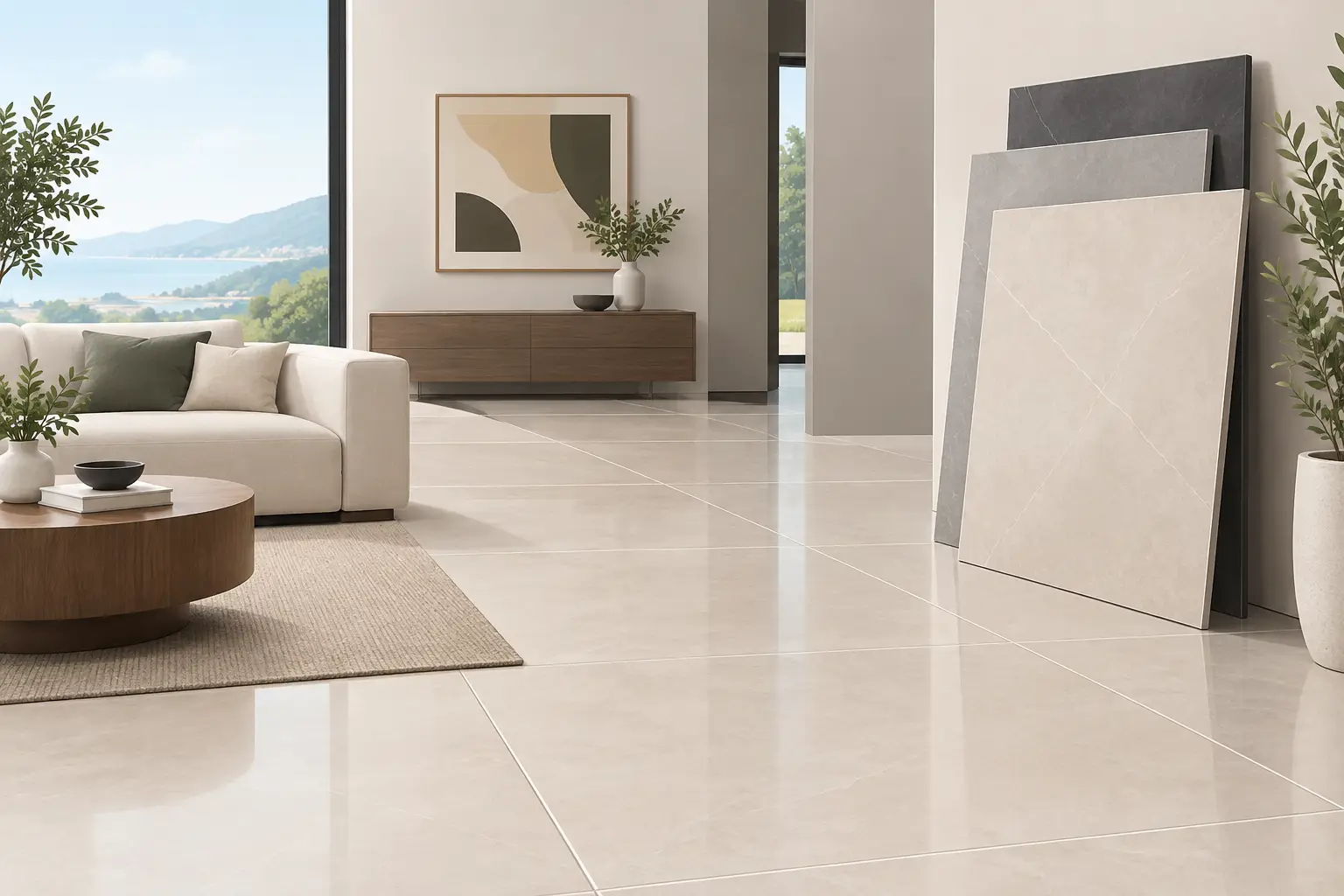
A wall of large tiles can make a compact bathroom feel calmer, cleaner and far more considered. But are large format tiles worth it when they demand more careful planning, specialised handling and precise installation? For many Australian homes and commercial spaces, the answer is yes – provided the surface, layout and installation standard are right.
Large format tiles are generally those with one side measuring 600 mm or more, including popular 600 x 600 mm, 600 x 1200 mm and 1200 x 1200 mm options. Their appeal is easy to see: fewer grout joints, broad uninterrupted surfaces and a premium finish that suits modern bathrooms, kitchens, living areas and retail interiors. Yet tile size alone does not create a flawless result. The quality of preparation underneath matters just as much as the tile selected.
Are Large Format Tiles Worth It? The Short Answer
Large format tiles are worth the investment when you value a refined appearance, reduced grout lines and a surface that is easier to keep looking fresh. They can visually expand a room, create continuity between zones and give renovations a polished, high-end result.
The trade-off is that larger tiles are less forgiving than smaller formats. A slightly uneven floor, poorly prepared wall or rushed adhesive application can lead to lippage, hollow spots, cracked tiles or uneven joints. Installation may cost more because it requires experienced workmanship, suitable levelling systems and additional attention to substrate preparation.
For a long-term renovation, those upfront requirements are usually worthwhile. Replacing failed tiles, repairing damaged waterproofing or living with an uneven finish is far more frustrating than preparing the area properly from the beginning.
Why Large Format Tiles Create Such a Strong Finish
The most obvious benefit is visual simplicity. Fewer joins allow the tile itself – whether it is stone-look porcelain, concrete-look matte tile or a soft neutral finish – to carry the design. This is especially effective in bathrooms, where smaller tiles can create a busy grid across walls and floors.
Large format tiles also help create a sense of space. A 600 x 1200 mm wall tile laid horizontally can make a narrow bathroom appear wider, while matching floor and wall tiles can make the boundaries of the room feel less defined. In open-plan living spaces, larger tiles create a continuous surface with fewer visual interruptions.
Grout reduction is another practical advantage. Grout is essential to every tiled surface, but it is also where staining, soap residue and mould can become most noticeable. With fewer grout lines, there is simply less grout to clean and maintain. This is valuable in showers, kitchen splashbacks, entry areas and commercial settings where presentation and hygiene matter every day.
That does not mean large tiles eliminate maintenance. Grout still needs to be correctly installed, sealed where appropriate and kept clean. In wet areas, flexible sealant joints and sound waterproofing remain critical. A beautiful tile finish is only as reliable as the system behind it.
The Installation Details That Decide the Result
Large tiles place greater demands on the surface beneath them. Unlike a small tile, which can accommodate minor variations across a floor or wall, a large tile bridges those variations. If the substrate is not flat, the corners or edges may sit proud of adjacent tiles. This is known as lippage, and it can affect both appearance and safety underfoot.
Proper preparation may involve floor levelling, wall straightening, repairing loose or damaged sheeting, and checking falls in wet areas before a single tile is laid. In a shower, the floor must still direct water efficiently to the drain. On a balcony or external area, drainage and movement joints are equally important for durability through changing weather conditions.
Adhesive coverage is also essential. Large format tiles require the right adhesive, applied with the correct trowel technique and usually back-buttered to achieve strong, even support. Gaps beneath a tile can leave it vulnerable to cracking from foot traffic, impact or movement in the substrate. They can also create hollow sounds that signal an installation issue.
A professional tiler will plan the layout before fixing begins. This includes checking where cuts will land, balancing tile sizes at opposite walls, aligning joints with fixtures and ensuring feature points such as niches, tapware and drains look intentional. Large tiles often involve fewer cuts overall, but every visible cut carries more weight in the final appearance.
Where Large Format Tiles Work Best
Bathrooms are a natural fit for large format tiles. On shower walls, they create a clean spa-style finish with fewer joints to scrub. On main bathroom floors, they can make even a modest room feel more expansive. For shower floors, however, smaller tiles are often the better choice because they can follow the required fall to the drain more accurately and offer additional grip through extra grout lines.
Kitchens also benefit from large format tiles, particularly on floors and splashbacks. A large porcelain splashback can offer a sleek alternative to many small wall tiles, with minimal grout and a strong visual statement. It needs accurate measuring and careful handling around power points, cabinetry and benchtops, but the result can be exceptionally clean.
In living areas, hallways and commercial interiors, porcelain large format tiles are valued for their durability and low-maintenance appeal. They suit busy households, rental properties and customer-facing spaces where the floor needs to look good while handling regular traffic. Choosing an appropriate slip rating remains important, especially near entries, pools and other wet zones.
When a Smaller Tile May Be the Better Choice
Large format is not automatically the best option for every room. Small showers with multiple angles, windows, ledges or pipe penetrations can require extensive cutting. A carefully chosen medium-size tile may produce a more balanced layout with less waste and fewer awkward narrow cuts.
Highly uneven surfaces can also make the project more expensive if major preparation is needed. That does not rule out larger tiles, but it should be factored into the budget early. Trying to save money by skipping levelling work is likely to compromise the finish.
Texture and safety matter as well. In some outdoor locations or shower floors, a smaller slip-resistant tile may perform better than a large smooth tile. The right choice depends on drainage, use, exposure to water and the specific tile rating, not just the look you are trying to achieve.
There is also a design consideration. Large tiles suit minimalist, contemporary and architectural interiors beautifully, but they are not the only route to a premium result. Patterned tiles, mosaics and smaller formats can add character in a powder room, niche or feature wall. The strongest schemes often use each tile size where it performs best rather than forcing one format throughout every surface.
Cost, Value and Long-Term Maintenance
Large format tiles can cost more to install than standard tiles. They are heavier to transport and position, require more precise substrate preparation, and may need specialised cutting equipment and tile levelling systems. Porcelain slabs and very large panels can also require two-person handling to protect both the tile and the surrounding space.
However, judging the decision on installation cost alone misses the broader value. Fewer grout joints can reduce cleaning time and help tiled areas maintain a fresher appearance. A well-installed porcelain tile is hard-wearing, moisture-resistant and suitable for years of daily use. For owners upgrading a tired bathroom or preparing a property for sale or lease, that visual improvement can make a meaningful difference.
The key is to budget for the whole tiled system: surface preparation, waterproofing in wet areas, quality adhesive, grout, sealants, movement joints and skilled installation. Cutting corners on these components can undermine even the most expensive tile selection.
Choosing the Right Tile Size for Your Space
Before settling on a size, consider the room dimensions, natural light, drainage requirements and the number of fixed elements in the space. Ask to see tile samples in the room itself. A tile that looks light and warm in a showroom can appear very different under your home’s lighting.
It is also worth planning the grout colour early. A grout close to the tile colour keeps the surface calm and continuous, while a contrasting grout makes the grid more visible. With large format tiles, subtle grout selections often support the clean, expansive effect people are aiming for.
A precision installation turns large format tiles from a design idea into a durable surface that performs properly. If the tile size suits the room and the preparation is done without compromise, you can enjoy the clean lines and long-lasting finish with confidence for years to come.