 10 years of water leakage warranty for Regrouting showers.

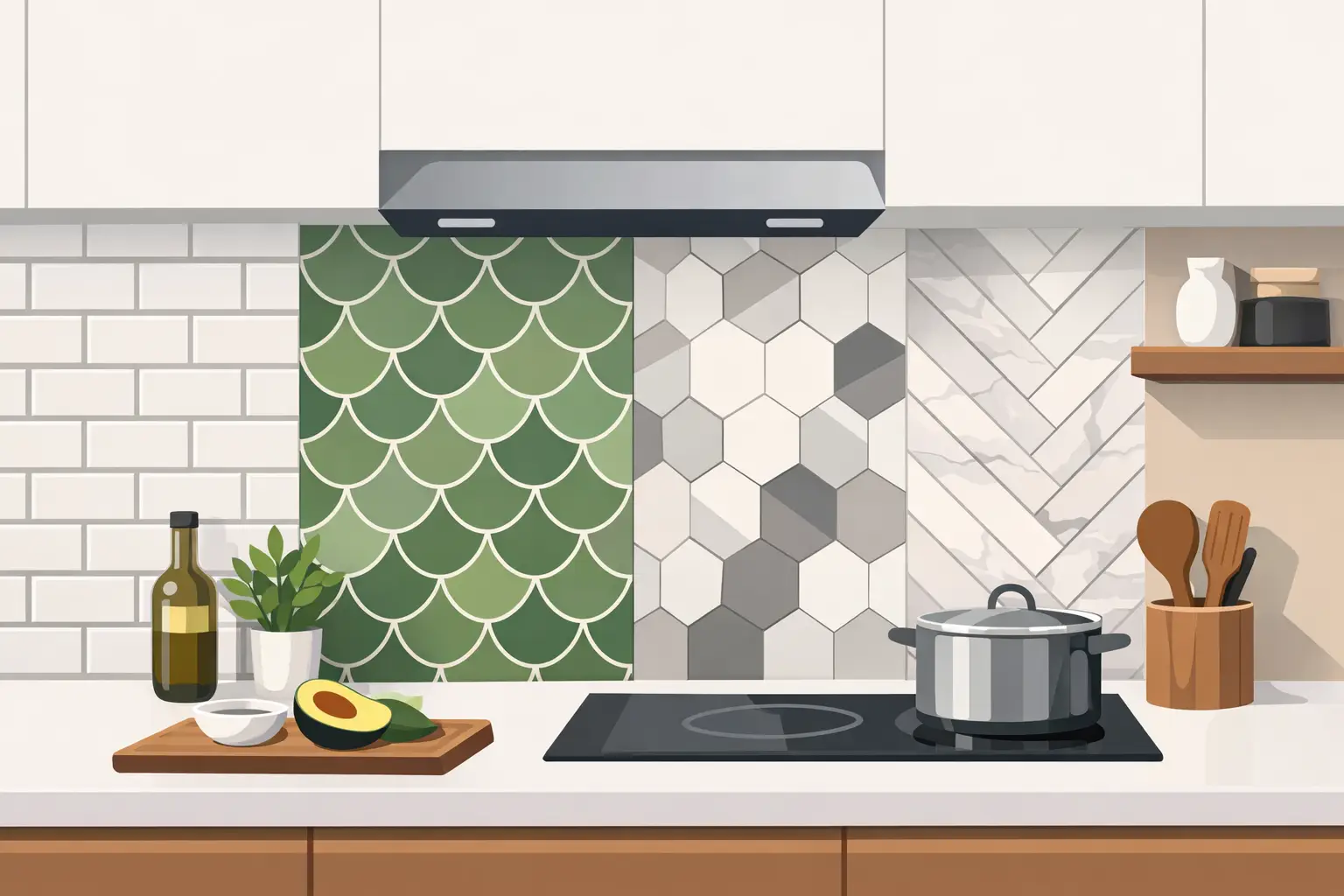
A kitchen splashback works harder than almost any other finished surface in the home. It is exposed to steam, oil, food splatter and regular cleaning, yet it sits directly at eye level and has a major influence on how the whole kitchen feels. The best kitchen splashback tiling ideas bring these two requirements together: a finish that looks considered and distinctive, with materials and grout work designed to stay clean, secure and attractive for years.
For a renovation, new build or rental upgrade, the right choice is rarely about following one trend. Tile size, layout, grout colour and the condition of the wall all affect the final result. Precision installation matters just as much as the tile itself.
Start with the Kitchen’s Overall Style
A splashback should complement the cabinetry, benchtop and tapware rather than compete with every finish in the room. If your benchtop has heavy veining or a bold stone pattern, a simpler tile can bring balance. A plain benchtop, on the other hand, gives you more freedom to introduce colour, texture or a feature layout.
Consider how much natural light the kitchen receives. Gloss tiles reflect light and can help a compact or darker kitchen feel brighter. Matte tiles offer a softer, more contemporary appearance and are excellent at disguising minor water marks, although textured surfaces may need more careful cleaning around the cooktop.
The scale of the room also matters. Large-format tiles can make a small kitchen feel calmer because there are fewer grout lines interrupting the wall. Smaller tiles create detail and character, but they demand accurate spacing and well-finished grout joints to avoid a busy or uneven appearance.
Kitchen Splashback Tiling Ideas with Lasting Appeal
Classic subway tiles, refined by layout
Subway tiles remain a reliable choice because they work across Hamptons, coastal, contemporary and classic kitchen styles. Their strength lies in versatility. A standard brick pattern feels familiar and relaxed, while stacking the tiles vertically adds height and a more modern edge.
For a more tailored result, consider a slimline subway tile with fine grout joints. White tiles with mid-grey grout create definition and make day-to-day marks less obvious than bright white grout. If you prefer a softer look, choose a grout colour close to the tile shade so the surface reads as one clean plane.
Large-format porcelain for a quiet, premium finish
Large-format porcelain tiles are an excellent option for homeowners who want a minimal, low-maintenance splashback. With fewer joints, there is less grout to clean and less visual interruption. Stone-look porcelain can provide the character of natural marble or travertine without the same level of sealing and care often required by natural stone.
Installation is more demanding with larger tiles. Walls must be properly prepared and flat, cuts around power points need to be exact, and the tiles require careful handling to prevent lipping or uneven edges. When completed with precision, the result is exceptionally polished.
Kit Kat and finger tiles for subtle texture
Slim finger tiles, often called Kit Kat tiles, bring gentle texture to a kitchen without requiring a strong colour contrast. They suit curved edges, small splashback areas and kitchens where you want a handcrafted feel. Vertical installation can make low ceilings appear higher, while horizontal rows can visually widen a narrow space.
These tiles have more grout lines than larger formats, so grout selection is especially important. A matching grout gives a cohesive, understated finish. A contrasting grout makes the individual tile shape stand out, but will also draw attention to alignment. This is a design choice that relies on meticulous setting out.
Herringbone for a feature wall
Herringbone tiling has enduring appeal, particularly behind a cooktop or across a full-height splashback. The angled pattern adds movement while still feeling elegant. It can work beautifully in neutral tones such as warm white, sage, soft grey or sand.
There is a practical trade-off. Herringbone creates more cuts and requires more time to set out accurately than a straight stack or brick pattern. It is worth investing in professional workmanship, particularly where the pattern meets cabinetry, rangehoods and power points. Uneven lines are difficult to ignore once the kitchen is in use.
Handmade-look ceramic tiles
Handmade-look ceramic tiles offer variation in glaze, edge shape and surface texture. This makes them well suited to character homes, Mediterranean-inspired kitchens and spaces that need warmth. A soft white tile with gentle tonal variation can add depth without overwhelming the room.
Because these tiles are intentionally irregular, the installation needs to strike the right balance. Joints should look consistent and considered, not forced into rigid uniformity that fights the tile’s natural character. A quality tiler will plan the layout before fixing so the finished surface looks intentional from every angle.
Full-height splashbacks for a more finished kitchen
Rather than stopping the tile at the standard splashback height, extending it to the underside of overhead cupboards or the ceiling can transform the room. Full-height tiling is particularly effective behind open shelving, on a feature wall or in kitchens with minimal upper cabinetry.
This approach can make a modest kitchen feel more substantial, but it does increase material and labour costs. It also puts every cut and edge in clear view. Choose a tile and pattern you will be happy to see as a major part of the room, not just a functional strip above the benchtop.
Grout Is Part of the Design
Grout is often treated as an afterthought, but its colour and finish can change the look of a splashback completely. Matching grout reduces visual lines and makes the tile colour the main feature. Contrasting grout adds graphic definition and suits simple tile shapes, especially white subway tiles or geometric mosaics.
For busy family kitchens, mid-tone grout colours are often more forgiving than pure white. Light grey, warm grey, beige and charcoal can all be practical choices, depending on the tile. The key is to select a grout that complements the undertones in the benchtop and cabinetry rather than choosing it in isolation.
Grout also needs to be properly mixed, applied and cured. Poorly finished joints can collect grease and discolour quickly, undermining an otherwise beautiful tile installation. For older kitchens, professional regrouting can provide a noticeable refresh when the tiles themselves are still in good condition.
Plan the Details Before Tiling Begins
The most successful splashbacks are planned around the details that can be difficult to correct later. Think about where full tiles will fall, how the pattern will finish at each end, and whether the tile line should align with window frames, cupboards or the rangehood centreline.
Power points deserve special attention. Their position can affect the visual flow of a patterned splashback, particularly with herringbone, mosaics or small-format tiles. Where possible, plan outlets before tiling starts so cuts are neat and balanced. The same applies to under-cabinet lighting, shelves and splashback edges near open walls.
Wall preparation is equally important. A tiled splashback is only as sound as the surface beneath it. Uneven walls, loose old finishes or moisture damage should be addressed before new tiles are installed. Proper adhesive coverage, accurate levelling and clean silicone finishing around benchtops all contribute to durability and hygiene.
Choosing a Finish That Suits Your Lifestyle
A statement splashback can be a worthwhile choice for an owner-occupied home where personal style is the priority. For rental properties, resale-focused renovations or commercial kitchenettes, a neutral porcelain or ceramic tile may provide broader appeal and easier long-term maintenance.
It also depends on how the kitchen is used. A household that cooks daily may favour fewer grout lines and a smooth glazed tile that wipes down easily. A kitchen designed mainly for entertaining can accommodate more texture, colour and decorative detail. Neither approach is better – the right finish is one that performs well for the people using the space.
A1 Grouting & Tiling approaches splashback work as both a protective surface upgrade and a design finish. Careful preparation, precise tile alignment and clean grout work ensure the finished kitchen looks refined up close, not just from across the room.
Choose a splashback that gives you confidence every time you wipe it down, switch on the kitchen lights or welcome guests through the door. When the layout, tile and grout are selected with care, the result is a feature that earns its place in the kitchen every day.