 10 years of water leakage warranty for Regrouting showers.

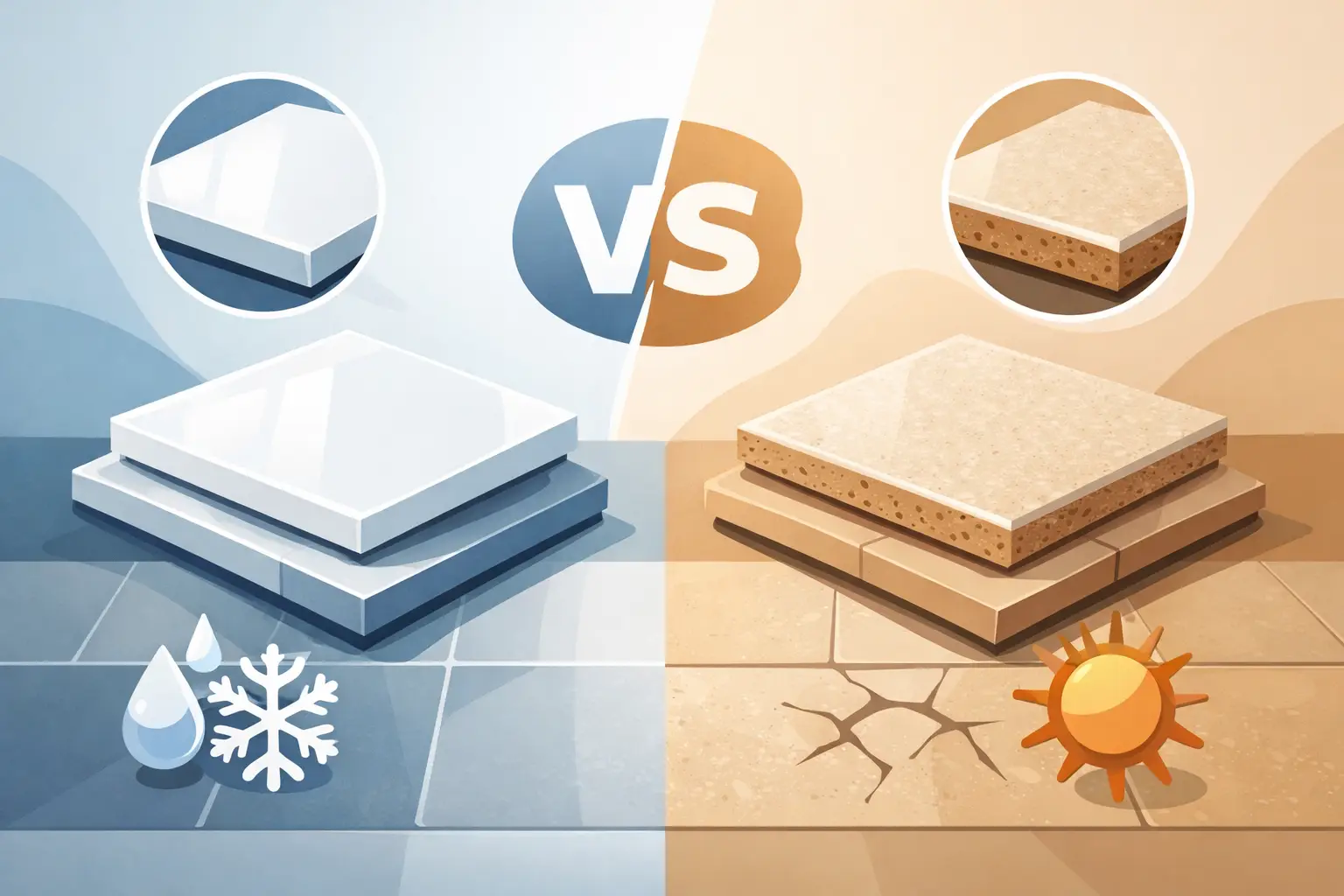
Choosing tiles is not simply a matter of finding a colour you like. In the porcelain vs ceramic tiles decision, the right material affects how a room wears, how easily it cleans, how it feels underfoot and how well the finished surface stands up to daily life. A glossy white wall tile may look perfect in a bathroom, while a textured porcelain may be the more dependable choice for a busy entry, outdoor area or commercial floor.
Both materials can deliver a refined, long-lasting result when they are selected for the right location and installed with precision. The practical difference comes down to density, water absorption, strength and the demands of the space.
Porcelain vs ceramic tiles: the core difference
Porcelain and ceramic tiles are both made from clay and fired in a kiln, but porcelain is made from a finer clay blend and fired at higher temperatures. This process creates a denser tile with very low water absorption.
Ceramic tiles are generally more porous and lighter than porcelain. That does not make them inferior. It simply means they suit different applications. Ceramic is an excellent choice for many interior walls and low-impact residential areas, especially where design variety and budget are key considerations.
Porcelain is usually the stronger, more moisture-resistant option. It is commonly specified for shower floors, high-traffic living areas, laundries, commercial spaces and outdoor installations, provided the particular product is rated for the intended use.
The label alone is not the full story. Tile thickness, surface finish, slip rating, installation method and substrate preparation all influence long-term performance. A premium tile can still fail prematurely if it is laid over an unstable base or finished with poorly prepared grout joints.
When porcelain is the better choice
Porcelain is built for areas where water, traffic and hard use are part of everyday life. Its low porosity helps it resist moisture penetration, making it a strong candidate for bathroom floors, shower areas and laundry rooms. It is also well suited to kitchen floors where spills, dropped utensils and regular cleaning are expected.
For open-plan homes, porcelain offers a practical way to carry one finish through living spaces, hallways and kitchens. Many porcelain ranges convincingly replicate natural stone, timber, terrazzo and concrete, giving renovators a design-led look without the sealing and maintenance associated with some natural materials.
Porcelain also performs well in commercial interiors. Retail spaces, reception areas, cafes and common areas need floors that retain their appearance under frequent foot traffic and routine cleaning. A correctly selected porcelain tile can provide that durable, polished finish.
For external areas, select a porcelain product specifically approved for outdoor use and appropriate for the site conditions. A smooth indoor tile can become slippery when wet, while a suitable textured finish can improve grip around pools, patios, balconies and entrances. Drainage and fall are just as important as tile choice outdoors, as standing water can create a safety issue regardless of the surface.
There are trade-offs. Porcelain is typically harder to cut and drill, so it demands the right equipment and experienced workmanship. It can also cost more than ceramic, both in supply and installation. That additional investment is often justified in wet areas and high-use zones, where durability and moisture resistance matter most.
Where ceramic tiles make sense
Ceramic tiles remain a smart, attractive option for many projects. They are often more affordable, easier to cut and available in an enormous range of colours, shapes, textures and decorative finishes. This makes them particularly effective for bathroom walls, kitchen splashbacks, feature niches and internal wall applications.
A ceramic subway tile, handmade-look square tile or glossy patterned wall tile can bring character to a renovation without placing unnecessary cost into a surface that will not experience heavy wear. On walls, where water does not sit under constant pressure and foot traffic is not a factor, ceramic performs beautifully when installed and grouted properly.
Ceramic can also suit low-traffic interior floors, such as a rarely used powder room or a lightly used residential space. The decision should be based on the tile’s manufacturer rating rather than an assumption that every ceramic product is suitable for every floor.
The main limitation is moisture exposure and impact resistance. Ceramic is more prone to chipping at exposed edges and may absorb more moisture than porcelain if used in demanding wet environments. For a shower wall, a quality ceramic tile can be a practical choice. For a shower floor, porcelain is usually the safer selection due to its density, available slip-rated finishes and suitability for wet-area conditions.
Appearance, grout lines and the finished result
The visual difference between porcelain and ceramic is often less obvious than people expect. Both can be elegant, contemporary or timeless. The better question is how the tile format and finish will work with the room.
Large-format porcelain can create a clean, expansive appearance with fewer grout joints. It suits modern bathrooms and open living spaces, but it requires a very flat substrate and careful levelling. If the floor or wall is uneven, large tiles can develop lipping, where adjoining edges sit at different heights. Precision preparation is essential for a flawless finish.
Smaller ceramic tiles offer more flexibility around corners, niches and detailed wall layouts. They can add texture and personality, particularly in splashbacks and feature walls. Mosaic tiles are useful on shower floors because their additional grout lines can provide grip, although they require more grout maintenance than large tiles.
Grout colour also changes the final look. A matching grout gives a more continuous surface, while a contrasting grout highlights the pattern and tile shape. In wet areas, clean, well-finished grout is not only an aesthetic detail. It helps protect the installation and makes routine cleaning easier.
Maintenance and cleaning considerations
Both porcelain and ceramic tiles are relatively low maintenance compared with many other finishes. Regular sweeping or vacuuming, followed by a pH-neutral cleaner, is usually enough for everyday care. Avoid harsh acidic products or abrasive pads, particularly on grout, polished surfaces and decorative glazes.
Porcelain’s dense surface gives it an advantage in busy homes and commercial settings because it is highly resistant to staining and moisture. Ceramic wall tiles are also easy to wipe down, making them ideal around basins, cooktops and showers.
In most tiled areas, grout needs more attention than the tile itself. Grout can become discoloured, cracked or mould-prone over time, particularly in showers where ventilation is poor or water has been allowed to penetrate ageing joints. Regrouting can significantly refresh the appearance of a tiled space, but recurring cracking or dampness should be assessed properly rather than covered over.
A well-installed tiled surface should be easy to maintain, not difficult to live with. Correct sealing where required, sound waterproofing in wet areas and neatly finished silicone joints all play a part in keeping the space hygienic and looking its best.
Cost: look beyond the tile price
Ceramic is generally the more budget-friendly material, especially for wall applications. Porcelain can carry a higher purchase price, and installation may cost more because it requires specialised cutting tools and more labour. However, the cheapest tile is not always the lowest-cost choice over the life of a renovation.
Installing a less suitable tile in a shower floor, entryway or commercial space can lead to chips, staining, difficult cleaning or early replacement. Selecting a fit-for-purpose product at the outset protects the investment in preparation, waterproofing, adhesives, labour and finishes.
It is also worth considering waste allowance. Tiles need to be ordered with enough extra material for cuts, breakages and future repairs. Complex patterns, diagonal layouts and large-format tiles can require a greater allowance. Keeping a few spare tiles after the project is complete can be invaluable if damage occurs years later.
Choosing the right tile for each space
For bathroom and laundry floors, porcelain is usually the practical choice, particularly in a matte or slip-rated finish. Ceramic works exceptionally well on bathroom walls, where colour, gloss and decorative detail can take centre stage.
For kitchen splashbacks, ceramic often delivers excellent value and visual impact. For kitchen floors, porcelain is generally better equipped for spills, traffic and regular cleaning. In living areas, either material may work, but porcelain is the stronger option where pets, children, heavy furniture or frequent entertaining are part of the picture.
For balconies, patios and pool surrounds, use an outdoor-rated porcelain tile with suitable slip resistance. These areas need careful attention to substrate condition, waterproofing where applicable, drainage and movement joints. Good tiling is never just about what is visible on the surface.
The best choice balances style with the realities of the room. Select ceramic when you want a beautiful, cost-effective wall finish or a low-demand interior surface. Choose porcelain when water, wear, impact and long-term durability are likely to test the installation.
A tile should still look considered years after the renovation dust has settled. With the right material, proper preparation and precise installation, your bathroom, kitchen or floor can remain clean, durable and beautifully finished for the life of the space.