 10 years of water leakage warranty for Regrouting showers.

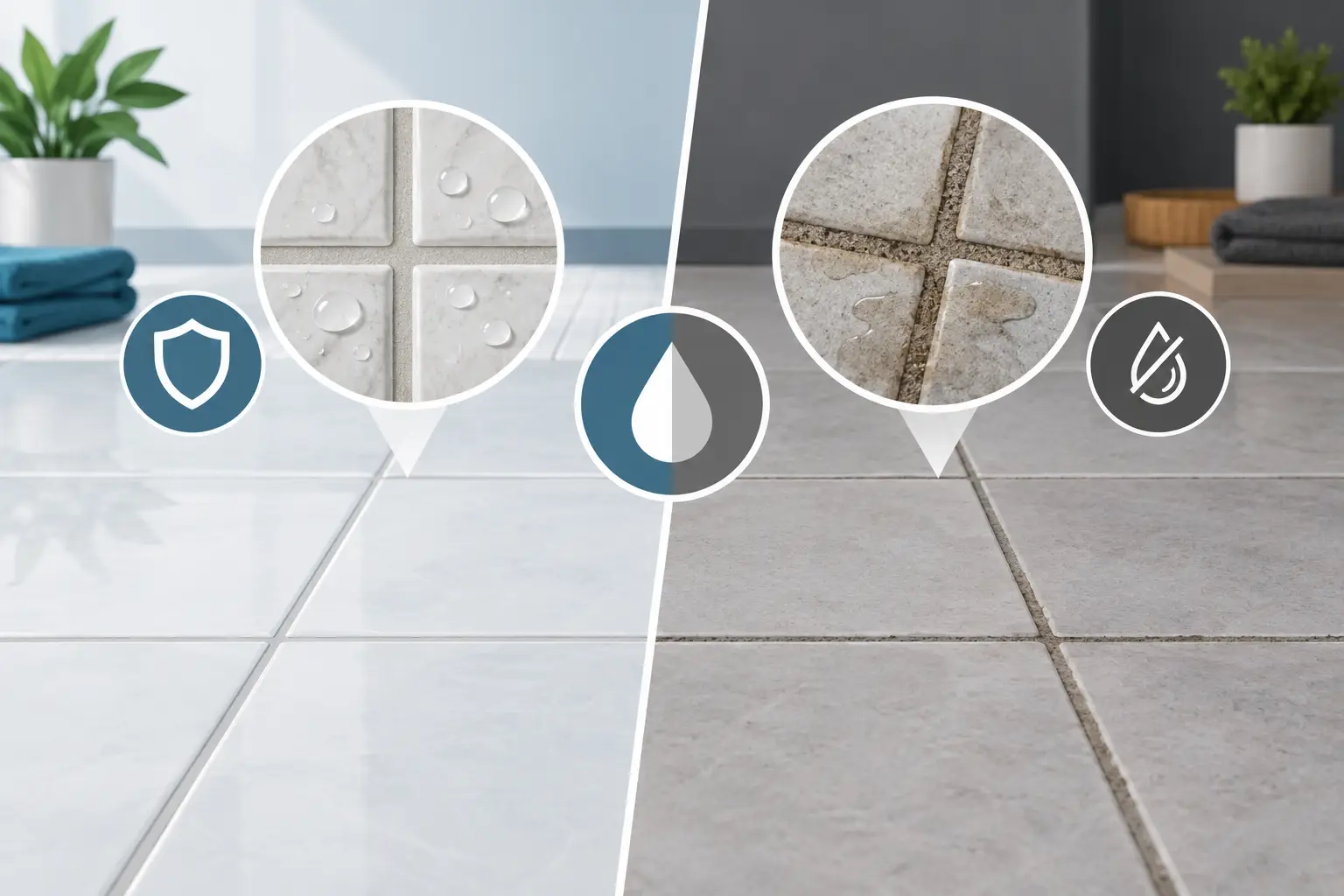
A freshly tiled bathroom can look immaculate on handover day, yet the grout lines often reveal the first signs of wear. In the sealed grout vs unsealed debate, the practical difference is how readily those joints absorb moisture, soap residue, cooking spills and everyday grime. The right approach protects both the finish you can see and the tiled surface beneath it.
For homeowners, landlords and property managers, grout sealing is not simply a cosmetic extra. It can reduce cleaning time, preserve an even colour and help cement-based grout perform better in demanding areas. But sealing is not a cure for failed grout, movement cracks or a leaking shower. Knowing where it helps – and where it does not – leads to a more durable result.
Sealed Grout vs Unsealed: The Core Difference
Most traditional grout is cement-based. It is made from cement, fine aggregates and colour pigments, and once cured it has tiny pores. Those pores can take in water, oils and stains. In a shower, that may mean soap scum and mould have more to cling to. On a kitchen splashback or floor, it can mean cooking oil, red wine or muddy footprints leave their mark more easily.
Sealed grout has a protective sealer applied after the grout has cured. A quality penetrating sealer absorbs into the grout rather than sitting as a thick coating on top. It slows down the absorption of liquids and contaminants, making routine cleaning more effective and helping the grout retain its original appearance.
Unsealed grout has no additional stain-resistance treatment. This does not automatically mean it will fail or look poor. In a dry, low-traffic tiled wall, unsealed cement grout may remain presentable for years. The trade-off is that it is generally more vulnerable to staining and harder to restore once dirt has settled into the pores.
Where Sealed Grout Makes the Biggest Difference
Sealing is particularly worthwhile where tiled surfaces face regular moisture, spills or foot traffic. Shower walls and floors, bathroom floors, kitchen floors, laundry areas, entryways, balconies and commercial washrooms all place greater demands on grout joints.
A sealed shower grout line is easier to maintain because water and residue do not penetrate as quickly. That matters in bathrooms with limited ventilation, where lingering humidity can encourage mould growth. Sealing also helps in rental properties and busy family homes, where cleaning routines may be practical rather than meticulous.
On floors, a sealer provides another layer of defence against discolouration. Light-coloured grout is especially susceptible to showing dirt, even when the tiles themselves still look clean. Sealing will not make pale grout maintenance-free, but it can make a noticeable difference to how easily it cleans and how consistently it ages.
For commercial spaces, the benefit is often long-term presentation. Reception areas, retail floors, cafes and common areas need to look clean under daily traffic. Protecting grout can support a more polished finish between professional maintenance visits.
What Grout Sealer Can and Cannot Do
A common misconception is that sealed grout becomes completely waterproof. Cement-based grout is not a waterproofing system, and neither is grout sealer. In a properly constructed shower, waterproofing sits behind the tiles and grout, forming the critical barrier that protects the wall or floor structure.
Sealer repels or slows moisture at the surface. It does not repair compromised waterproofing, stop water entering through cracks, or fix failed junctions around taps, screens, niches or floor edges. These areas often require correctly installed flexible sealant, such as sanitary-grade silicone, rather than grout.
Sealer also cannot stabilise loose tiles or failing grout. If grout is cracked, hollow, crumbling or missing, applying sealer over it only disguises a problem temporarily. Proper preparation matters: damaged joints should be removed and regrouted before sealing, and movement joints should be assessed separately.
Does Every Type of Grout Need Sealing?
No. The answer depends on the grout product and the location.
Traditional cement-based grout commonly benefits from sealing, particularly in wet or high-use areas. Some modern cement grouts are sold as stain-resistant or water-repellent and may have additives that reduce their need for a separate sealer. Even then, the manufacturer’s guidance should determine whether additional sealing is suitable.
Epoxy grout is different. It is far less porous than standard cement grout and is highly resistant to water, stains and chemicals. It generally does not require sealing. This makes it an excellent option for some showers, commercial applications and heavily used kitchens, although it is more specialised to install and can cost more upfront.
Using the wrong sealer on the wrong grout can create avoidable issues. A surface-forming product, for example, may leave a haze, alter the appearance or wear unevenly if it is not suited to the tile and grout combination. Professional product selection protects the intended colour, texture and finish.
Appearance, Cleaning and Long-Term Value
The visual advantage of sealed grout is often most obvious after several months of use. Unsealed grout may darken unevenly around shower corners, near cooktops, along floor edges or in the main walking path. Once staining is embedded, scrubbing harder can roughen the grout surface and make it even more likely to hold dirt.
Sealed grout does not eliminate cleaning, but it improves the outcome of regular care. A pH-neutral cleaner and soft brush are usually preferable to harsh acids, bleach-heavy products or abrasive pads. Aggressive cleaners can weaken cement grout, dull certain tiles and reduce the effectiveness of sealers over time.
There is a value calculation too. Sealing adds a small maintenance step at the beginning, and it may need renewing periodically depending on traffic, cleaning products and exposure. However, it can help delay deep staining, reduce restoration work and keep an otherwise well-installed tiled area looking finished rather than tired.
How to Tell Whether Existing Grout Needs Attention
A simple water test can offer a clue. Place a few drops of clean water on a discreet grout joint. If the grout darkens immediately and absorbs the water, it may be unsealed or due for resealing. If the droplets sit on the surface for a short time, some protection is likely still present.
This test is only an indication, not a full condition report. Grout may absorb water because it is worn, poorly mixed, cracked or inadequately cured. In showers, persistent mould, loose tiles, recurring cracks or dampness outside the shower area warrant professional assessment rather than another coat of sealer.
Watch for grout that has become powdery, joints that have recessed below the tile edge, or discolouration that returns soon after cleaning. These are signs the surface may need regrouting or targeted repairs. Addressing the cause early is cleaner, more cost-effective and more reliable than continually treating the symptom.
Choosing the Right Finish for Your Space
For a dry decorative wall, unsealed cement grout may be perfectly reasonable if the surface is unlikely to face spills or heavy cleaning. For bathrooms, kitchens, laundries and tiled floors, sealing cement-based grout is usually the smarter choice for appearance and maintenance.
The best result comes from looking beyond the grout alone. Tile type, joint width, room ventilation, drainage, cleaning habits and the condition of the substrate all affect how a tiled surface performs. A beautifully aligned tile layout deserves grout joints that are equally well prepared, finished and protected.
At A1 Grouting & Tiling, the focus is on correcting the condition of the surface first, then delivering a clean, durable finish suited to how the space is used. Whether a shower needs careful regrouting or a floor needs restoration, the right solution should look refined on day one and remain easier to live with long after the work is complete.
If your grout is staining faster than you can clean it, do not assume sealing alone is the answer. A careful inspection of the joints, silicone, tiles and surrounding areas will show whether protection, repair or full regrouting will give your space the lasting finish it deserves.