 10 years of water leakage warranty for Regrouting showers.


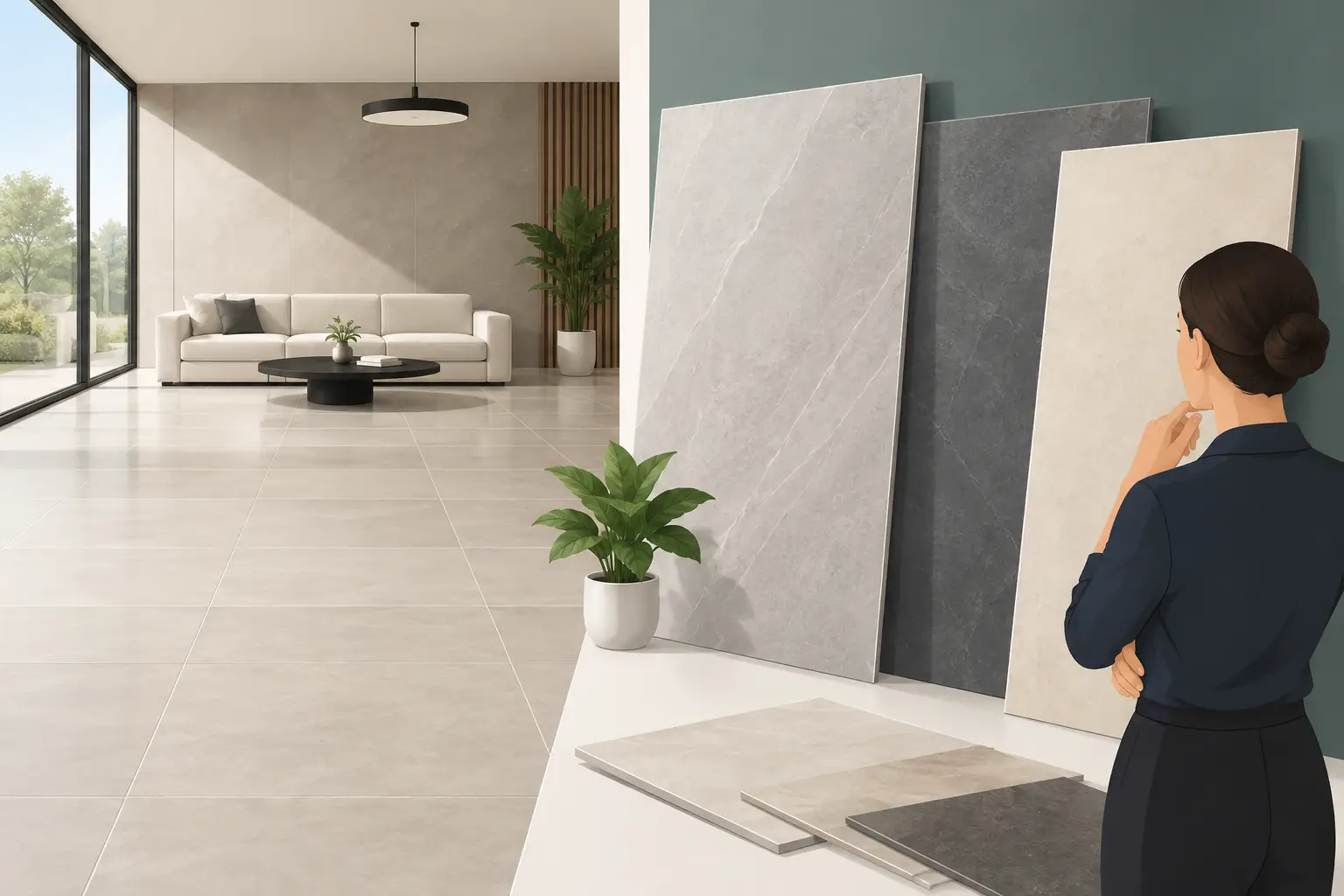
A large tile can make a compact ensuite feel calmer, give a kitchen floor a more refined finish, or turn a commercial entry into a surface that looks considered rather than busy. This guide to choosing large format tiles focuses on the decisions that matter before installation begins: proportion, tile suitability, surface preparation and the level of finish required for lasting results.
Large format tiles are generally considered to be 600 x 600 mm and above, with popular choices including 600 x 1200 mm, 750 x 750 mm and 900 x 900 mm. Their appeal is clear. Fewer grout joints create a cleaner visual line, make routine cleaning easier and allow the colour and texture of the tile to take centre stage. However, larger tiles demand greater precision from the substrate through to the final grout joint.
Start with the room, not the tile sample
A tile sample can look exceptional in a showroom and still be the wrong choice for the room. Begin by looking at the room’s dimensions, natural light, traffic levels and the surfaces that need to meet each other. Large format tiles work particularly well in open-plan living areas, kitchens, entries and generously sized bathrooms because they reduce visual interruption.
That does not mean small rooms are off limits. In a modest bathroom, a 600 x 1200 mm wall tile can make the space feel more expansive when the layout is planned carefully. The trade-off is that cuts around windows, niches, tapware and floor wastes become more noticeable. A well-designed set-out avoids narrow slivers at the edges and places full or near-full tiles in the most visible areas.
Before committing, consider where the eye naturally lands when entering the room. This is often the wall opposite the doorway, the shower wall or the main floor area. A precise tile layout gives these focal points balance and prevents the finished surface from looking accidental.
Choose the right size and orientation
Bigger is not always better. The ideal tile size depends on room proportions and how many cuts are needed. A very large tile in a small, highly detailed room can create unnecessary waste and leave more cut edges than full tiles. In contrast, a tile that is too small for a broad living area can make the floor feel fragmented.
Rectangular large format tiles provide useful design flexibility. Laid lengthways through a narrow room, they can draw the eye along its longest dimension. Laid horizontally on a wall, they can make the room feel wider. Square tiles tend to create a quieter, more even pattern, which suits contemporary floors and larger spaces.
Consider the tile’s visual movement
Stone-look, concrete-look and marble-look porcelain tiles vary considerably from piece to piece. This variation is part of their character, but it needs to be managed during installation. Tiles should be checked and blended from multiple boxes so concentrated veining, dark patches or repeated patterns do not disrupt the surface.
For marble-look tiles with strong veins, ask for a layout that considers vein direction and continuity. A bookmatched feature wall may be appropriate in a premium bathroom, while a more natural blend often suits expansive floors. The right approach depends on the tile design and the level of formality you want in the finished space.
Select a finish that suits daily use
Tile finish is as important as colour. Polished porcelain has a crisp, luxurious appearance and reflects light beautifully, making it well suited to feature walls and lower-traffic interior spaces. It can, however, show water marks and may be too slippery for wet floors.
Matt and satin finishes are popular choices for everyday floors. They soften reflections, hide minor marks more effectively and usually offer better grip. For bathrooms, laundries, balconies and commercial entrances, slip resistance should be considered alongside appearance. A tile’s slip rating matters most where water, bare feet, wet shoes or cleaning products are part of normal use.
Outdoor areas require special care. Choose a porcelain tile rated for exterior conditions, with suitable slip resistance and minimal water absorption. The base beneath it must also be correctly waterproofed, drained and prepared to manage movement caused by heat and weather. A beautiful outdoor tile will not perform well if water is allowed to sit beneath it.
Do not overlook thickness, edges and grout joints
Most large format porcelain tiles are durable, but thickness and edge style influence both installation and appearance. Rectified tiles have machine-cut edges that are designed for narrow, consistent grout joints. This creates a refined, architectural finish, provided the underlying surface is sufficiently flat and the tiles are installed with exacting care.
A narrow grout joint is not the same as no grout joint. Tiles need an appropriate joint to accommodate manufacturing tolerance, movement and proper grout placement. Trying to push tiles too closely together can lead to chipped edges, cracked grout or an uneven finish over time.
Grout colour also changes the look of large format tiles. A colour close to the tile creates a more continuous surface and places attention on the tile itself. A contrasting grout makes the layout more visible and can be effective in a deliberate pattern, though it will also highlight any inconsistency in alignment. In showers and wet areas, quality grout and correctly finished silicone joints are essential for cleanliness and water management.
Surface preparation is where lasting results begin
Large tiles do not hide an uneven floor or wall. In fact, they often expose it. If a substrate has dips, humps or inconsistent levels, tile edges can sit proud of one another. This is known as lippage, and it is more visible on polished tiles, rectified edges and surfaces lit from the side.
A professional assessment should check substrate flatness, structural movement, existing cracks, moisture exposure and the condition of any previous tiling. Floors may need levelling compound or screeding before tiling. Walls may need straightening or suitable sheet preparation. In wet areas, waterproofing must be sound before the first tile is fixed.
Large format tiles also require the right adhesive coverage. Voids beneath a tile can compromise bond strength and increase the chance of cracking under point loads. This is especially relevant for floors, commercial areas and tiles installed over heated systems. The installation method should support the full tile properly, not simply secure it around the edges.
Plan for movement and difficult details
Every building moves to some degree. Temperature changes, settling, substrate movement and different materials meeting each other all place stress on tiled surfaces. Movement joints are not a cosmetic afterthought. They are a practical part of a durable installation, particularly across large floor areas, near doorways, over existing joints and in areas exposed to direct sun.
Bathrooms add another layer of complexity. A large format tile can be used on a shower floor, but the choice must suit the falls to the waste. Standard centre wastes often require multiple directional cuts, which can be difficult with oversized tiles. Linear drains can allow cleaner falls and larger pieces, but the drainage system must be designed correctly from the start.
Consider niches, hob details, floor-to-wall transitions and door clearances before tiles are ordered. These details affect tile sizes, cut locations and the final look far more than most people expect. Good planning protects both the design and the project timeline.
Balance maintenance with the look you want
One of the strongest advantages of large format tiles is reduced grout coverage. Fewer joints can mean less routine scrubbing and a cleaner overall appearance. Yet the tile finish still needs to suit how the room is used. Gloss surfaces may need more frequent wiping, while highly textured tiles can hold grime if used in the wrong setting.
Porcelain is a dependable choice for many Australian homes and commercial interiors because it is hard-wearing, low-porosity and available in a wide range of realistic stone, timber and concrete looks. Natural stone has its own appeal but may require sealing and more specialised care. The best choice is the one that aligns with your maintenance expectations as well as your design brief.
Work with an installer who plans the finish
Large format tiling is not a job for rushed measuring or guesswork. A quality installation begins with accurate site measurement, a considered set-out, suitable preparation and careful handling of every tile. The finished surface should look balanced at doorways, corners, drains and feature walls, not merely level from a distance.
At A1 Grouting & Tiling, precision is treated as part of the design. Whether the project is a bathroom renovation, a kitchen floor upgrade or a commercial fit-out, the goal is a clean, durable finish that continues to perform long after handover.
Choose the tile you genuinely want to live with, then give it the preparation and workmanship it deserves. When size, layout, safety and substrate are all considered together, large format tiles deliver the calm, polished finish that makes a room feel complete.