 10 years of water leakage warranty for Regrouting showers.


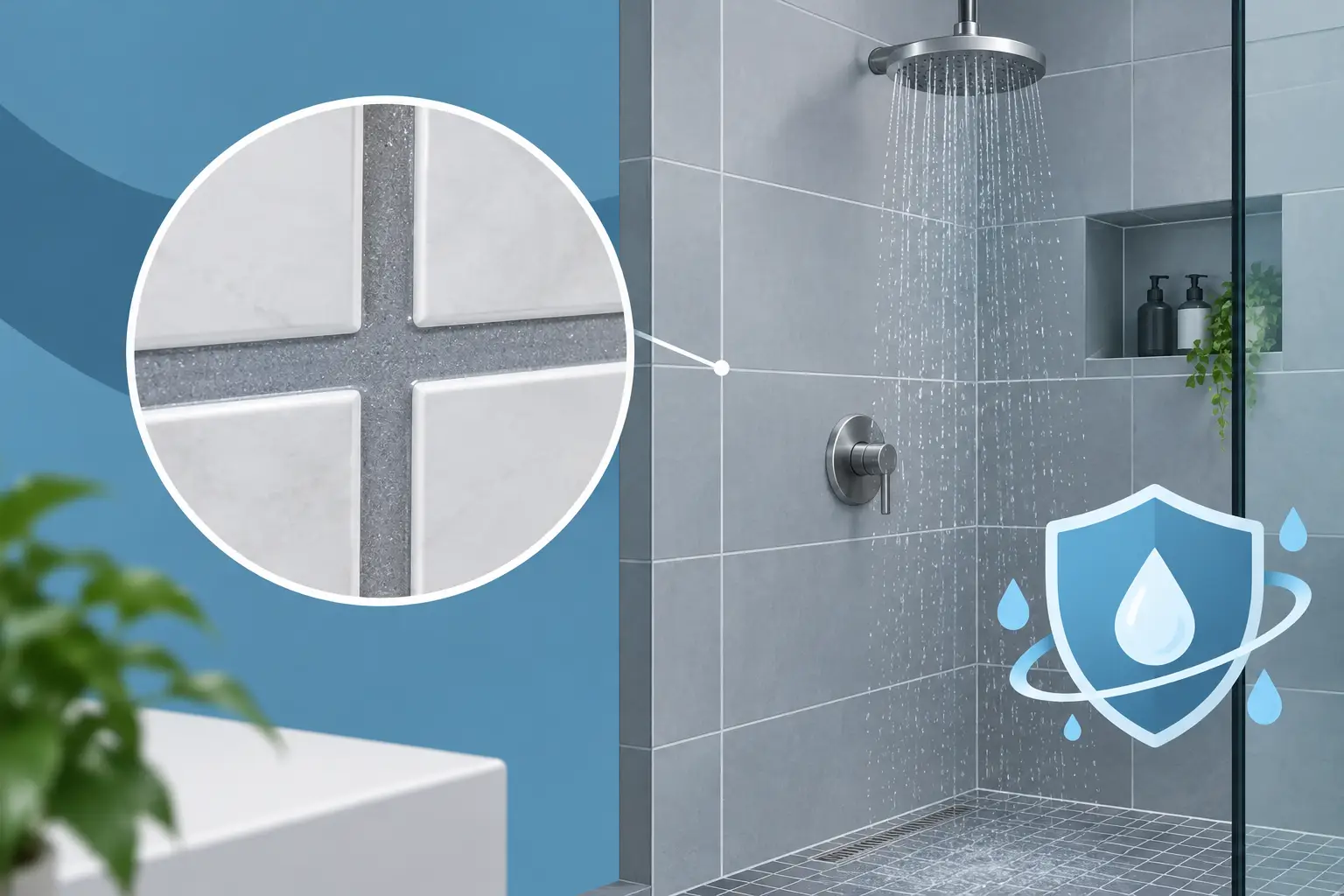
A shower can look immaculate yet still allow water into places it should never reach. So, are epoxy grout joints waterproof? Epoxy grout is exceptionally water-resistant and far less absorbent than standard cement grout, but grout joints are not the waterproofing system behind a tiled shower. The distinction matters when you are planning a renovation, choosing materials, or trying to solve a suspected leak.
For a clean, durable finish in wet areas, epoxy grout can be an excellent choice. It resists moisture, staining and mould growth far better than many traditional grouts. However, lasting protection depends on the complete installation: sound tiles, correctly prepared joints, flexible sealant where surfaces meet, and an intact waterproof membrane beneath the tiles.
Are epoxy grout joints waterproof?
Epoxy grout is often described as waterproof because, once cured, it has very low porosity. Unlike cement-based grout, it does not readily soak up water, soap residue, oils or common bathroom stains. In practical terms, water beads on the surface rather than being drawn into the joint.
That makes it a high-performance option for shower walls, bathroom floors, splashbacks, commercial washrooms and other tiled areas exposed to regular moisture. It is also easier to keep looking fresh because it is less likely to discolour or harbour mould in the way worn, porous cement grout can.
But “waterproof” needs context. An epoxy grout joint may resist water extremely well, yet a tiled surface contains more than grout lines. Water can still find a path through cracks, movement joints, poorly sealed edges, damaged tiles, penetrations around taps and shower screens, or failures in the membrane below. Epoxy grout improves the surface finish and moisture resistance. It does not replace compliant waterproofing.
What epoxy grout does better than cement grout
Traditional cement grout is a useful and cost-effective material for many tiled areas, but it is naturally more porous. It can absorb moisture and contaminants over time, particularly in a hard-working shower. Sealers can help reduce absorption, although they need maintenance and do not turn cement grout into a waterproof barrier.
Epoxy grout is made from resin and hardener components rather than Portland cement. Once mixed and cured correctly, it forms a dense, hard-wearing joint with several advantages:
- It has very low water absorption, which helps protect the appearance of the joint in wet areas.
- It is highly resistant to staining from soap, shampoo, cosmetics, food and household spills.
- It is less welcoming to mould and mildew because there are fewer pores for moisture and residue to settle into.
- It is durable under regular cleaning and suits high-traffic residential and commercial tiled floors.
Those benefits make epoxy grout particularly valuable where hygiene and finish quality are priorities. A bright shower surround, a light-coloured kitchen splashback or a commercial bathroom can maintain a cleaner, more polished appearance for longer.
There is a trade-off. Epoxy grout is more demanding to install than standard grout. It has a limited working time, can be difficult to clean from textured tiles if handled poorly, and needs precise mixing and joint preparation. A rushed application can leave haze on tile faces, uneven joint profiles or weak areas in the grout. The material is excellent, but its performance relies on workmanship.
Why a shower still needs waterproofing behind the tiles
Tiles and grout form the visible wearing surface of a bathroom. The waterproof membrane is the protective layer beneath them. In a properly built or renovated shower, the membrane is installed over the prepared substrate and integrated around corners, floor-to-wall junctions, hob details, wastes and penetrations.
This layer manages any moisture that reaches behind the tile finish. Even with epoxy grout, this protection is essential. Buildings move slightly over time, silicone can deteriorate, a tile can crack after impact, and water can enter through areas that grout was never intended to seal.
A common misconception is that changing old grout will repair a shower leak. Regrouting can make a shower look dramatically better and can remove deteriorated, mouldy or cracked joints. It may also address a localised surface issue. But if the waterproof membrane has failed, water is entering through a wall penetration, or movement has opened a junction, new grout alone will not correct the underlying problem.
This is why a proper inspection matters before work begins. Signs such as peeling paint on the adjoining wall, swollen skirting boards, loose tiles, persistent damp smells or water marks below an upstairs bathroom call for more than a cosmetic refresh. The source needs to be identified before selecting a repair method.
Grout joints, silicone and movement joints have different jobs
One of the most important details in a wet-area finish is knowing where grout should stop. Grout is rigid, including epoxy grout. Areas where two surfaces meet can move independently, especially wall-to-floor corners, vertical internal corners, shower hobs and the joint where tiles meet a bath or shower tray.
These locations generally require a flexible sanitary-grade silicone sealant rather than grout. Silicone accommodates minor movement and helps keep water out of the junction. If rigid grout is used in these areas, it can crack as the building shifts or materials expand and contract.
A well-finished shower therefore combines materials for their intended purpose. Epoxy grout can create dense, stain-resistant joints across the tiled field. Flexible sealant protects change-of-plane junctions. Waterproofing behind the tiles provides the final line of defence. Each layer contributes to a shower that looks refined and performs reliably.
When epoxy grout is worth choosing
Epoxy grout is not mandatory for every tiled project, but it is worth considering when the long-term benefits align with the space. It is especially suited to family showers that see daily use, rental properties where easy maintenance matters, pale grout colours that can show staining, and commercial bathrooms where hygiene and durability are non-negotiable.
It can also be a smart choice for kitchen splashbacks and tiled floors exposed to spills. In these settings, the low-porosity finish makes routine cleaning easier and helps preserve the intended colour of the grout.
For a low-use powder room or a modest wall-tile project, a quality cement grout may still be entirely appropriate. The best choice depends on the tile type, joint width, exposure to water, budget and desired finish. Large-format tiles, natural stone, textured surfaces and mosaics each introduce their own installation considerations.
Caring for epoxy grout joints
Although epoxy grout is low maintenance, it is not maintenance-free. Regular cleaning prevents soap film, body oils and mineral deposits from dulling the tiled surface around it. Use a pH-neutral cleaner suited to tiles and grout, rinse well, and avoid leaving harsh chemicals sitting on the surface.
Keep an eye on silicone joints and grout lines during normal cleaning. Cracks, missing sections, recurring mould in a single area or loose tiles should be investigated early. Small defects are often simpler to repair before moisture reaches the substrate.
Avoid aggressive scraping or abrasive pads that can scratch glazed tiles or damage the finish of softer stone. If you are unsure whether a cleaning product suits your tile, test it in an inconspicuous spot first.
Precision installation makes the difference
Epoxy grout delivers its best results when the tile installation is stable, joints are clean and correctly sized, and the application is completed with disciplined timing. It is not a shortcut around poor preparation or failed waterproofing. It is a premium finishing material that performs exceptionally well as part of a complete, well-built tiled system.
For shower regrouting, the key question is not simply whether epoxy grout repels water. It is whether the existing shower is structurally sound and whether its waterproofing remains intact. A professional assessment can separate a surface-level grout issue from a deeper leak, protecting both the appearance of your bathroom and the building behind it.
A1 Grouting & Tiling approaches wet-area repairs with that full-picture mindset: precise joints, clean lines, appropriate sealants and workmanship focused on long-term performance. The best result is a shower that feels polished every day, while the details you cannot see are given the same careful attention as the finish you can.