 10 years of water leakage warranty for Regrouting showers.

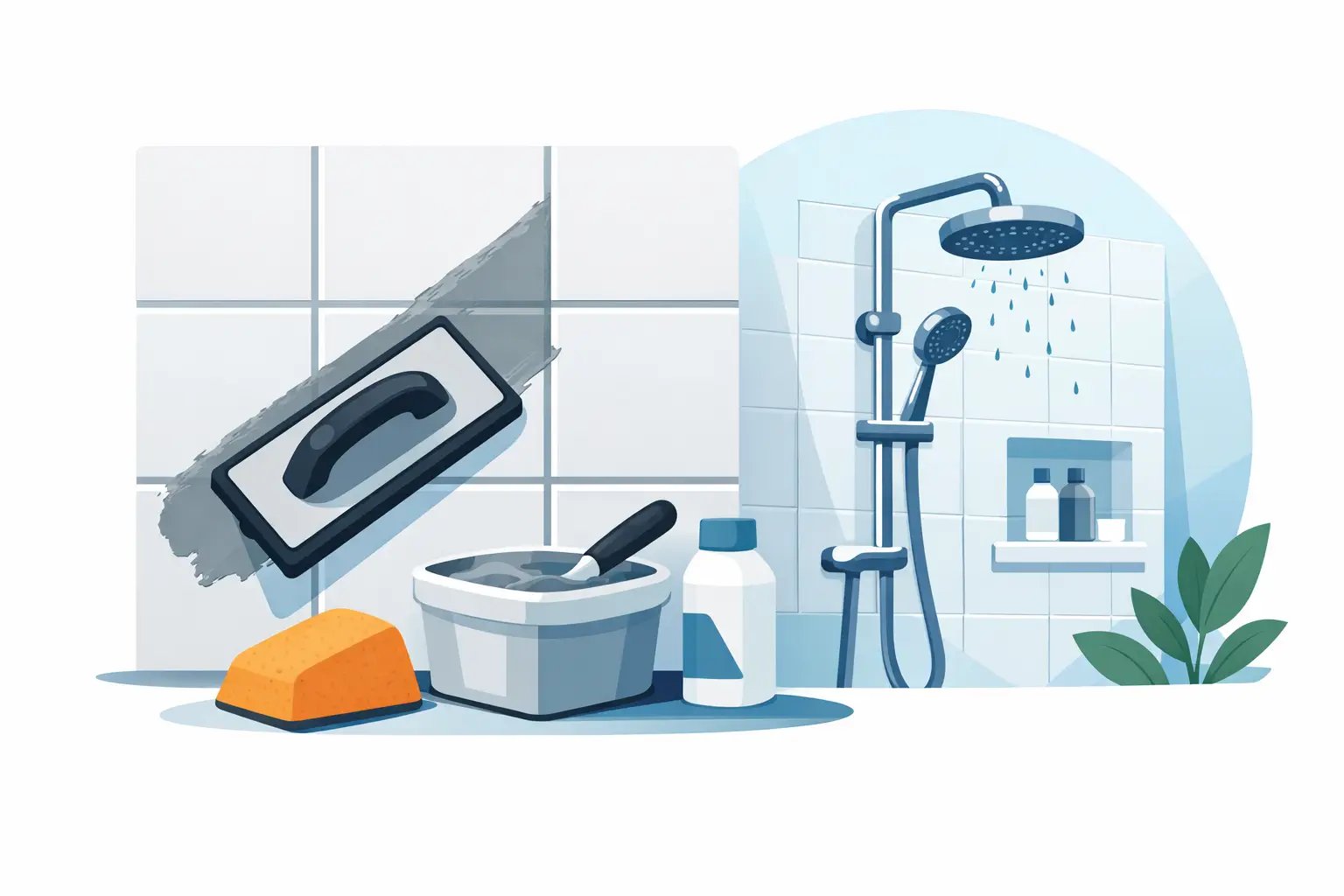
A shower can have beautifully laid tiles and still look tired, unhygienic or poorly finished if the grout is failing. Choosing the best grout for shower walls is about more than matching a colour. It affects how easily the shower cleans, how well it resists staining and mould, and whether the tiled finish continues to look sharp after years of daily use.
For most residential showers, a quality polymer-modified cementitious grout is the strongest all-round choice. In high-use bathrooms, commercial change rooms, or showers where maximum stain resistance is the priority, epoxy grout can be worth the added cost. The right choice ultimately depends on the tile type, joint width, condition of the substrate, ventilation and how the shower is used.
What Shower Wall Grout Needs to Do
Shower walls are exposed to repeated moisture, body oils, soap residue, shampoo and cleaning products. Grout in this environment needs to be durable, low-absorption and properly installed, but it must also suit the tile and the movement within the room.
A good shower grout should resist water penetration, discolouration and surface mould while maintaining a consistent colour and smooth finish. It should bond securely within the grout joints without scratching delicate tiles or cracking as the building naturally moves.
There is one critical point to understand: grout is not the waterproofing system. Even high-performance grout is not a substitute for compliant waterproofing behind the tiles. If a shower has ongoing leaks, loose tiles, swollen walls or persistent moisture outside the shower enclosure, simply applying new grout will not correct a failed membrane. The cause needs to be assessed before any cosmetic work begins.
The Best Grout for Shower Walls in Most Homes
Polymer-Modified Cementitious Grout
For the majority of shower wall installations, polymer-modified cementitious grout offers the best balance of performance, appearance and value. It is designed with additives that improve flexibility, adhesion and water resistance compared with basic cement grout.
This type of grout is available in a broad range of colours, making it easier to achieve a refined result with white subway tiles, large-format porcelain, natural stone-look tiles or patterned feature walls. It is also generally easier to apply and repair than epoxy, which matters when achieving crisp lines and an even finish across a full bathroom.
Not all cementitious grouts perform equally. A premium product formulated for wet areas, installed to the manufacturer’s specifications and sealed where recommended, will outperform a low-cost grout applied without careful preparation. The workmanship behind the finish matters just as much as the product selected.
Epoxy Grout for Maximum Stain Resistance
Epoxy grout is often considered the premium option for shower walls. It is highly resistant to stains, moisture and many household chemicals, and its dense surface makes it far less likely to absorb grime than conventional grout.
It is an excellent option for heavily used family bathrooms, rental properties, boutique accommodation and commercial bathrooms where easy cleaning and long-term appearance are priorities. Epoxy grout is particularly useful in light colours, where soap scum and discolouration can quickly become visible.
The trade-off is cost and installation complexity. Epoxy grout sets more quickly and is less forgiving during application, so it requires experienced handling to avoid residue on tile faces or an uneven finish. It can also be a less practical choice for some textured tiles, porous natural stone and certain tile surfaces unless the installer confirms compatibility first.
For homeowners who want the lowest-maintenance result and are prepared to invest in it, epoxy can be the best grout for shower walls. For many projects, however, a quality polymer-modified grout provides excellent performance at a more accessible price point.
Sanded or Unsanded Grout: Which Is Right?
The width of the grout joint and the tile finish should guide this decision. Sanded grout contains fine aggregate, giving it strength and making it suitable for wider joints. It is commonly used for standard ceramic and porcelain wall tiles with joints of around 3 mm or more.
Unsanded grout has a smoother texture and is generally better suited to narrow joints and scratch-sensitive surfaces, such as polished stone, glass or some glossy wall tiles. However, it may not have the same strength in wider joints.
Many modern high-performance grouts are formulated to work across a range of joint widths, reducing the need to choose strictly between traditional sanded and unsanded products. This is especially useful in contemporary bathrooms, where tile layouts may combine large-format tiles with narrow, precise joints.
A professional installer will consider the tile manufacturer’s recommendations, joint size and tile surface before selecting the grout. Using the wrong product can lead to scratching, shrinkage, cracking or poor colour consistency.
Grout Colour Changes the Look of the Shower
Colour selection is not merely decorative. It influences how clean the shower appears and how much routine maintenance the grout will require.
White grout creates a fresh, classic look but can show soap residue, mould spots and discolouration sooner than mid-tone shades. It works beautifully in well-ventilated bathrooms when paired with regular cleaning and good aftercare. Light grey provides a similar clean aesthetic with more forgiveness between cleans, making it a popular choice for busy households.
Darker grout can create definition around light tiles and make a feature wall feel more architectural. It is often easier to maintain visually, although it can show mineral deposits in areas with hard water. For a softer, more cohesive finish, select a grout colour close to the tile shade. For contrast and pattern definition, choose a noticeably darker or lighter tone.
Before committing, view the grout sample beside the actual tile in the bathroom lighting. Colours can look very different under warm downlights, natural daylight and vanity lighting.
Do You Need to Seal Shower Wall Grout?
Whether shower grout needs sealing depends on the grout product. Traditional cement-based grout is more porous and often benefits from a quality penetrating sealer after it has fully cured. Sealing helps reduce absorption of moisture, soap residue and stains, making routine cleaning easier.
Many advanced polymer-modified grouts have improved stain and water resistance, while epoxy grout generally does not require sealing. Even so, sealing is not a cure for poor installation, cracked joints or failed waterproofing. It is a protective maintenance step, not a repair method.
If a sealer is recommended, it should be applied carefully and renewed according to the product guidance and the shower’s level of use. Excess sealer left on tile faces can leave haze or alter the appearance of some finishes, particularly textured or natural stone tiles.
Common Problems That Are Not Really Grout Problems
Cracked grout is often treated as a simple regrouting job, but the crack may be signalling movement beneath or behind the tiles. Movement joints where walls meet floors, shower trays, benchtops or adjoining surfaces should be finished with a flexible sanitary-grade silicone, not rigid grout. This allows for normal expansion and contraction without placing pressure on the tile edges.
Likewise, recurring black mould is not always caused by unsuitable grout. It may be linked to poor ventilation, water pooling, inadequate cleaning, leaking plumbing or a shower screen that allows excessive water to escape. Regrouting can dramatically improve the appearance of a shower, but the result will last longer when these underlying issues are addressed.
Tiles that sound hollow, move when pressed, or have widespread cracking need further investigation. Regrouting over unstable tiles may provide a short-term cosmetic improvement, but it will not restore the integrity of the installation.
When Professional Regrouting Is the Better Choice
A shower can often be restored without a full renovation when the tiles remain well bonded and the waterproofing is sound. Professional regrouting removes failed, stained or cracked grout to an appropriate depth, thoroughly cleans the joints and applies a compatible new grout with clean, consistent lines.
This process can transform an older bathroom, improve hygiene and extend the life of the tiled surface. It is also an opportunity to replace deteriorated silicone around corners, screens and fixtures, where water is most likely to find a path behind tiles.
At A1 Grouting & Tiling, the focus is not simply on filling joints. Precision preparation, carefully selected materials and a flawless finish create a shower that looks considered, performs reliably and is easier to maintain.
The best result comes from treating grout as part of the whole shower system. Choose a high-quality grout suited to the tile and level of use, maintain the silicone joints, keep the room ventilated and act early when staining or cracking appears. Those small decisions protect both the clean lines of the bathroom and the value of the work behind them.